
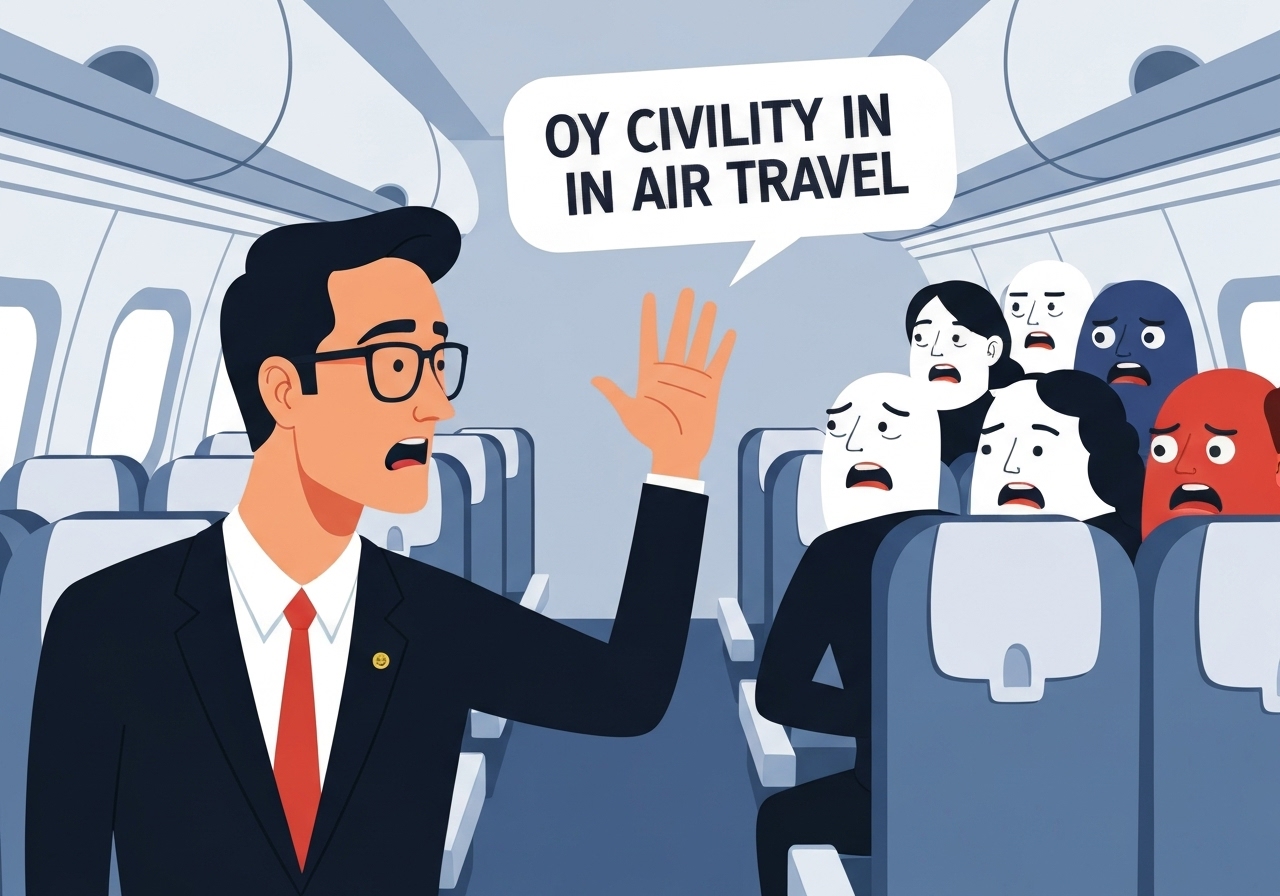
US Transportation Secretary Sean Duffy this week called on air travellers to show greater courtesy and to dress with more formality as part of a new Department of Transportation campaign launched ahead of the Thanksgiving travel surge. The campaign, titled “The Golden Age of Travel Starts with You”, juxtaposes archival footage of orderly airports with modern clips of in-flight disruptions to argue that manners and respect should return to air travel. The announcement arrives as the Federal Aviation Administration forecasts the busiest Thanksgiving travel week in 15 years, with more than 52,000 scheduled flights on 25 November. The initiative has prompted sharp debate from passengers and industry observers who say staffing, cabin conditions and operational delays are central to the problem of unruly behaviour.
Key Takeaways
- The Department of Transportation launched a civility campaign this month called The Golden Age of Travel Starts with You, urging passengers to be courteous and dress respectfully.
- The FAA expects the Thanksgiving travel period to be the busiest in 15 years, including more than 52,000 flights on 25 November.
- DOT cites a roughly 400 percent rise in in-flight outbursts since 2019 and reports 13,800 unruly passenger incidents since 2021.
- Flight experts say individual appeals to manners are unlikely to curb incidents once passengers have become agitated during delays or crowded conditions.
- Industry analysts point to smaller seats, boarding practices, fewer amenities and understaffed flight crews as contributors to passenger frustration.
- Social media responses to Duffy ranged from support for increased courtesy to calls for structural fixes to security screening, legroom and on-time operations.
Background
Public frustration with air travel has been rising as passenger volumes rebounded to near pre-pandemic levels, while airlines and airports have faced staffing shortages and operational challenges. After pandemic-era disruptions many carriers adopted a bare-bones business model in economy cabins, unbundling services and reducing included amenities to cut costs. At the same time, passengers now routinely encounter cramped seating, longer time on the tarmac, and frequent gate delays, all of which contribute to stress during travel.
Government agencies have recorded a sharp increase in reported disruptive events in recent years, and regulators are under pressure to respond both to safety concerns and to popular complaints. The DOT campaign frames poor behaviour as a cultural failing that can be remedied through reminders about manners, while critics say the root causes are structural and operational. Historically, periods when flying was framed as glamorous coincided with very different safety standards, higher relative fares, and norms that would be considered unacceptable today, complicating nostalgic appeals.
Main Event
Secretary Duffy unveiled the campaign in a short video that combines mid-20th century scenes of smiling staff and well-dressed passengers with modern clips of fights, passengers placing bare feet on seats, and other disruptive acts. In the ad Duffy asks viewers to consider small acts of courtesy such as helping a pregnant passenger with an overhead bag and to reflect on dress as a sign of respect. The Department says the push is aimed at reducing violent and disruptive incidents on aircraft and in airport terminals.
The announcement came as the FAA forecast that 25 November would see over 52,000 flights, part of what the agency expects to be the busiest Thanksgiving travel period in 15 years. The DOT highlighted enforcement data describing a multi-hundred percent increase in in-flight outbursts since 2019 and a tally of 13,800 unruly incidents since 2021, including instances of physical assault against crew members.
Public reaction on social platforms was immediate and mixed. Some travellers welcomed a call for basic courtesy, while many used the posts to criticize airline policies, cramped seating, boarding practices described as cattle-like, and the intensity of airport security checks. Aviation analysts and travel commentators responded with skepticism that wardrobe guidance would materially improve passenger conduct during delays and crowded flights.
Analysis & Implications
The DOT campaign attempts to shift some responsibility for travel civility onto individual passengers, but experts argue that the most effective levers are operational and regulatory. When travellers face extended delays, limited personal space, or minimal in-flight staffing, their tolerance declines and conflicts become more likely. Addressing those operational stressors could reduce triggers for unruly behaviour more effectively than public appeals alone.
Economics and airline business models also matter. The widespread adoption of fee-based ancillary services and denser seating configurations has changed passenger expectations and comfort levels. Analysts note that restoring elements such as larger seats, included meal service, or more generous boarding procedures would raise costs for carriers and fares for passengers, so any change involves trade-offs between price and experience.
Enforcement and deterrence are another dimension. The DOT and FAA can pursue legal and administrative measures to penalize severe misconduct, yet enforcement often requires timely evidence and sufficient crew resources to manage incidents in flight. Increasing penalties without addressing the conditions that spark most incidents may have limited deterrent effect and could strain crew workloads.
Comparison & Data
| Metric | Reported Value |
|---|---|
| FAA forecasted flights on 25 November | More than 52,000 |
| Increase in in-flight outbursts since 2019 | About 400 percent |
| Unruly incidents recorded since 2021 | 13,800 |
These figures, released by federal agencies and summarized in recent reporting, show incidents have risen even as passenger volumes have climbed. Analysts caution that raw incident counts are influenced by higher travel volume, expanded reporting, and changing thresholds for what is recorded as an incident. Comparisons with mid-20th century travel are illustrative but imperfect, because safety standards, fare structures, and onboard norms were markedly different.
Reactions & Quotes
Industry experts and commentators offered sharp but concise assessments of the campaign and the causes of in-flight disruptions.
You might as well ask a wall to start printing you money.
Scott Keyes, founder of Going.com
Keyes used this remark to underline skepticism that a civility campaign can tame behaviour once travelers are already agitated by delays or cramped conditions.
Clothes do not make the person in terms of courtesy.
Henry Harteveldt, Atmosphere Research Group
Harteveldt argued that encouraging nicer dress will not change passengers tendencies to be civil and that airlines share responsibility by creating uncomfortable cabins and reducing services.
I will do my small part to spread civility in my own life.
Individual traveller quoted on social media
Some passengers responded positively, saying small acts of courtesy can still improve day-to-day interactions despite broader structural issues.
Unconfirmed
- The assertion that adopting dress standards alone will meaningfully reduce unruly incidents is unconfirmed and lacks empirical support.
- Claims on social media that TSA screening “accomplishes nothing” are disputed and require specific operational evidence to evaluate.
- Comparisons suggesting air travel was categorically better for passengers in the 1950s and 60s do not account for differences in safety, cost, and onboard conditions and remain subject to interpretation.
Bottom Line
Secretary Duffy’s appeal for restored civility has refocused debate about why incidents occur on aircraft and in airports. The campaign underscores a genuine public concern about passenger safety and crew welfare, but it also highlights a divide between calls for personal responsibility and demands for structural fixes by airlines and regulators.
Evidence and expert commentary suggest that a mix of measures will be needed to reduce unruly behaviour: operational improvements to reduce delays, enforcement and reporting enhancements, and modest cultural reminders about courtesy. Policymakers and industry leaders face choices that trade cost, convenience, and comfort, and how they balance those choices will shape the travel experience in the coming seasons.
Sources
- BBC News — media report summarizing campaign, expert reactions and DOT data
- US Department of Transportation — official agency site and campaign materials
- Federal Aviation Administration (FAA) — operational forecasts and aviation data
- Going.com — travel site founded by Scott Keyes, industry commentary
- Atmosphere Research Group — travel industry analysis and commentary
- University of Nevada Las Vegas — academic perspective on aviation history