
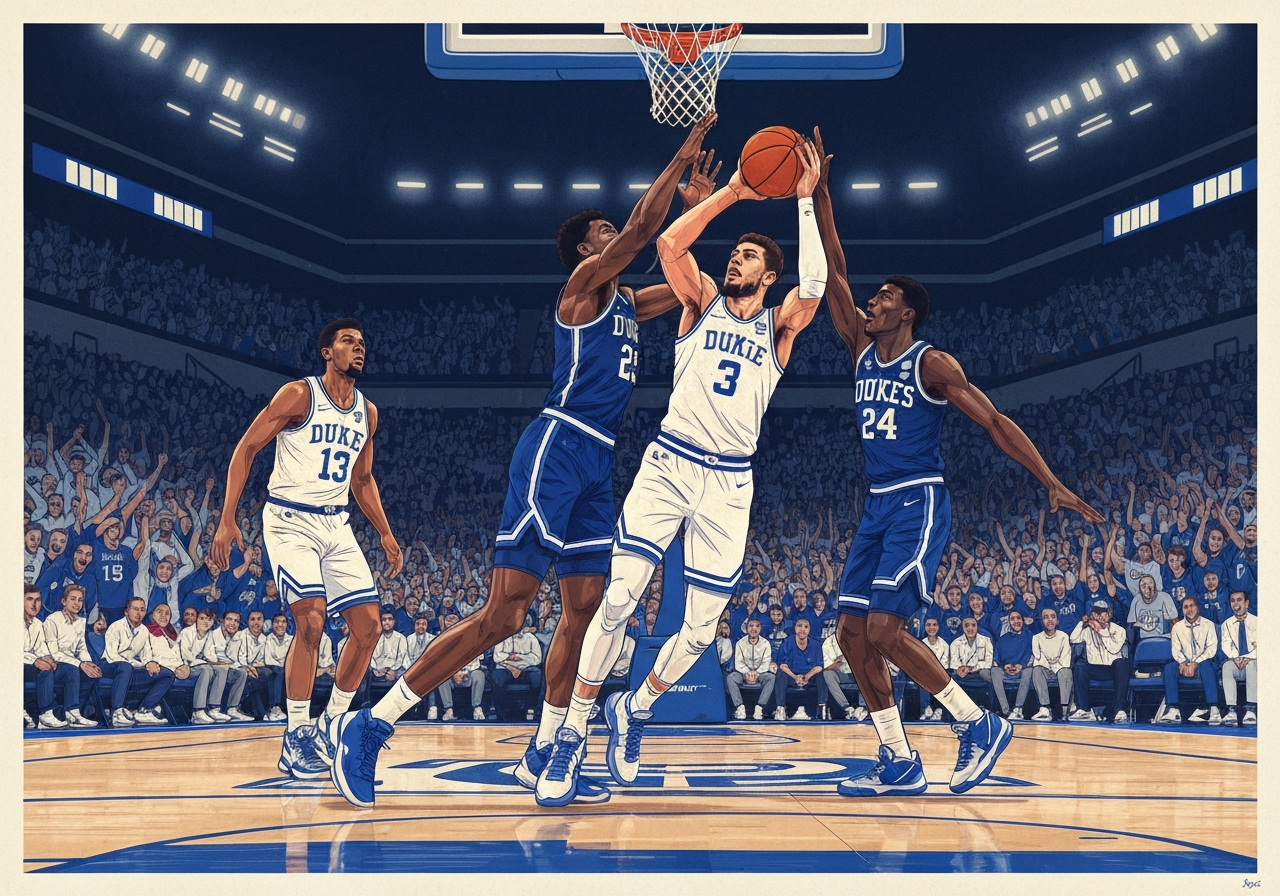
Duke, Michigan, Arizona and defending champion Florida were designated the four No. 1 seeds in the 2026 men’s NCAA Tournament on Sunday, with Duke receiving the No. 1 overall seed and the top spot in the East Region. The bracket places Michigan atop the Midwest (regional semifinals and finals in Chicago), Arizona in the West (San Jose, Calif.) and Florida in the South (Houston). The selection set up a notable First Four matchup: 31-1 Miami (Ohio) drew a No. 11 seed and must beat SMU in Dayton to reach the round of 64. The committee’s choices immediately raised matchup and travel questions — notably that Florida could face a Houston team playing on its home court if both advance to the Elite Eight.
Key Takeaways
- Duke is the No. 1 overall seed and will lead the East Region; East regional semis/finals are scheduled for Washington, D.C.
- Michigan is the Midwest No. 1 seed; the Midwest regional semis/finals will be played in Chicago.
- Arizona is the West No. 1 seed (San Jose, Calif. site); Florida is the South No. 1 seed (Houston site), and Houston is the South No. 2 seed.
- Miami (Ohio), 31-1 on the season and upset in the MAC tournament, received an at-large bid as an 11 seed and must play SMU in a First Four game in Dayton.
- Selection committee chair Keith Gill noted SMU’s recent five losses in six games and highlighted that B.J. Edwards (12.7 ppg) missed much of that stretch with an ankle injury and is expected to return for the tournament.
- Florida lost the SEC final 91-74 to Vanderbilt but retained a top seed after Arizona beat Houston and St. John’s beat UConn in conference finals, removing potential challengers.
- The SEC led the field with 10 bids; the Big Ten had nine, the ACC and Big 12 eight each. The Mid-American Conference received two bids (Akron automatic, Miami (Ohio) at-large).
- Duke’s East Region includes high seeds UConn (No. 2), Michigan State (No. 3) and Kansas (No. 4), yielding a deep bracket in the eyes of the committee.
Background
The NCAA selection committee revealed the 68-team bracket Sunday on CBS, finalizing seed lines after conference tournaments concluded. Committee chair Keith Gill and his panel balanced regular-season profiles, conference-tournament outcomes and late-season metrics to seed teams across four regions and the First Four play-in games in Dayton. As usual, the bracket reflected both season-long performance and last-week results; a handful of conference final outcomes reshaped the top lines and solidified which programs earned the coveted No. 1 rankings.
This year’s No. 1 group mixes established blue-bloods and the reigning champion. Florida, coached by Todd Golden, enters as the defending national champion seeking back-to-back titles — a feat Florida previously achieved only once under Billy Donovan (2006–07). Michigan, Arizona and Duke each had stretches this season that made them look like the dominant team nationally, and head-to-head meetings among them (Duke beat Michigan and Florida; Arizona beat Florida in the opener) provided limited direct comparison points.
Main Event
When the bracket was announced, Duke was slotted No. 1 overall and placed atop the East Region, with regional semifinal and final games set for Washington, D.C. The committee’s placement put UConn at No. 2 in the East alongside Michigan State (No. 3) and Kansas (No. 4), creating what the committee characterized as a particularly deep region. Duke’s resume, including key nonconference wins and late-season metrics, earned it the top overall line.
In the Midwest, Michigan drew the No. 1 seed and will play toward a Chicago site for the regional weekend. The Wolverines arrive off an 80-72 loss to Purdue in the Big Ten tournament final but maintain a body of work that placed them among the top four. The Midwest also includes Iowa State (No. 2), Virginia (No. 3) and Alabama (No. 4), giving Michigan notable obstacles if it advances deep.
Arizona is the West No. 1 seed with San Jose as the regional site. The Wildcats’ line includes Purdue (No. 2), Gonzaga (No. 3) and Arkansas (No. 4). Arizona’s marquee early-season win over Florida and strong league performance were central to its top-line placement. Florida, as the South No. 1 seed, could face a tough draw if it meets No. 2 seed Houston on Houston’s home floor in the Elite Eight, should both clubs advance.
The First Four featured Miami (Ohio), which finished 31-1 and fell in the MAC tournament before receiving an at-large berth as an 11 seed. Miami (Ohio) must beat SMU in Dayton to reach the 64-team field; SMU was selected in part despite a mid-March skid that coincided with the absence of third-leading scorer B.J. Edwards (12.7 points per game) because of an ankle issue.
Analysis & Implications
The committee’s seeding underscores the value placed on full-season resumes over single-game outcomes, while still giving weight to conference-tournament performances that shifted possible top-seed contenders. Florida’s SEC final loss to Vanderbilt left a window for UConn or Houston to supplant the Gators, but both teams lost their conference finals — Arizona beat Houston and St. John’s beat UConn — preserving Florida’s No. 1 slot. That sequence demonstrates how late results can close or open paths to the top line.
Geography and venue assignments carry competitive implications. With the South Regional in Houston and Houston seeded No. 2, a potential Florida–Houston Elite Eight matchup would effectively be a home game for the Cougars. Home-region advantages have mattered in recent tournaments, both for travel logistics and local fan density, and could influence outcomes if seeds hold.
The inclusion of Miami (Ohio) as an at-large 11 seed — despite the conference tournament loss — spotlights the committee’s willingness to reward high regular-season performance. That selection also highlights the First Four’s continued role as a gatekeeper: mid-major teams with strong resumes can still be placed into the play-in crucible, creating a short path to momentum or immediate elimination.
Comparison & Data
| Region | No. 1 Seed | Regional site (semis/finals) |
|---|---|---|
| East | Duke (No. 1 overall) | Washington, D.C. |
| Midwest | Michigan | Chicago |
| West | Arizona | San Jose, Calif. |
| South | Florida | Houston |
The conference breakdown reinforces league depth: the SEC leads with 10 bids, the Big Ten follows with nine, and the ACC and Big 12 each placed eight teams. The Mid-American Conference earned two appearances — Akron with the automatic berth and Miami (Ohio) with the at-large. Those figures reflect how power conferences continue to populate the field while select mid-majors can still break through with strong regular-season performances.
Reactions & Quotes
The selection broadcast featured committee remarks about late-season injuries and seeding rationale.
“SMU’s recent losses came in a stretch when B.J. Edwards was sidelined, which we weighed in the decision.”
Keith Gill, NCAA selection committee chair (broadcast)
Coaches and analysts noted the difficulty of Florida’s potential path if it meets Houston in Houston.
“Playing a regional on the opponent’s home court changes travel and fan dynamics — that’s an edge we have to respect going in.”
Conference analyst (post-selection remarks)
Unconfirmed
- B.J. Edwards is “expected back” for the tournament; the timing and game-readiness are contingent on medical clearance and team decisions.
- Projected home-court impact for Houston in a hypothetical Elite Eight matchup with Florida is based on venue assignment, not on how many local fans will attend or on ticket allocation specifics.
- Any prediction about which No. 1 seed is likeliest to reach the Final Four is speculative and not confirmed by committee statements.
Bottom Line
The 2026 bracket stitched together season-long performance and late conference-tournament outcomes to place Duke, Michigan, Arizona and Florida atop the field. Each top seed faces a credible path and real hurdles; geography and matchups — notably Florida’s possible Elite Eight trip to Houston — could influence which teams advance.
Mid-majors such as Miami (Ohio) earned recognition for regular-season excellence but still must navigate the First Four gauntlet to prove themselves on the national stage. As the tournament begins, bracket balance, injuries and single-game variance will determine whether the top seeds hold or if lower lines produce the upsets that define March.
Sources
- The New York Times — Media report of the selection show and bracket release.
- NCAA — Official tournament information and bracket (official).
- CBS Sports — Broadcast of the selection show and committee comments (television/broadcast).