
Lead
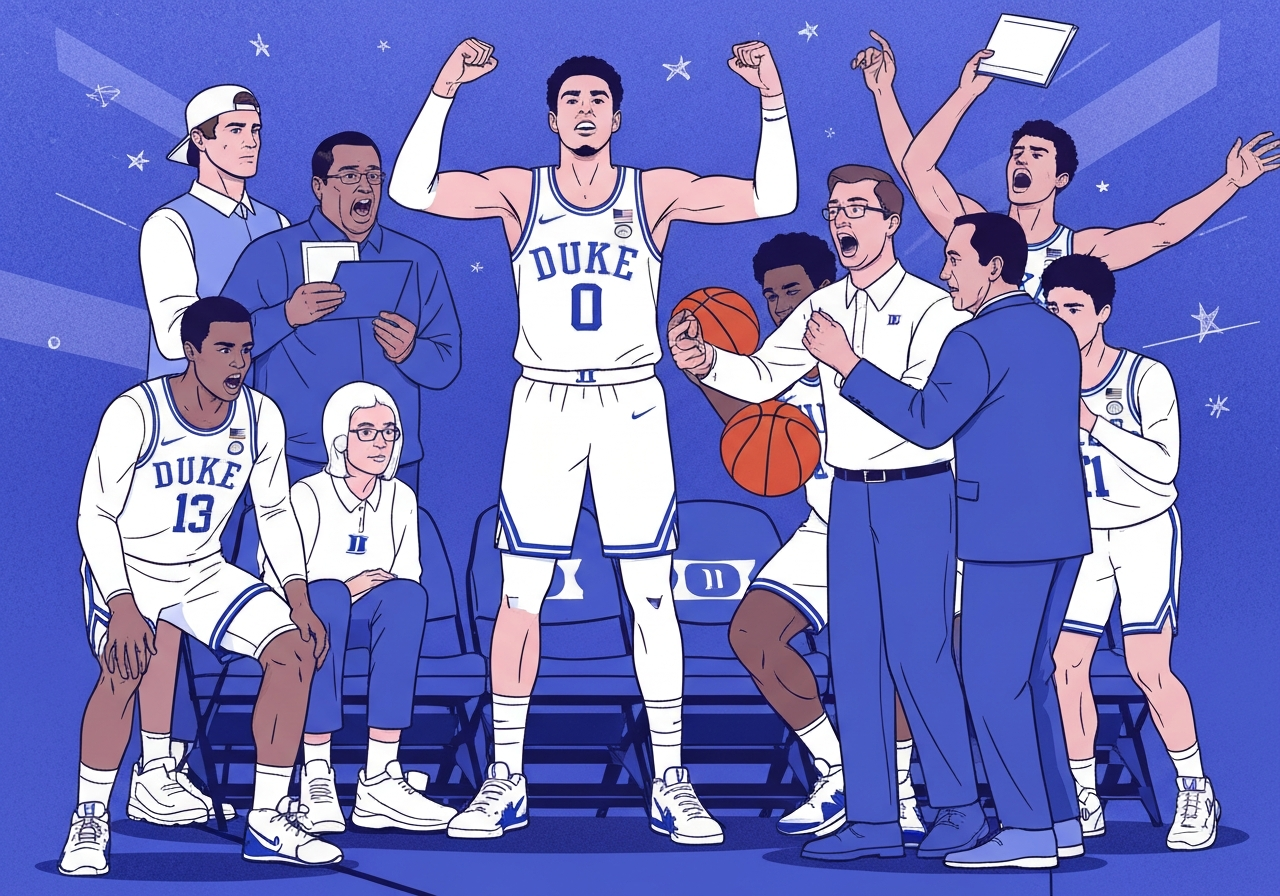
Selection Sunday set the stage for March Madness: Duke (32-2) earned the men’s No. 1 overall seed after a 74-70 victory over Virginia in the ACC Tournament final on Saturday. The UConn Huskies (34-0) were given the women’s No. 1 overall seed as they enter the NCAA tournament undefeated. The men’s tournament opens with the “First Four” on Tuesday and Wednesday, followed by the Round of 64 on Thursday; the women’s First Four begins Wednesday, with its Round of 64 starting Friday. Several storyline teams, bubble surprises and high‑profile freshmen prospects now shift from conference play to the national bracket.
Key Takeaways
- Duke finished 32-2 and clinched the ACC title with a 74-70 win over Virginia, earning the men’s top overall seed.
- UConn enters the women’s bracket 34-0, the program’s 11th undefeated regular season and the women’s top overall seed.
- Other men’s No. 1 seeds are Arizona (32-2), Michigan (31-3) and defending champion Florida.
- Miami (OH) finished 31-1 but was seeded No. 11 and placed in a First Four matchup versus SMU, after committee evaluation of schedule strength and metrics.
- High-profile freshmen expected in the NBA draft conversation include AJ Dybantsa (BYU), Cameron Boozer (Duke) and Darryn Peterson (Kansas).
- Queens University of Charlotte (No. 15) and California Baptist (No. 13) will make their first NCAA tournament appearances after recent conference titles.
- Women’s top seeds include UConn, UCLA (31-1), South Carolina and Texas; UCLA’s season featured a 51-point win over Iowa in the Big Ten final.
Background
Selection Sunday concludes weeks of conference tournaments and months of regular-season scheduling, with the NCAA selection committee balancing win-loss records, strength of schedule, quadrant wins and analytic metrics. This season’s committee faced unusual puzzles: one-loss mid-majors, historically strong freshman classes and the carryover of COVID-era scheduling disparities that still affect nonconference slates. The men’s landscape was shaped both by power-conference winners and by teams that compiled impressive records against softer schedules, forcing debate over comparative quality.
On the women’s side, UConn’s return to the top followed last season’s national title; the program rebuilt after several years outside the summit and now fields one of the country’s most complete rosters. UCLA, South Carolina and Texas remained consensus contenders after strong conference showings, while other programs leveraged veteran leadership or breakout sophomores to secure high seeds. The First Four format continues to place bubble teams in high-pressure play-in games that can determine regional matchups and bracket paths.
Main Event
Duke’s ACC championship came with tangible obstacles: injuries to guard Caleb Foster and center Patrick Ngongba limited depth, yet the Blue Devils closed the season 32-2 and took the committee’s top overall seed. Arizona matched Duke’s 32-2 mark and also entered the tournament as a No. 1 seed after winning its conference title; Michigan rounded out the top men’s quartet at 31-3, and Florida entered as the defending national champion.
Miami (OH) presented a rare selection dilemma. Despite a 31-1 record, the RedHawks’ nonconference slate lacked games against ranked or major-conference opponents; analytic rankings such as Ken Pomeroy placed them well outside typical at-large territory. The committee placed Miami (OH) at No. 11 in a First Four pairing with SMU, meaning the RedHawks must win that game to reach the Round of 64.
On the women’s side, UConn’s 34-0 season was powered by forward Sarah Strong and guard Azzi Fudd, and the Huskies drew the top overall seed. UCLA (31-1) received the other No. 1 nod and enters with a veteran core led by Lauren Betts, Kiki Rice and Gabriela Jaquez. Matchups to watch include potential UConn vs. Iowa State in Round 2 and a possible Elite Eight clash with No. 2 seed Vanderbilt should both advance.
Analysis & Implications
The committee’s placement of Duke as the top overall seed underscores both the Blue Devils’ résumé and the perceived gap between power-conference scheduling and mid-major resumes. A top overall seed gives Duke bracket control—regional placement and theoretically more favorable early matchups—but tournament single-elimination means seeding is an advantage, not a guarantee. The absence of Foster and Ngongba from full-time rotation injects roster uncertainty that could matter in late-game situations.
Miami (OH)’s situation highlights the continued weight of strength of schedule and predictive metrics in at-large decisions. A 31-1 record is rare for an at-large team, but the committee prioritized quality of wins and comparative metrics over raw record; the RedHawks’ First Four placement shows the committee will penalize light nonconference slates even for near‑perfect records. That precedent may influence future scheduling decisions by mid-major programs aiming for at-large consideration.
For the women’s tournament, UConn’s undefeated run restores the program to favorite status and reshapes other teams’ paths; opponents must weigh tactical plans to limit UConn’s interior play and perimeter creators. The women’s field has historically shown fewer deep-seed upsets than the men’s bracket, making top seeds more likely to survive to the second weekend—but the presence of high-level players across the bracket, and teams like Iowa State and Vanderbilt, leaves room for surprise outcomes.
Comparison & Data
| Bracket | Top Seeds (examples) | Record | Notable Notes |
|---|---|---|---|
| Men | Duke, Arizona, Michigan, Florida | 32-2, 32-2, 31-3, (Florida defending champ) | Duke ACC champion; Miami (OH) 31-1 placed No. 11 in First Four |
| Women | UConn, UCLA, South Carolina, Texas | 34-0, 31-1, (top seeds) | UConn undefeated; UCLA dominant margin wins during season |
The table summarizes top seeds and context for both brackets. While seeding reflects season records, committee decisions also weigh conference championships, head-to-head results, NET and other advanced metrics. First Four placements for bubble teams—like Miami (OH)—effectively add an extra game to reach the Round of 64 and can alter regional balance depending on winners.
Reactions & Quotes
“They came in before N.C. State, Texas and SMU,”
Keith Gill, selection committee chair (via CBS reporting)
“Relative to the predicted metrics and the difference in the quality of the wins,”
Keith Gill, selection committee chair (via CBS reporting)
The selection committee chair’s comments, as reported by news coverage, explained why Miami (OH) — despite a 31-1 record — was placed lower than some single-loss teams with stronger schedules. Coaches and analysts have reacted to the bracket by noting that top seeds gain bracket-control advantages but still face matchup-specific threats, particularly from veteran mid-major teams and lottery-caliber freshmen on high-major rosters.
Unconfirmed
- The full availability and conditioning of Duke players Caleb Foster and Patrick Ngongba for the opening rounds remains subject to team medical updates and was not finalized at selection time.
- Projections for AJ Dybantsa, Cameron Boozer and Darryn Peterson as the top three NBA draft picks are analyst forecasts and not definitive; draft order can change with season-ending performance and workouts.
Bottom Line
Selection Sunday produced a bracket that rewards sustained regular-season performance and conference championship results: Duke and UConn head their respective fields, but seeding does not remove the unpredictability inherent in single-elimination play. Bubble and First Four placements—most notably Miami (OH)’s — underscore the committee’s emphasis on schedule strength and analytic measures beyond raw records.
As the First Four and Round of 64 approach, attention will shift from seeding debates to matchups, health reports and how high-profile freshmen perform under tournament pressure. For fans and bracket managers, the next two weekends will test whether seeding predictions hold or whether Cinderella runs and upset shocks reshape the narrative of March Madness.