
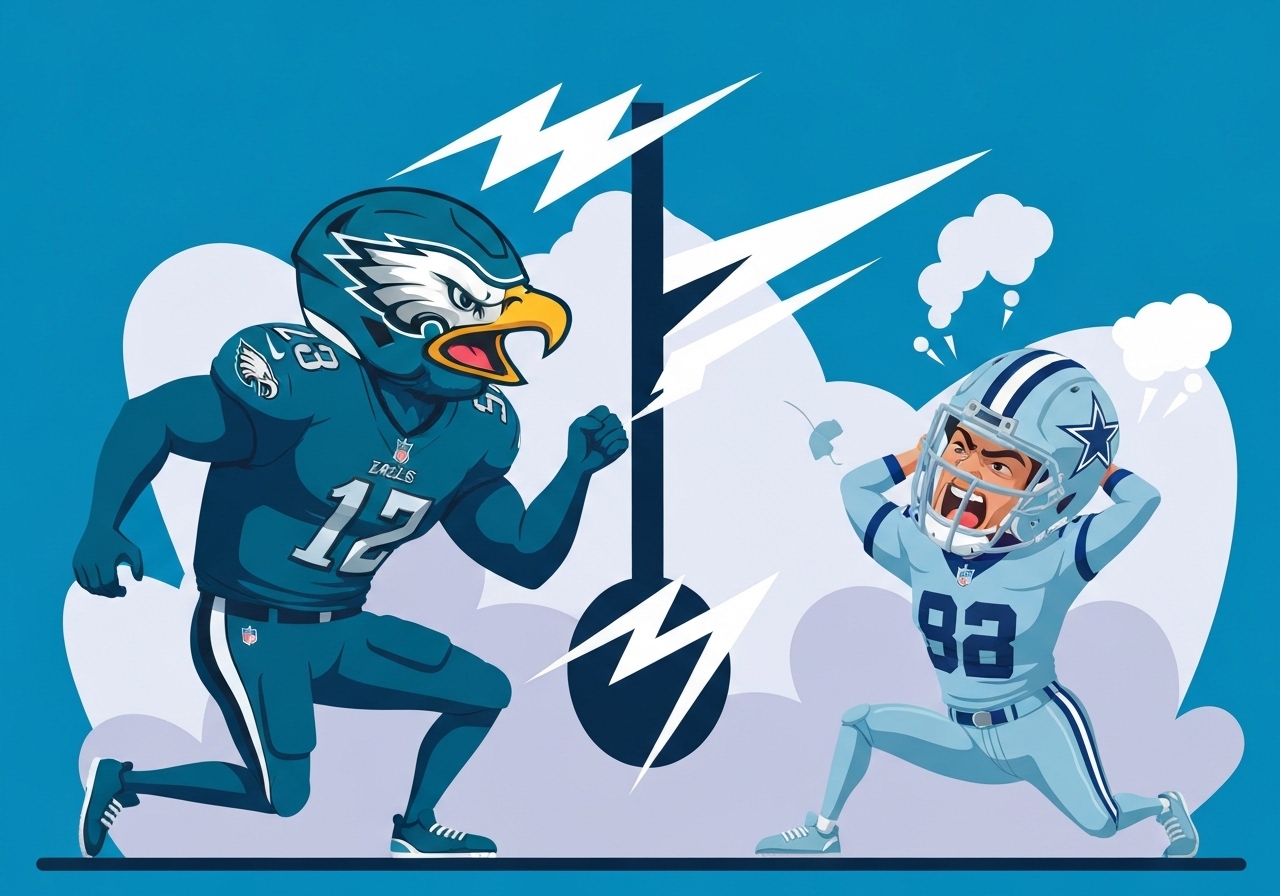
Lead: The NFL trade deadline passed with a flurry of moves that reshaped several playoff hopefuls and some rebuilding franchises. On deadline day teams like the Philadelphia Eagles piled up veteran talent while high-profile decisions from the Dallas Cowboys and New York Jets provoked immediate debate. The deadline ranked among the busiest in the modern era and left a clearer short-term picture for some clubs and deeper long-term questions for others.
Key Takeaways
- The Eagles reinforced for the stretch run, adding veteran pieces including Jaire Alexander, Jaelen Phillips and Michael Carter II while keeping a sizable 2025 draft inventory: 10 picks total with four inside the top 100.
- The Jets dealt cornerstone defenders during the deadline cycle, surrendering Sauce Gardner and Quinnen Williams in moves that netted multiple future first-round selections and altered the franchise’s rebuild trajectory.
- The Cowboys traded for Quinnen Williams (and added other front-line talent), a splash move that consumed premium draft capital and prompted scrutiny over timing and long-term fit.
- The Ravens added depth pieces such as Alohi Gilman and Dre’Mont Jones to shore up pass-rush and coverage versatility, coinciding with a recent defensive uptick (seventh in defensive EPA over the last three weeks).
- The Dolphins largely stood pat, keeping stars like Bradley Chubb and Jaylen Waddle and leaving roster turnover decisions to a potential new front office this winter.
- League-wide, this deadline increased the emphasis on 2026 and 2027 draft capital; several teams shifted toward stockpiling picks rather than immediate rebuilds.
Background
The 2025 trade deadline was the second-most active of the modern era, producing a mix of conventional deadline buys and franchise-altering exchanges. Teams balanced two competing logics: push-now moves to secure playoff positioning and longer-term retooling through draft accumulation. For some clubs—most notably Philadelphia—the calculus favored adding experienced, situational talent to address coordinator-driven needs ahead of the postseason.
Other organizations, especially those in large markets, used the deadline to accelerate multi-year plans. The Jets’ front office, in particular, pivoted aggressively toward draft capital, echoing past franchise strategies where trading established veterans yielded haulable assets for rebuilding. That approach places outsized emphasis on scouting and the next two drafts as the central vehicles for future competitiveness.
Main Event
Philadelphia’s deadline activity was among the most consequential: a series of veteran additions designed to satisfy both offensive and defensive coordinators. Management acquired Jaire Alexander and Jaelen Phillips to tighten the secondary and pass rush, respectively, while Michael Carter II added safety depth in the backend. Those moves come alongside a deep 2025 draft inventory—10 picks, four within the top 100—giving the Eagles both present and future flexibility.
The Jets’ transactions dominated conversation given the quality of players moved. Sauce Gardner and Quinnen Williams, two established defensive pillars, were traded in deals that brought back high-value draft capital. That push toward accumulating picks immediately reorients New York’s roster-building timeline and puts pressure on coaching staff and scouts to convert those selections into frontline contributors.
The Cowboys’ Quinnen Williams acquisition was among the most debated trades of the day. Dallas surrendered premium draft capital to land Williams and paired him with existing pieces, aiming to accelerate their return to contention. The move also reopened questions about the franchise’s prior asset allocations—most notably the earlier Micah Parsons trade—and whether trading prime picks now improves the Cowboys’ odds over the medium term.
Other notable deadline activity included Baltimore’s additions of Dre’Mont Jones and Alohi Gilman—players intended to increase pressure-generating options and coverage flexibility. The Colts’ defensive profile was also reshaped by a big-ticket addition intended to match top receivers more effectively in upcoming matchups. Meanwhile, Miami’s front office opted not to clear veterans, preserving choice for a potentially new executive regime this winter.
Analysis & Implications
The Eagles’ dual approach—buying proven midseason upgrades while holding significant draft capital—reflects a winning model in the short and medium term. By meeting coordinator needs now, Philadelphia improves playoff odds without exhausting future resources. The club’s ability to add high-end veterans while maintaining draft flexibility elevates their status among deadline winners.
The Jets’ sell-off accelerates a hard reset and places enormous importance on the 2026–2027 drafts. Acquiring multiple first-round selections creates optionality but also amplifies execution risk: converting picks into long-term cornerstones is far from guaranteed. For head coach and staff, the practical result may be at least one season of on-field growing pains while the roster remakes itself.
Dallas’ strategy under the team’s owner produced a headline-grabbing trade that helps immediately but costs future draft capital. Adding Quinnen Williams strengthens interior pass rush and run defense now, but Williams will be approaching the end of his prime across the next several seasons. The trade’s success will hinge on Dallas converting current talent into postseason wins before the window narrows.
Across the league, teams that preserved assets—like Miami—kept options open for an incoming decision-maker, while clubs that traded away veterans signaled a willingness to delay contention. The deadline also emphasized the increasing value teams place on draft flexibility: stockpiled picks are being treated as currency that can either be spent on premium prospects or packaged in future trades.
| Team | Notable Moves | Draft Positioning (noted) |
|---|---|---|
| Eagles | Added veteran DBs/Rushers (Alexander, Phillips, Carter II) | 10 picks in 2025; 4 inside top 100 |
| Jets | Traded Sauce Gardner, Quinnen Williams | Multiple 1st-round picks (five 1sts across two years referenced) |
| Cowboys | Acquired Quinnen Williams | Spent high 2026/2027 capital |
| Ravens | Added Dre’Mont Jones, Alohi Gilman | Short-term defensive upgrades |
This table summarizes the primary deadline moves and the immediate draft-related outcomes highlighted during the deadline window. The numbers above reflect the reporting and context delivered during and after the deadline.
Reactions & Quotes
Team officials and league observers reacted quickly. Front-office statements emphasized roster improvement and long-term vision, while analysts focused on the strategic tradeoffs between present help and future capital.
“We believe these additions give us the best chance to win now and keep our long-term options open.”
Team official (post-deadline statement)
Independent analysts framed the Jets’ activity as a high-variance bet that places a premium on scouting and draft execution.
“Stockpiling picks is only as valuable as your ability to turn them into starters—there’s real execution risk here.”
NFL analyst
Fans and local media reacted with a mixture of optimism and skepticism depending on market and roster context.
“Deadline day felt like a reveal: some teams doubled down, others cleared house—expect strong takes and louder fan reactions in the days ahead.”
Local sports commentator
Unconfirmed
- Reports that Miami is a likely quick turnaround candidate depending solely on winter executive hires remain speculative and unconfirmed by an incoming general manager.
- Assertions that the Commanders will be without a franchise quarterback for the remainder of the season are plausible but not officially settled; the timeline for any return is uncertain.
- Some league chatter about teams privately valuing 2027 picks significantly above 2026 picks circulated, but those internal valuations have not been confirmed publicly.
Bottom Line
The 2025 trade deadline delivered a clear split: some clubs spent to improve for 2025, while others doubled down on future picks and a multi-year rebuild. Philadelphia emerges as a deadline winner for addressing coordinator needs without surrendering future flexibility; the Jets and Cowboys both made high-leverage decisions that will be judged over a multi-season horizon.
Ultimately, the deadline reset several storylines heading into the final weeks: who will convert veteran additions into playoff success, and which franchises can convert draft stockpiles into sustained contention. The next two drafts and offseason staff decisions will determine whether deadline-day moves are remembered as masterstrokes or costly gambles.
Sources
- Sports Illustrated — Deadline recap and analysis (media)
- NFL — Official transaction log (official league transactions)
- Philadelphia Eagles — Team announcements (official team site)
- Dallas Cowboys — Team announcements (official team site)
- New York Jets — Team announcements (official team site)