
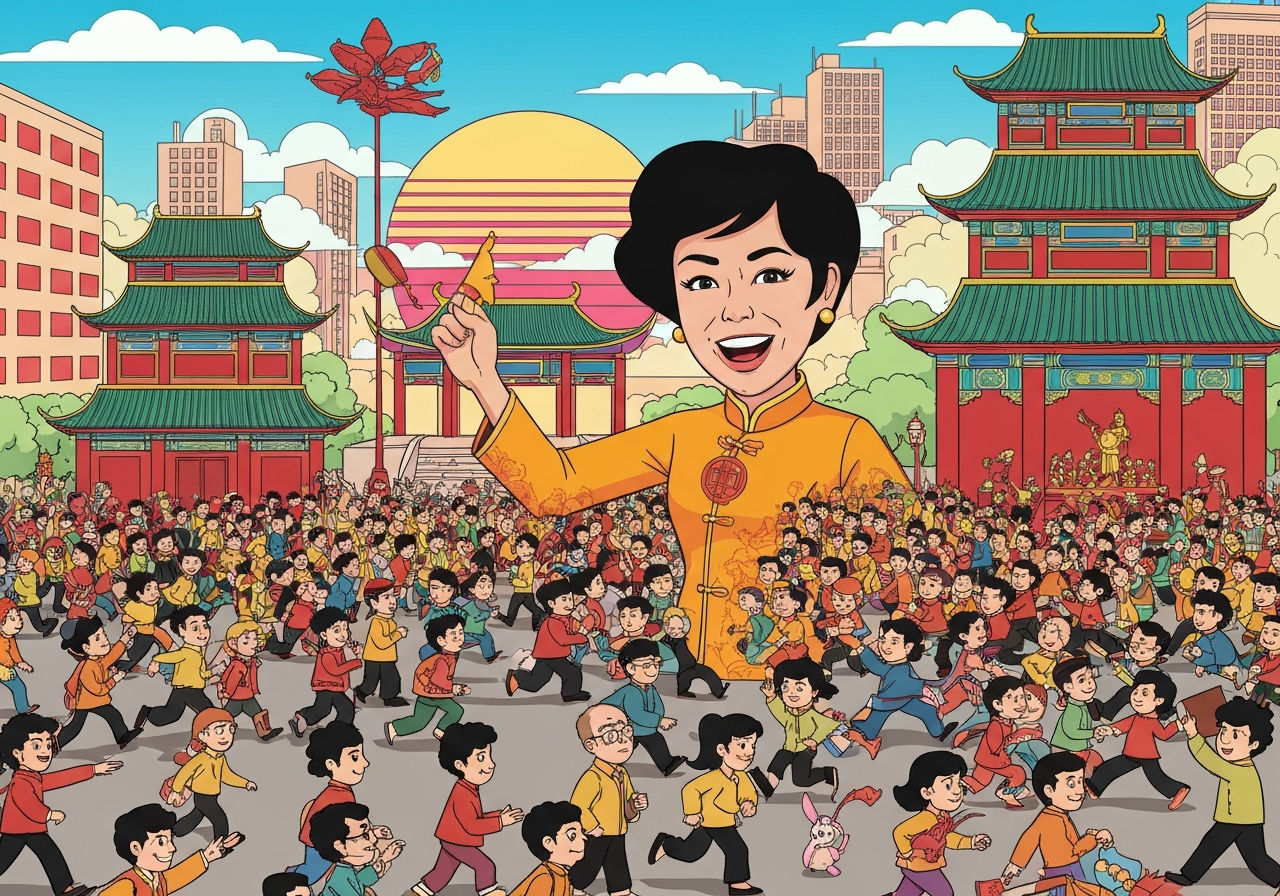
On March 7, 2026, San Francisco’s Chinese New Year Parade welcomed hometown skier Eileen Gu as grand marshal, and the reception was overwhelmingly positive. The 22-year-old Stanford student and one of the sport’s most decorated athletes rode in a red Mustang through crowds that cheered at each turn. Her public appearance came amid lingering controversy over her decision to compete for China, but on the parade route critics were not visible. The event drew large, enthusiastic crowds across Chinatown and Union Square, turning the spotlight back to celebration rather than debate.
Key Takeaways
- Eileen Gu served as grand marshal on March 7, 2026, for San Francisco’s Chinese New Year Parade, which draws hundreds of thousands of spectators to Chinatown.
- Gu is 22 years old, a Stanford student studying international relations, and is described in coverage as a three-time Olympic gold medalist and a six-time Olympic medalist overall.
- At the 2026 Winter Olympics in Milan she won one gold and two silver medals, and Forbes reported she earned $23 million in the previous year.
- Crowds along Kearny Street and at Union Square greeted Gu with sustained cheers; she waved, smiled and offered brief remarks to spectators.
- Gu has been the target of political criticism in the U.S. over her choice to compete for China; several conservative commentators and politicians publicly questioned that decision.
- The Wall Street Journal reported that the Chinese government paid Gu millions to compete, a claim that has attracted attention and scrutiny in reporting.
- During the parade Gu emphasized goodwill and community, urging people to pursue their passions and bring success back to San Francisco.
Background
Eileen Gu was born in San Francisco and raised in the Seacliff neighborhood before emerging as an international freestyle skiing star. As she rose through junior ranks, she opted in 2019 to compete for China, the country of her mother’s upbringing, a choice that widened her global commercial opportunities and complicated perceptions in the United States. The decision occurred against a backdrop of heightened U.S.-China tensions and intensified domestic debates over national allegiance, athlete representation, and geopolitics in sport. In China she has become a major celebrity with lucrative endorsements; in the U.S. her profile has prompted criticism from some commentators and politicians who view her choice through a political lens.
Gu’s athletic résumé is central to the story: at the 2026 Milan Winter Olympics she added two silver medals and a gold to a career total described in reporting as three Olympic golds and six medals overall. Off the slopes she studies international relations at Stanford and maintains a high-profile modeling and endorsement portfolio; Forbes estimated her 2025 earnings at $23 million. Media scrutiny intensified after reporting about payments and endorsements tied to Chinese entities, and she has faced pointed questions about human-rights issues and whether public figures should comment on them. Gu has generally declined to take detailed public positions on geopolitical or human-rights matters, describing herself as neither an expert nor the right forum for such debates.
Main Event
The parade route through Chinatown and past Union Square on the evening of March 7 unfolded largely as a celebratory procession. Spectators filled bleachers and lined sidewalks; parents lifted children to see over the crowd and many held phones aloft to capture the moment. Gu rode in the back of a red Mustang convertible with two police officers walking ahead; each time the car turned a corner, cheers rose and people called her name. At several stops she waved, formed hearts with her hands, and paused to address the crowd with short well-wishes for the new year.
At a brief stop on Kearny Street near Portsmouth Square, Gu addressed the assembled spectators, offering a message of prosperity and family time and urging people to pursue their passions. Her remarks were concise and framed in terms of community and optimism rather than politics. The mood along the route was largely festive; organizers and local officials reported no major incidents and parade marshals said the focus remained on cultural celebration. Observers noted that, while prior controversies had generated national attention, that sentiment did not visibly surface on the parade line.
Local landmarks punctuated the route: crowds paused outside the Nintendo Store at Union Square, teenagers raced to secure vantage points near Portsmouth Square, and long-standing community groups marched with traditional lion dances and floats. The parade’s scale — historically drawing hundreds of thousands — meant that Gu’s appearance drew continued attention but did not overshadow other performances and community participants. Organizers had announced Gu as grand marshal prior to the Milan Olympics, and this year’s selection followed previous celebrity grand marshals such as Awkwafina in 2024 and Joan Chen in 2025.
Analysis & Implications
Gu’s warm reception in San Francisco highlights a local-versus-national split in perceptions of high-profile athletes with transnational ties. Locally, she is a native daughter whose successes and charitable appearances resonate with community members who prioritized celebration; nationally, political commentators have turned her biography and choices into a focal point for broader debates. That divergence underscores how hometown events can reframe public figures away from political narratives and back toward personal and cultural identity.
The commercial and diplomatic dimensions of Gu’s career complicate how public officials and media treat elite athletes in the 2020s. Her earnings and endorsements, combined with reported payments tied to Chinese entities, raise questions about influence, soft power and how commercial arrangements intersect with national symbolism. For policymakers and sports federations, the case illustrates the limits of moralizing over athlete nationality when globalized markets and mixed-family backgrounds are common among elite competitors.
For youth athletes and universities, Gu’s trajectory — balancing sport, study and a global brand — will likely be a template for future talent navigating sponsorships and international representation. Stanford and other institutions that host elite athletes must weigh reputational and ethical questions as students build commercial profiles. Media coverage will continue to test the line between legitimate public-interest scrutiny and politicized commentary that risks simplifying individual choices into ideological markers.
Comparison & Data
| Category | 2026 Milan | Career Total (reported) |
|---|---|---|
| Gold medals | 1 | 3 |
| Silver medals | 2 | — |
| Total Olympic medals | 3 | 6 |
The table summarizes reporting that Gu won one gold and two silver medals at the 2026 Milan Olympics and is credited in coverage with three career golds and six medals overall. These figures show how Milan contributed substantially to her career tally and public profile. Comparing seasonal and career earnings also highlights her commercial value: Forbes’ estimate of $23 million in 2025 places her among the highest-paid female athletes globally, and that income stream has amplified both adoration and scrutiny.
Reactions & Quotes
Organizers, local spectators and many community leaders framed Gu’s appearance as a unifying, celebratory moment for San Francisco. Community attendees emphasized pride in a hometown athlete returning to share a cultural event, and many described the evening as one centered on family and tradition rather than politics.
“I certainly think that somebody who grew up in the United States… I would hope that they want to compete with the United States of America.”
Senator J.D. Vance (television interview)
This remark from Senator J.D. Vance was cited in national coverage as an example of political voices urging athletes to represent the U.S.; his comment was quoted during broader interviews about allegiance and national benefit. Vance framed the debate in terms of civic reciprocity and perceived obligations tied to education and opportunity received in the United States.
“She’s a true villain.”
Tucker Carlson (commentator)
That blunt characterization from a conservative commentator has circulated as a concise example of sharply negative framing in some U.S. media. Such rhetoric has amplified polarized views, even as city residents on the parade route focused on celebration. The contrast between televised commentary and local reception illustrates media fragmentation in public perception of global athletes.
“I’m not an expert on this. I haven’t done the research. I don’t think it’s my business.”
Eileen Gu (Time interview)
Gu’s own comment to Time — a partial refusal to engage on human-rights questions — has been central to discussions about the responsibilities of public figures when asked about geopolitically sensitive issues. Her stance of declining substantive commentary has partly shaped how different audiences interpret her role.
Unconfirmed
- The Wall Street Journal’s reporting that the Chinese government paid Gu “millions” has been widely cited in coverage but the exact amounts and contractual details have not been independently verified in public records.
- Reports of organized opposition or anti-Gu protest activity planned for the parade route were not substantiated by on-the-ground reporting; no major demonstrations were observed during the event.
Bottom Line
Eileen Gu’s appearance as grand marshal at San Francisco’s Chinese New Year Parade on March 7, 2026, shifted attention from contentious national debate back to a hometown celebration. Locals greeted her with sustained cheers, underscoring how community context can recenter a public figure’s reception. Her dual roles as athlete and global brand mean that national politics will continue to follow her career, even as local events produce different responses.
Looking ahead, scrutiny of commercial ties and the political implications of athlete nationality is likely to persist in national discourse. For San Francisco’s community and for athletes navigating transnational identities, the parade illustrated that public sentiment can diverge sharply from media-driven controversies; policymakers, journalists and sports organizations will keep watching how those tensions evolve.
Sources
- SFGATE (local news: event coverage)
- Associated Press (news agency: photo coverage)
- The Wall Street Journal (national news: reporting on payments/endorsements)
- Time (news magazine: interview quotes)
- Forbes (business media: earnings estimate)
- USA Today (news: athlete response)
- Fox News (news: commentary and interviews)