
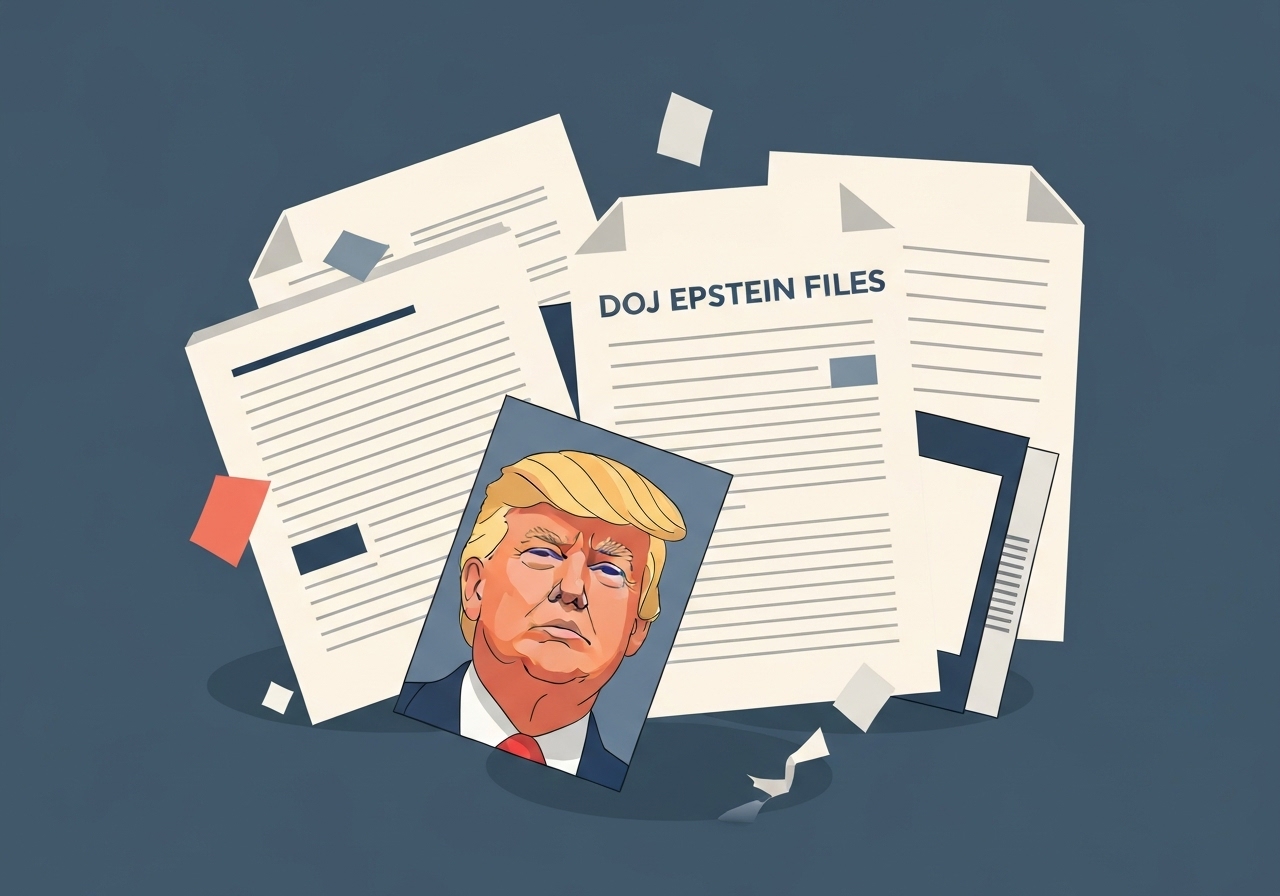
Federal records tied to convicted sex offender Jeffrey Epstein were posted by the Justice Department beginning Friday and continued to appear on the agency’s public “Epstein Library” site into Saturday. By Saturday afternoon, NPR identified more than a dozen items that were available on Friday but could no longer be downloaded, including a file that displayed a photograph of President Trump on a desk. The removed items also included images of artworks, some with nudity. The DOJ told users to report material that should not have been published and acknowledged that, despite review efforts tied to a congressional deadline, the archive could contain inadvertently exposed sensitive content.
Key Takeaways
- DOJ began releasing Epstein-related records on Friday and updates continued on Saturday, following a congressional deadline tied to public disclosure.
- NPR found over a dozen files posted Friday that were not available by Saturday afternoon, including a photograph showing President Trump’s image among other desk photos.
- Some of the pulled files included artworks and images containing nudity, prompting the DOJ to provide a dedicated reporting email for problematic items.
- The department warned the volume of material means some non-public personally identifiable information or other sensitive sexual-content matter may still appear.
- Members of both parties in Congress raised concerns; Representative Ro Khanna pressed for public accountability, while Representative Thomas Massie criticized the scope of redactions.
- A separate tranche released earlier by the House Democratic Oversight Committee referenced Trump more than 1,000 times, largely in Epstein’s communications about politics and influence.
- DOJ had not publicly explained by Saturday why the specific files NPR flagged were removed from the public archive.
Background
The Justice Department compiled an online collection of documents and images related to Epstein’s life, death and criminal investigations to comply with legislative requirements for public release. Officials said the effort was conducted under time pressure tied to a congressional deadline, and that teams made “reasonable efforts” to redact personal data and sensitive information before posting. The archive represents a large trove of materials assembled from investigations that spanned years and multiple jurisdictions, and the department has warned about the practical limits of review given sheer volume.
Epstein’s case has long drawn intense public and political scrutiny because of the high-profile nature of his acquaintances, the gravity of the crimes for which he was convicted, and unanswered questions about earlier investigations. Previous releases of related materials, such as those shared by congressional committees, have shown frequent references to powerful figures and prompted ongoing demands for transparency from survivors, advocates and some members of Congress. That context framed close attention to the DOJ’s public posting this week.
Main Event
On Friday the department began placing files online; in the following hours and into Saturday more documents and images were added to the site. NPR reporters reviewed the newly posted items and identified more than a dozen specific files that could be downloaded Friday but were no longer accessible by Saturday afternoon. One of those files included an image showing a desk with multiple framed photographs, among them a picture of President Trump.
The DOJ’s online notice invited the public to alert the agency if material had been published in error, and it reiterated that reviewers worked to remove or redact private information. The department also issued a broader caveat that because of the volume of records, some non-public personally identifiable information or sexually explicit content could nonetheless appear. As of Saturday afternoon the department had not provided a public explanation for why the specific files NPR flagged were taken down.
Responses from elected officials were swift. Representative Ro Khanna (D-Calif.) said survivors and others have identified powerful attendees at Epstein gatherings and urged public accountability. Representative Thomas Massie (R-Ky.), a co-sponsor of the House-level Epstein Transparency Act, criticized the redaction choices and warned that the release failed to fully satisfy the law’s intent, posting his remarks on social media.
Analysis & Implications
The removal of files within hours of posting illustrates the trade-offs agencies face when complying with statutory disclosure deadlines: speed increases the risk that sensitive material will be posted, while slower, more exhaustive review risks missing legal timelines designed to maximize transparency. That tension has legal and political consequences, because incomplete or inconsistent releases can fuel accusations of concealment or favoritism.
Practically, the episode may prompt calls for clearer procedures and more resources for large-scale document reviews, including third-party or independent oversight for redaction decisions. Lawmakers on both sides of the aisle expressed dissatisfaction—some wanting fuller public release, others worried about privacy or prosecutorial fairness—so congressional hearings or follow-up legislation to tighten standards are possible.
For survivors and advocacy groups, the discovery and subsequent removal of graphic or identifying material raises renewed concerns about retraumatization and the adequacy of safeguards. The DOJ’s acknowledgment that some sensitive content may have been posted underscores how difficult it is to fully sanitize a large archival dump without targeted review guided by subject-matter expertise.
Comparison & Data
| Item | Known figure |
|---|---|
| Files NPR found removed after Friday | More than 12 files |
| Mentions of Trump in earlier House Oversight tranche | Well over 1,000 mentions |
The table summarizes verifiable counts reported by news outlets and congressional releases: NPR documented the removal of more than a dozen files between Friday and Saturday, while a prior tranche made public by House Democrats featured in excess of a thousand references to Donald Trump, mostly in Epstein’s communications.
Reactions & Quotes
“They need to be at least publicly held accountable,” Representative Ro Khanna said, urging clearer public accountability for powerful individuals connected to Epstein’s social circles.
Rep. Ro Khanna (D-Calif.)
Representative Thomas Massie criticized the release on social media, saying the Department’s posting “grossly fails to comply” with the law’s intent and transparency requirements.
Rep. Thomas Massie (R-Ky.)
Department officials told users to report mistakenly published material and acknowledged the challenge of fully reviewing a massive set of records before the statutory deadline.
U.S. Department of Justice (official notice)
Unconfirmed
- Whether the specific files NPR flagged were removed for privacy, technical reasons, or political sensitivity has not been publicly confirmed by the DOJ.
- It is unconfirmed whether additional files still contain unredacted personally identifiable information beyond the items already identified and removed.
Bottom Line
The Justice Department’s expedited posting of Epstein-related material met a congressional disclosure requirement but produced an imperfect public archive: more than a dozen files identified Friday were gone by Saturday afternoon, drawing scrutiny from lawmakers who said the release either failed to protect privacy or failed to be fully transparent. The episode highlights structural challenges agencies face when large document sets must be released under tight timelines.
Expect continued pressure from congressional offices, survivor advocates and the public for a fuller accounting of what was released and why certain files were removed. Lawmakers may seek hearings or tighter statutory rules to govern future disclosures, and independent reviews of the department’s redaction process are likely to be proposed.