
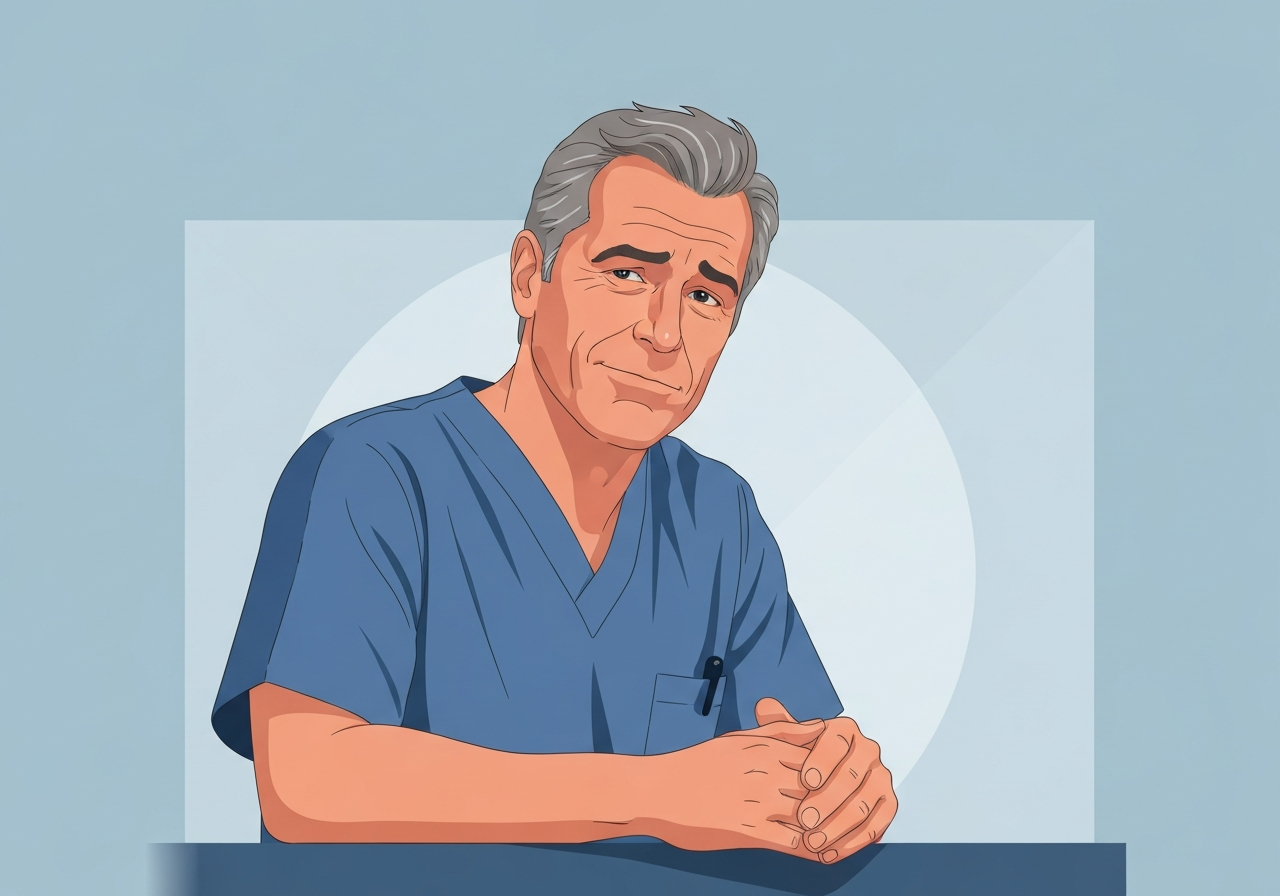
Lead: Eric Dane, the actor who rose to fame as Dr. Mark “McSteamy” Sloan on ABC’s Grey’s Anatomy, died on Feb. 19, 2026, at age 53 after a months‑long struggle with amyotrophic lateral sclerosis (A.L.S.). His publicist, Melissa Bank, confirmed he was surrounded by close friends, his wife and their two daughters. Dane first disclosed his A.L.S. diagnosis in April 2025 and became a visible advocate for research and patient fundraising in the months that followed. His passing was announced publicly by his representative and widely reported across major outlets.
Key Takeaways
- Eric Dane, 53, died on Feb. 19, 2026, after a battle with amyotrophic lateral sclerosis (A.L.S.), confirmed by his publicist Melissa Bank.
- Dane announced his diagnosis in April 2025 and publicly discussed symptom progression, including loss of function in his right arm.
- He participated in an advocacy campaign in Sept. 2025 to raise funds and awareness for A.L.S. research.
- Dane’s breakout role came in 2006 as Dr. Mark Sloan (“McSteamy”) on Grey’s Anatomy, a role that brought international recognition.
- Typical A.L.S. survival ranges from two to five years after diagnosis, though clinical trials have shown potential to extend survival in some cases.
- Family: he is survived by his wife and two daughters, Billie and Georgia, who his publicist said were at his side.
- Coverage and public response have focused on both his career and his candidness about living with a progressive neurological disease.
Background
Eric Dane became a household name after joining Grey’s Anatomy in 2006 as Dr. Mark Sloan, a charismatic head of plastic surgery whose looks and storylines earned the nickname “McSteamy.” The series, created by Shonda Rhimes, helped define network‑era medical drama and made several cast members internationally recognizable. Dane’s role, though not the show’s lead, became one of its signature characters and sustained public interest in his career long after his initial run.
Amyotrophic lateral sclerosis, commonly known as A.L.S. or Lou Gehrig’s disease, is a progressive neurodegenerative disorder that impairs motor neurons controlling voluntary muscles. Patients typically face increasing weakness, speech and swallowing difficulties, and eventually respiratory failure; median survival is commonly quoted as two to five years after symptom onset, though individual courses vary. In recent years, high‑profile diagnoses have drawn attention to the disease, increasing donations for research and enrollment in clinical trials for experimental therapies. Stakeholders include patient advocacy groups, research consortia, pharmaceutical companies running trials, and clinicians specializing in neuromuscular medicine.
Main Event
On Feb. 19, 2026, Melissa Bank, Dane’s publicist, issued a statement confirming his death and noting he was surrounded by family and close friends. The announcement reiterated the timeline of his public disclosure: Dane revealed his A.L.S. diagnosis in April 2025 and had spoken candidly about the condition in interviews and social media posts since then. Media coverage since the announcement has emphasized both his career and his efforts to draw attention to research funding.
In interviews after his diagnosis, Dane described the daily realities of progressive muscle loss; he told Diane Sawyer in 2025, “I will never forget those three letters,” referring to A.L.S., and spoke about losing function in his right arm. In September 2025 he appeared in a patient advocacy piece, addressing viewers in visibly altered speech and asking for support for research and fundraising efforts. Those appearances were framed by outlets as a mix of personal testimony and public advocacy.
Industry colleagues and fans reacted swiftly, recalling key moments from Dane’s career as well as his recent openness about illness. Broadcasters and entertainment publications ran retrospectives of his film and television work while health outlets placed his case in the context of ongoing research into A.L.S. progression and treatment options. Medical experts cited by reporters emphasized that individual outcomes can vary and highlighted the role of clinical trials.
Analysis & Implications
Dane’s public profile and frank discussion of A.L.S. accelerated public awareness of the disease and its human costs. High‑profile patients often shift public discourse from abstract epidemiology to personal impact, which in turn can drive donations and political attention to research budgets. The spike in media coverage following his diagnosis and passing is likely to translate into short‑term increases in traffic and fundraising for A.L.S. charities, as seen after other celebrity disclosures.
Clinically, A.L.S. remains without a cure; existing treatments primarily aim to slow progression and manage symptoms. Recent clinical trials have offered incremental extensions of life expectancy in some cohorts, but large‑scale therapeutic breakthroughs remain limited. Dane’s emphasis on research and trials may help boost trial enrollment—critical for testing new agents—but sustained funding and scientific hurdles remain significant barriers.
For the entertainment industry, Dane’s death underscores how chronic illness affects labor, insurance, and caregiving needs for actors and their families. Productions, unions and health plans face questions about long‑term support systems for performers with degenerative diseases. Moreover, the public nature of Dane’s decline may influence how future diagnoses among public figures are discussed and how compassionate, accurate coverage is framed by the press.
Comparison & Data
| Year/Event | Key Point |
|---|---|
| 2006 | Dane’s breakout role as Dr. Mark Sloan on Grey’s Anatomy |
| April 2025 | Eric Dane publicly announced an A.L.S. diagnosis |
| Sept. 2025 | Advocacy appearance to raise funds and awareness |
| Feb. 19, 2026 | Dane’s death at age 53, confirmed by his publicist |
The timeline above compresses Dane’s public engagement with his illness into a ten‑month window from disclosure to death. That interval aligns with the faster end of reported progression timelines for some A.L.S. patients, though broad averages range higher. The table is intended to clarify public milestones; medical records and private clinical details were not released publicly.
Reactions & Quotes
Media outlets relayed the publicist’s announcement and excerpts of Dane’s own public remarks, while fans and colleagues posted condolences across social platforms. Coverage balanced recollections of his acting career with summaries of his advocacy work.
“He spent his final days surrounded by dear friends, his devoted wife, and his two beautiful daughters, Billie and Georgia, who were the center of his world.”
Melissa Bank, publicist (statement confirming death)
The publicist’s statement framed the death in family terms and reinforced Dane’s recent public campaign to raise funds for A.L.S. research. Outlets used that wording to anchor timeline reporting and to report on survivors and memorial arrangements.
“I will never forget those three letters.”
Eric Dane, interview with Diane Sawyer / Good Morning America (2025)
Dane’s remark about the emotional weight of an A.L.S. diagnosis was widely quoted after his announcement and later after his death, highlighting the personal toll of the disease. Reporters used the quote to illustrate the shift from private diagnosis to public advocacy.
Unconfirmed
- Specific medical details about Dane’s final hours and the immediate cause of death beyond A.L.S. progression have not been released publicly.
- Any particular experimental treatments or off‑label therapies Dane may have tried were not disclosed in public reports.
Bottom Line
Eric Dane’s death at 53 closes the public chapter of a well‑known career and a brief but highly visible advocacy effort on behalf of A.L.S. patients. His openness about symptom progression put a widely known face on a disease that many still misunderstand, and that visibility is likely to prompt renewed media attention and charitable giving in the near term.
Longer term, the impact will depend on whether increased awareness translates into sustained funding for clinical research and trial participation. For fans and the entertainment community, his passing is also a reminder of the human costs behind public personas and the gaps that remain in care for progressive neurological disease.
Sources
- The New York Times — news report confirming death and timeline (news)
- People — original public disclosure of diagnosis (entertainment press)
- Good Morning America / ABC News — interview with Diane Sawyer quoting Dane (broadcast news)
- Reuters — photo agency and international reporting (news agency)
- ALS Association — nonprofit information on disease progression and advocacy (nonprofit/medical resource)