
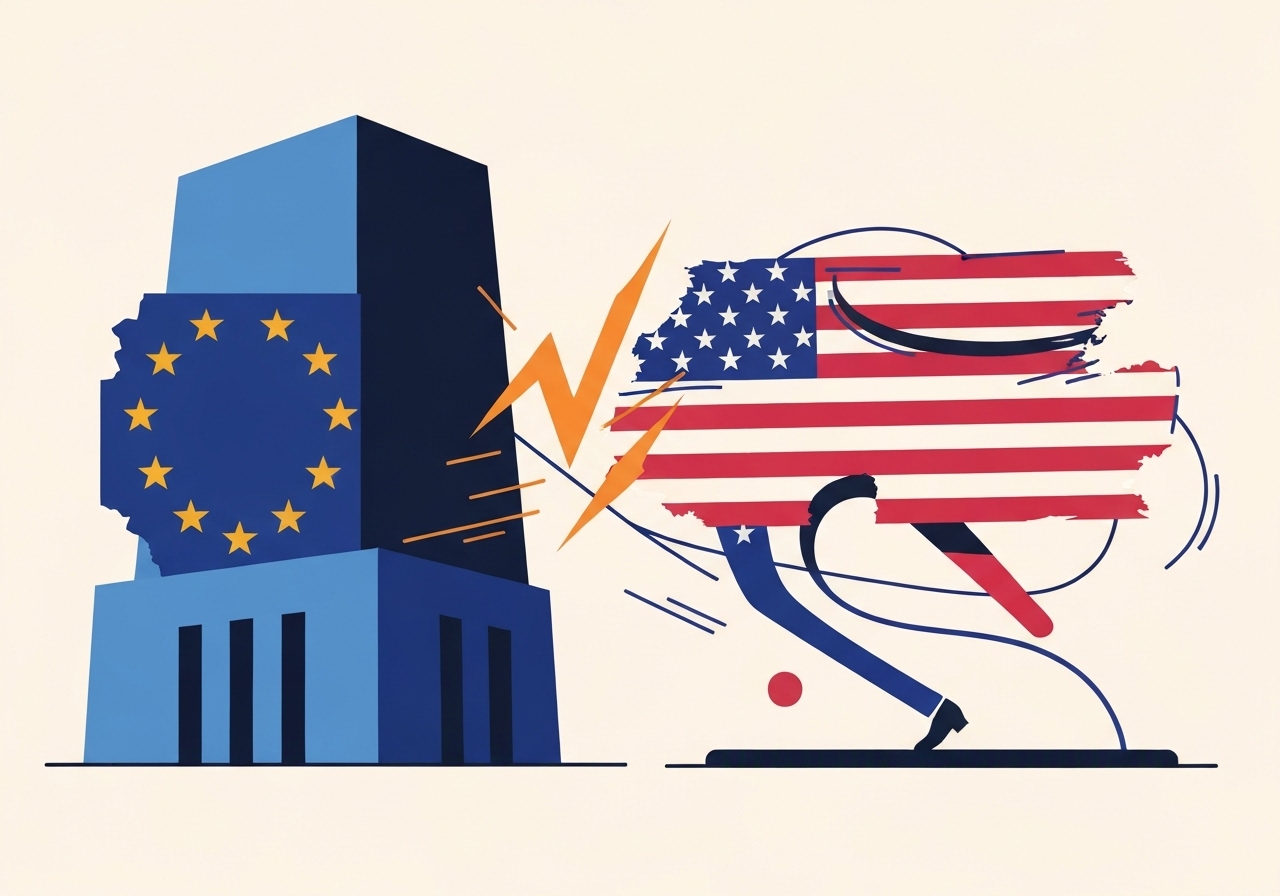
The European Union has imposed a €120 million fine on X, the social media platform owned by Elon Musk, in a move that has heightened tensions with the United States. The penalty stems from EU enforcement of bloc-wide digital rules and marks one of the more visible instances of post‑regulatory pressure on a major U.S. tech company operating in Europe. EU officials framed the action as the enforcement of common standards, while U.S. officials and some industry groups signalled concern about its diplomatic and commercial implications. The decision is likely to trigger legal challenges and intensify debate over cross‑border regulation of online platforms.
Key Takeaways
- Fine amount: The EU imposed a €120 million penalty on X, representing one of the larger monetary sanctions specifically tied to digital‑platform compliance in recent months.
- Regulatory basis: The sanction was issued under EU digital‑rule enforcement mechanisms targeting platform obligations across the bloc.
- Stakeholders: The decision involves EU regulators, X’s Dublin‑based European unit, and has prompted public reactions from U.S. policymakers and industry observers.
- Legal outlook: X is expected to consider legal remedies; appeals to EU courts are a common next step in such corporate disputes.
- Diplomatic impact: Officials in Washington described the ruling as a development with potential transatlantic repercussions for tech diplomacy and regulatory cooperation.
- Sector implications: The fine underscores rising enforcement risks for platforms classified as very large online services operating in the EU market.
Background
Over the past decade, the European Union has steadily expanded its regulatory toolkit to govern large online platforms, pursuing rules intended to protect users, promote competition and enforce transparency. New regulatory frameworks have increased scrutiny of how platforms moderate content, report risks and comply with cross‑border enforcement. For U.S. tech companies that base European operations in member states such as Ireland, this has meant closer day‑to‑day oversight and higher compliance costs.
The case involving X occurs against a wider political backdrop: European policymakers have signalled a willingness to apply rules firmly to global platforms, while U.S. administrations and legislators have repeatedly sought to shield American firms from what they see as intrusive or extraterritorial regulation. Prior high‑profile enforcement actions in the EU have covered data protection, competition and content oversight, establishing precedents for substantial fines and corrective measures.
Main Event
EU authorities announced a €120 million sanction against X following an investigation into the company’s conduct under EU digital obligations. Regulators said the penalty reflects specific compliance failures identified during their probe; the EU framed the move as part of routine enforcement of bloc‑wide standards. Officials communicated the decision through formal channels and provided details about the breach and the corresponding penalty in the regulatory notice.
X responded publicly after the decision, rejecting elements of the regulator’s findings and signalling it would evaluate legal options. Company representatives emphasized ongoing changes to platform operations and disputed characterizations of noncompliance, while indicating readiness to engage with regulators on corrective steps. The enforcement notice sets deadlines for remedy or appeal, a standard sequence in EU administrative actions.
The development immediately drew attention in Washington, where diplomats and lawmakers monitor EU tech enforcement for its wider economic and policy implications. Some U.S. officials characterised the move as a test of transatlantic cooperation on digital policy, noting the potential for regulatory divergence to complicate trade and technology discussions between the two partners.
Analysis & Implications
Politically, the fine reinforces the EU’s posture that its digital rules apply across jurisdictions to any platform serving European users. That stance strengthens Brussels’ leverage in global rule‑making but risks provoking pushback from major economies whose firms are disproportionately affected. For bilateral relations, the episode is likely to become a talking point in broader U.S.‑EU negotiations about data flows, market access and regulatory alignment.
Economically, the immediate financial hit to X is significant but not existential for a large platform; the larger consequence may be the operational and compliance costs imposed by enhanced enforcement. Firms may accelerate investments in regional compliance teams, content moderation processes and reporting systems to avoid future penalties, raising the cost of doing business in the EU market.
Legally, the case may clarify how EU regulators interpret specific obligations and procedural standards. If X appeals, judicial review by EU courts could produce precedent on the scope of enforcement powers and on due process protections for digital platforms. That judicial outcome could either solidify regulator authority or constrain enforcement discretion, with ripple effects for other firms.
Strategically, this enforcement action interacts with a growing policy competition over digital governance. The EU’s assertive regulation encourages other jurisdictions to adopt their own standards, increasing fragmentation. Conversely, it may also catalyse efforts toward regulatory cooperation between the EU and the U.S., if both sides see mutual benefits in harmonised approaches to platform accountability.
Comparison & Data
While the €120 million sanction is sizable, its true weight depends on the comparator—relative to company revenues, it may be modest; compared with many individual fines under past EU antitrust or privacy actions, it sits in the mid‑range. Enforcement outcomes across cases vary by legal basis, duration of investigation and remedial steps required. The sanction underscores a trend: regulators are using monetary penalties alongside injunctions and compliance orders to secure change.
Reactions & Quotes
Summary of the EU position: regulators said enforcement was necessary to uphold consistent standards across the bloc and protect users.
European Commission — official statement (summarized)
Summary of X’s response: the company disputed aspects of the decision and indicated it would review legal options to challenge the ruling.
X (company statement — summarized)
Summary of U.S. reaction: some U.S. officials expressed concern about the ruling’s implications for transatlantic regulatory cooperation and for American tech firms operating in Europe.
U.S. government and congressional observers (summarized)
Unconfirmed
- Whether the United States will pursue formal trade or legal countermeasures in direct response to this specific fine remains unconfirmed.
- The precise timetable and grounds for any anticipated appeal by X have not been publicly disclosed in full detail.
Bottom Line
The €120 million fine against X signals a robust enforcement phase for EU digital regulation and highlights the real costs of noncompliance for global platforms. Beyond the immediate financial impact, the decision carries broader regulatory and diplomatic weight that will influence how U.S. tech firms approach the European market.
Expect legal challenges and intensified diplomatic discussion in the coming months as stakeholders negotiate the balance between regulatory sovereignty and the need for transatlantic policy coordination. For companies and policymakers alike, the case is a reminder that Europe’s rule‑making now routinely produces enforcement actions with international repercussions.