
Lead
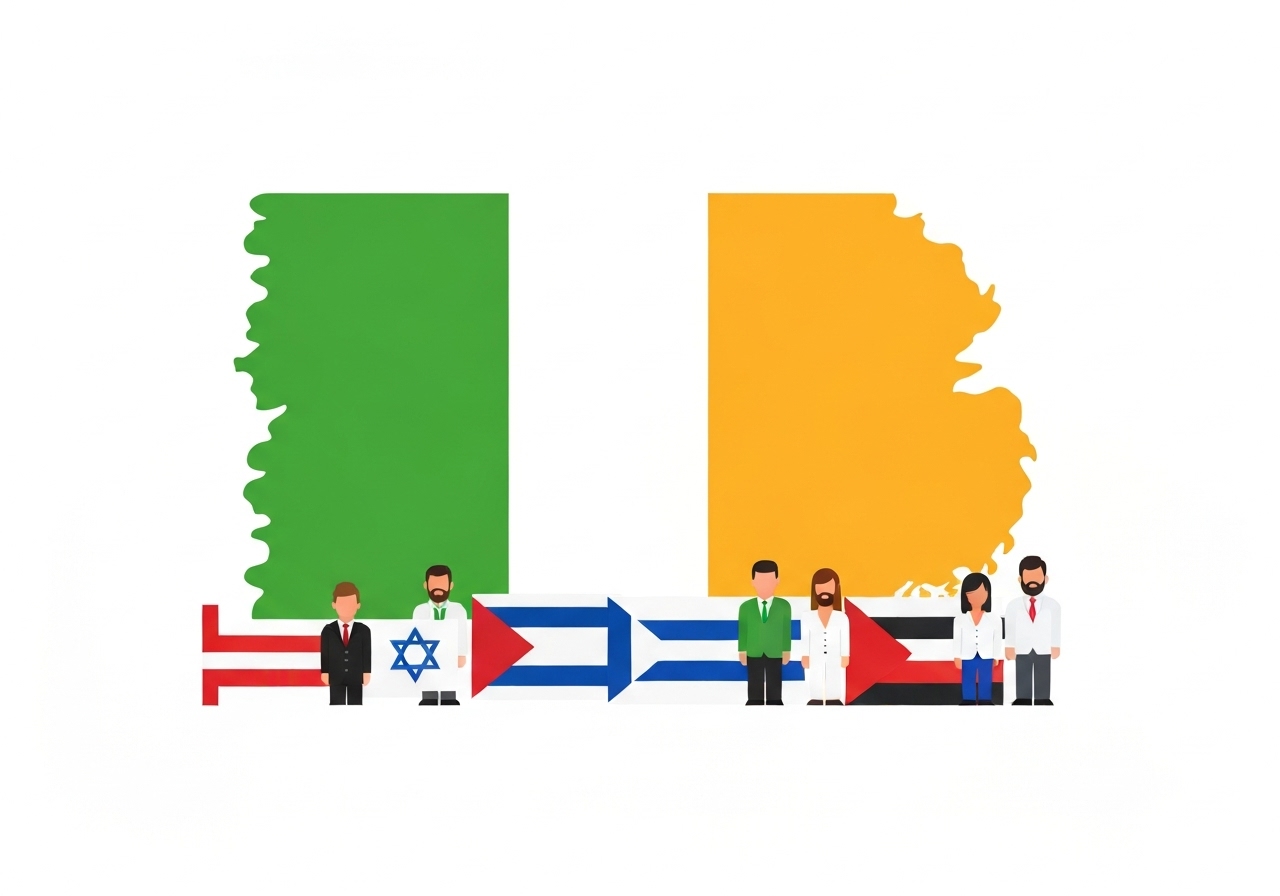
Several public broadcasters, including Ireland’s RTÉ, Spain’s RTVE, the Netherlands’ AVROTROS and Slovenia’s RTV, announced they will not participate in the Eurovision Song Contest 2026 after the European Broadcasting Union allowed Israel to compete. The decision followed a Thursday meeting of roughly 50 EBU member broadcasters in Geneva where members voted to adopt new anti-campaigning rules and to proceed without a separate vote on Israel’s eligibility. The controversy stems from the war in Gaza and allegations that voting campaigns gave Israel an unfair boost after this year’s contest, in which Israeli singer Yuval Raphael, a survivor of the 7 October 2023 Hamas attack, represented the country. Broadcasters opposed to Israel’s participation described continued involvement as untenable given the humanitarian situation in Gaza.
Key Takeaways
- At least four public broadcasters announced a boycott of Eurovision 2026: Ireland’s RTÉ, Spain’s RTVE, the Netherlands’ AVROTROS and Slovenia’s RTV.
- The EBU meeting in Geneva on Thursday involved about 50 broadcasters, including the BBC, and addressed new rules to curb third party voting campaigns.
- Voting on the anti-campaigning measures was linked to a clause preventing a separate vote on Israel’s participation, a move that some members said eroded trust in the process.
- Yuval Raphael, Israel’s 2024 entrant, is noted publicly as a survivor of the 7 October 2023 Hamas attack, a fact referenced in broadcasters’ objections.
- Spain, part of Eurovision’s Big Five that secure direct final access due to larger EBU contributions, said it will neither participate nor broadcast the 2026 contest.
- Nordic broadcasters from Norway, Sweden, Finland, Denmark and Iceland supported the EBU reforms aiming to strengthen rule enforcement on voting fairness.
- Germany’s ARD welcomed the EBU decision and intends to participate in 2026, while some members, notably Iceland’s RÚV, delayed a final position.
Background
Eurovision, now in its seventh decade, is organized by the European Broadcasting Union and draws more than 150 million viewers worldwide. The contest has long tried to balance cultural exchange with rules intended to keep the competition apolitical. Over recent years, tensions have re-emerged where geopolitics intersect with popular culture, most recently around the conflict in Gaza.
After the 7 October 2023 Hamas attacks and the subsequent war in Gaza, several broadcasters and national audiences called for Israel to be excluded from future contests. Allegations also circulated that organized voting campaigns improperly influenced results in recent editions, prompting the EBU to propose rule changes to discourage third party or government-led mobilization in support of entries.
Main Event
At a Geneva meeting on Thursday, approximately 50 EBU member broadcasters debated a package of rule changes designed to prevent external voting campaigns and reinforce impartiality. Spain’s RTVE requested a secret ballot on whether Israel should be allowed to compete; the EBU denied that request, and members instead voted on the reforms as a package. Several public broadcasters said the denial of a separate vote on Israel’s participation contributed to a loss of confidence in the process.
The EBU described the vote outcome as making all members who agreed to comply with the new rules eligible to participate in the Eurovision Song Contest 2026. The organization framed the vote as an effort to protect the integrity and neutrality of the contest rather than to adjudicate political disputes. EBU leadership said members had the chance to debate Israel’s place in the contest prior to voting.
Broadcasters that announced withdrawal cited ethical objections and humanitarian concerns. RTÉ stated that participation remained unconscionable given the loss of life and the humanitarian crisis in Gaza. RTVE said its board had agreed last September to withdraw if Israel were included and confirmed it will not broadcast the 2026 semi-finals or final.
Analysis & Implications
The split among EBU members exposes a core tension for Eurovision: whether the contest can remain insulated from geopolitical conflicts when public broadcasters, accountable to national audiences and parliaments, deem participation morally unacceptable. For the EBU, the immediate task is damage control to preserve the contest’s reputation and ensure a viable field of participants for 2026.
Economically, withdrawals from significant contributors create both financial and logistical headaches. Spain is a member of the Big Five, whose broadcasters contribute substantial funding and whose entrants go straight to the final. Non-broadcasting or non-participation by Big Five members could complicate EBU revenue models and audience reach.
Politically, the decision may set precedents. Broadcasters that withdraw frame their action as ethical and based on public values, while others argue that excluding a country over a foreign policy dispute risks turning a cultural event into a political battleground. The EBU’s next steps on enforcement and transparency will be watched closely by members, artists, and viewers.
In the medium term, the contest’s organizers face the challenge of restoring trust among dissenting members while upholding rules that limit external influence on voting. Failure to do so could encourage further boycotts or calls for governance reform at the EBU, potentially reshaping Eurovision’s membership dynamics ahead of its 70th anniversary.
Comparison & Data
| Country | Broadcaster | Stated reason for withdrawal |
|---|---|---|
| Ireland | RTÉ | Humanitarian concerns in Gaza; participation called unconscionable |
| Spain | RTVE | Refusal to allow secret ballot; prior board decision to withdraw if Israel included |
| Netherlands | AVROTROS | Incompatible with public values under current circumstances |
| Slovenia | RTV Slovenia | Ethical principles; calls for equal rules and standards |
The table lists the principal announced withdrawals and their public justifications. While four broadcasters have declared they will not take part, several other members are still deciding. The EBU says the new rules were adopted by an emphatic margin, though the linked clause on Israel’s participation created the present rupture.
Reactions & Quotes
Officials from the EBU and participating states framed the outcome in different terms, underscoring the polarized responses.
It was a full, frank and honest and quite moving debate; members came together on a belief that the contest should not be used as political theatre.
Martin Green, Director of the Eurovision Song Contest
Green emphasized the organization’s view that Eurovision must retain neutrality, while acknowledging the depth of feeling during the Geneva discussion.
This is an appreciated gesture of solidarity and a victory over those who seek to silence Israel.
Isaac Herzog, President of Israel
President Herzog praised the EBU decision as a symbolic affirmation of cultural exchange and representation for Israel on international stages.
The attempt to disqualify our entry can only be understood as a cultural boycott.
Golan Yochpaz, CEO, KAN (Israel’s public broadcaster)
KAN’s chief warned that the boycott could tarnish the contest’s 70th anniversary and urged members to consider cultural consequences of exclusion.
Unconfirmed
- Precise scale and origin of alleged external voting campaigns that boosted Israel this year remain under investigation and have not been independently verified.
- It is not yet confirmed whether additional broadcasters will follow the announced withdrawals or whether any will reverse their decisions before 2026.
- Any long-term financial impact on the EBU from these withdrawals has not been quantified publicly.
Bottom Line
The EBU’s decision to adopt anti-campaigning rules while declining a separate vote on Israel’s participation has prompted a rare, public split among member broadcasters. Four national broadcasters have declared they will not participate in or broadcast Eurovision 2026, citing humanitarian concerns and loss of confidence in the EBU process.
How the EBU responds to calls for greater transparency, and whether it can rebuild trust with dissenting members, will determine whether Eurovision can preserve its claim to political neutrality and retain broad member and audience support heading into its 70th edition. For viewers and broadcasters alike, the coming months will test whether a cultural event can withstand geopolitical fault lines without major structural change.