
Lead
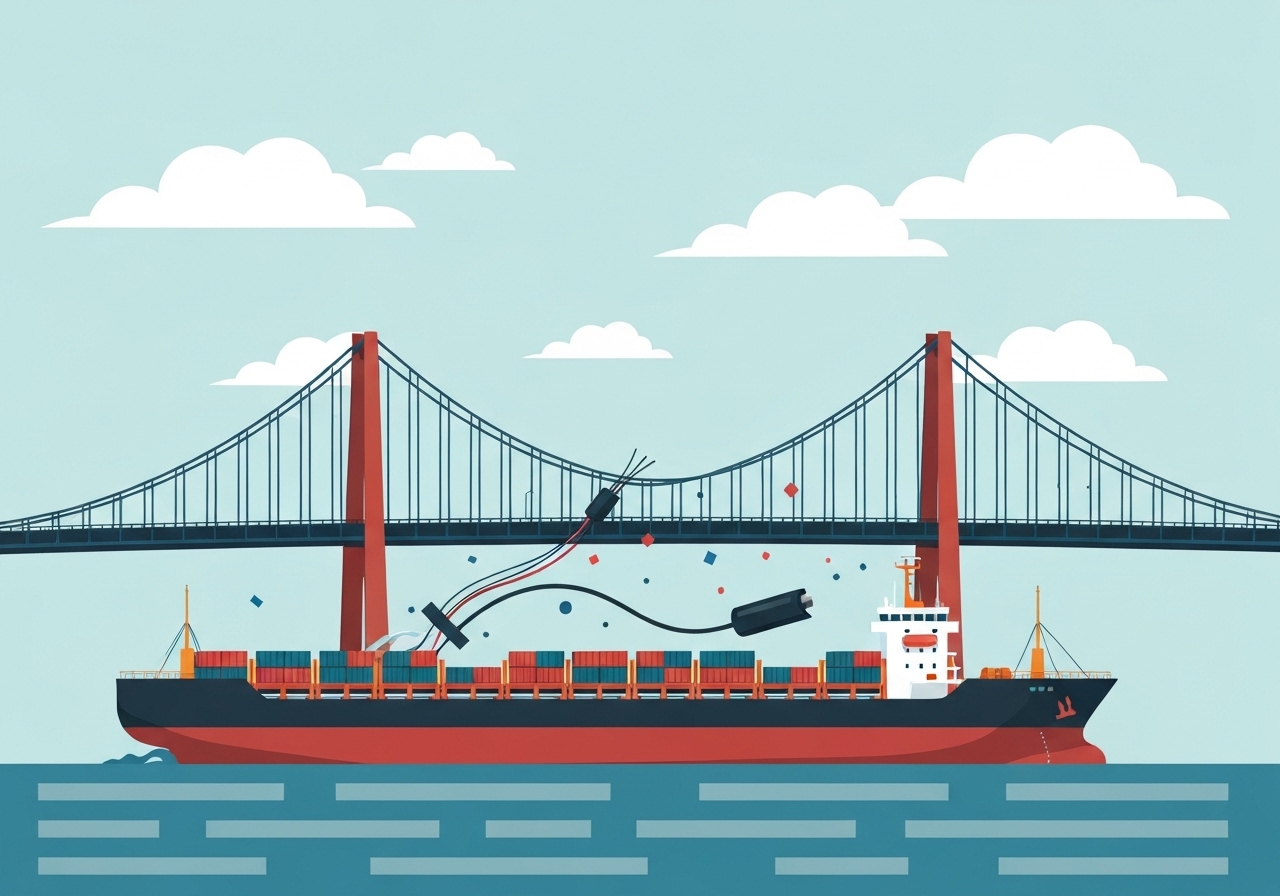
On 19 November 2025, the U.S. National Transportation Safety Board (NTSB) concluded that a single loose electrical wire aboard the 300-metre (984 ft) container ship Dali precipitated the fatal collapse of the Francis Scott Key Bridge in Baltimore. The board found that two separate electrical blackouts on 26 March 2024 left the vessel without reliable propulsion and steering, causing it to strike a bridge pier and triggering the collapse that killed six highway workers. The finding follows months of forensic work by investigators who traced a complex wiring fault amid thousands of connections aboard the nearly 1,000-foot ship. The report also confirms that one worker survived and that the shipping channel reopened in June 2024 while bridge reconstruction plans extend toward 2030.
Key takeaways
- The NTSB identified a single loose wire on the Dali as the initiating cause of two electrical blackouts on 26 March 2024, which disabled propulsion and steering.
- The ship is 300 metres (984 ft) long—almost the height equivalent of the Eiffel Tower—and its electrical network includes miles of wiring and thousands of connections, complicating the investigation.
- Six highway workers were killed and one survived after a major span of the Francis Scott Key Bridge collapsed when the Dali struck a pier.
- The ship’s pilots notified local authorities quickly, enabling Maryland Transportation Authority to halt bridge traffic before a larger loss occurred.
- The Baltimore shipping channel fully reopened in June 2024; Maryland officials estimate bridge repair costs between $4.3 billion and $5.2 billion, with reopening not expected until 2030.
- The NTSB praised the investigative effort as lengthy and technically demanding, requiring detailed electrical forensics to locate the single loose conductor.
Background
The Francis Scott Key Bridge spans roughly 4 kilometres (2.5 miles) across a busy portion of the Port of Baltimore and carries significant regional freight and commuter traffic. On 26 March 2024 the container ship Dali—nearly 1,000 feet long—struck a support pier after experiencing a rapid loss of control, and a large midspan section collapsed into the Patapsco River. A livestream camera set to monitor port traffic captured the collapse, producing widely circulated footage and immediate national attention.
Bridge infrastructure and port navigation are tightly regulated; marine pilots and the Maryland Transportation Authority coordinate vessel transits through the channel. The Dali was under pilotage when electrical faults disabled its ability to steer and control propulsion. Previous marine incidents involving power loss have highlighted how a single system failure can cascade into catastrophic outcomes when redundancy or rapid recovery is not available.
Main event
According to the NTSB report released on 19 November 2025, the Dali experienced two distinct blackouts on 26 March 2024 that left the ship without main propulsion and effective steering. Investigators traced the interruptions to a loose conductor in the vessel’s complex electrical distribution system, which produced transient failures and ultimately prevented the crew from maintaining controlled maneuvering near the bridge.
The crew and the ship’s pilots attempted corrective actions after the first blackout and again after the second, the NTSB found, but electrical anomalies prevented reliable command of thrusters and engine control. Pilots reported the situation to local authorities, and Maryland Transportation Authority officials immediately closed the span to traffic, but seven workers were on the structure; six were killed when the span collapsed.
Port authorities and first responders moved quickly after the strike. Divers and salvage teams worked to recover wreckage and evacuate survivors; the shipping channel was cleared and reopened to traffic in June 2024 following salvage and safety inspections. The NTSB’s final report concentrated on electrical forensics, wiring diagrams, maintenance records and the sequence of blackouts to determine causal factors.
Analysis & implications
The NTSB determination that a single loose wire can precipitate a multi-system failure underscores vulnerabilities in large commercial vessels’ electrical architecture. Ships like the Dali rely on integrated networks for propulsion, steering, automation and alarms—so a local mechanical or connection fault can propagate through control systems unless redundant, segregated channels or robust fault-tolerant designs exist.
From a regulatory standpoint, the finding will likely prompt closer scrutiny of vessel electrical maintenance practices, certification of wiring work, and inspection regimes for ships calling on major ports. Class societies, flag states and port authorities may re-evaluate requirements for periodic verification of critical electrical connections on vessels over certain sizes or ages.
Economically, the loss of the Key Bridge and the protracted reconstruction window to 2030 impose substantial costs on regional traffic flow and supply chains. The $4.3–$5.2 billion repair estimate represents direct infrastructure spending, but indirect costs—detours, longer truck routes, port scheduling disruptions—will amplify the economic impact for businesses and commuters around Baltimore.
Comparison & data
| Item | Value |
|---|---|
| Ship (Dali) length | 300 m (984 ft) |
| Bridge span affected | Section collapse midspan, part of 4 km bridge |
| Fatalities | 6 highway workers |
| Workers on bridge at incident | 7 |
| Shipping channel reopen | June 2024 |
| Estimated repair cost | $4.3bn–$5.2bn |
| Projected bridge reopening | 2030 |
The table summarizes concrete figures from the NTSB report and state estimates. Placing the Dali’s length beside iconic structures (the NTSB noted the ship is roughly the Eiffel Tower’s height laid on its side) helps convey scale and why an electrical failure aboard such a large vessel can have outsized consequences for fixed infrastructure.
Reactions & quotes
Maryland and federal officials emphasized the technical complexity of the investigation and expressed condolences to the victims’ families. Officials also highlighted the need for lessons to prevent future similar failures.
“Our investigators routinely accomplish the impossible. Finding this single wire was like hunting for a loose rivet on the Eiffel Tower,”
Jennifer Homendy, NTSB Chair
The NTSB chair’s comment framed the scale of the investigative task; it was offered as recognition of the technical work required to trace the initiating fault through miles of wiring. State transportation officials described ongoing efforts to design and finance a replacement crossing.
“We acted immediately to halt traffic and support rescue operations; now our focus is on rebuilding safely and ensuring the bridge will meet future resilience standards,”
Maryland Transportation Authority (statement)
Maritime industry groups and ship operators are expected to review operational guidance and maintenance protocols in response to the report, while unions and worker advocates have pressed for independent reviews of port safety measures and emergency response plans.
Unconfirmed
- Some third-party accounts suggested maintenance lapses on the Dali prior to the voyage; the NTSB report documents maintenance records but does not make a public allegation of deliberate negligence.
- Claims that additional structural deficiencies in the bridge accelerated the collapse remain under engineering review and are not concluded in the NTSB causal finding.
Bottom line
The NTSB’s conclusion that a single loose wire and two consequent blackouts on 26 March 2024 led the Dali to strike the Francis Scott Key Bridge highlights how a small technical fault can cascade into a major public-safety disaster. The human toll—six workers killed and a community disrupted—frames the urgency for regulators, ship operators and port authorities to reassess electrical maintenance, redundancy and emergency preparedness.
Reconstruction of the bridge and the financial and logistical consequences will play out over years; policymakers must balance speed, cost and resilience in rebuilding. At sea and ashore, the report is likely to shape stricter inspection practices and renewed emphasis on verifying critical electrical connections on large commercial vessels.
Sources
- Al Jazeera (international news report summarizing NTSB findings)
- National Transportation Safety Board (NTSB) (official agency investigating marine and bridge collision; press releases and report)