
Lead
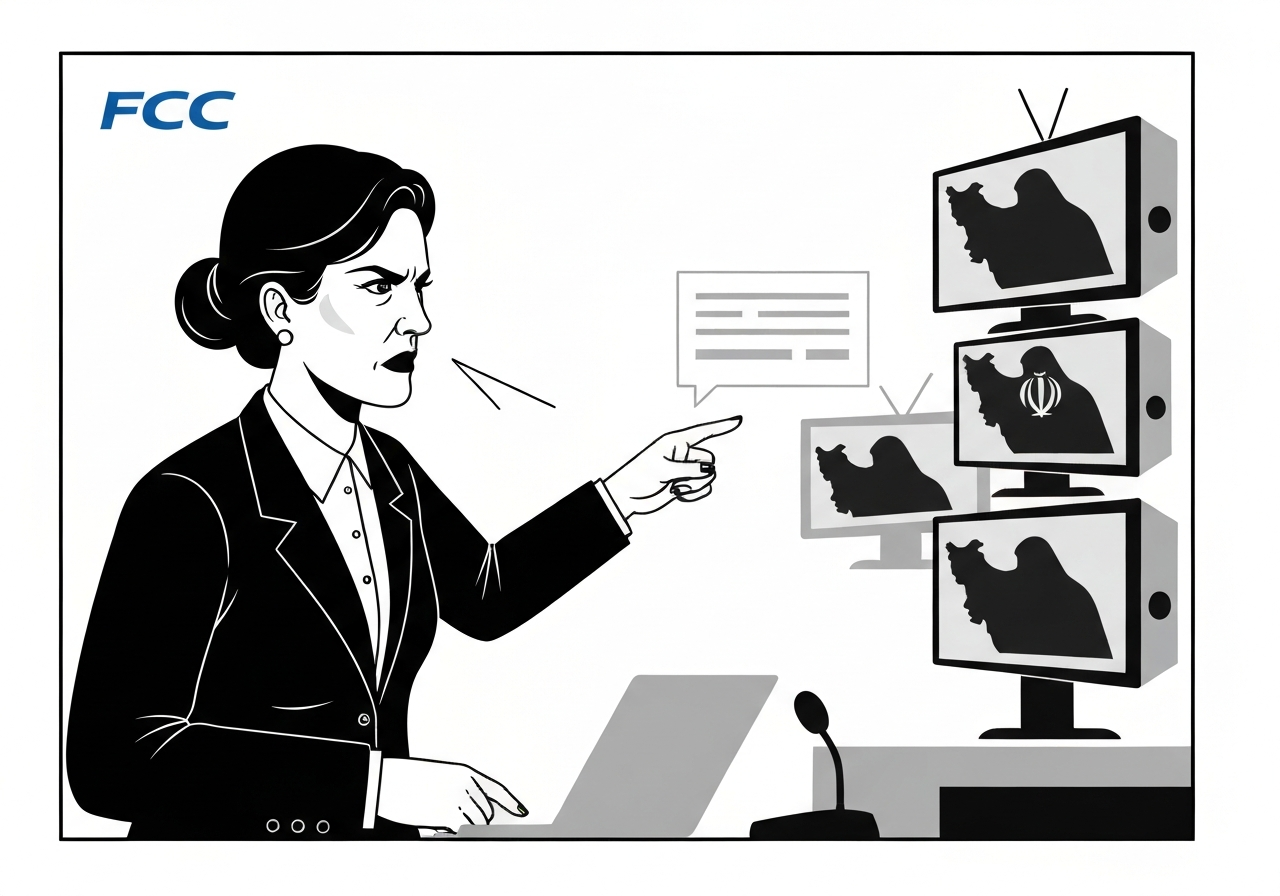
The chair of the US Federal Communications Commission, Brendan Carr, warned this week that broadcast stations could lose their licences if they fail to serve the public interest, after comments from President Donald Trump about media coverage of the US-Israel war with Iran. Carr reiterated the point in an interview with CBS News and directly tied his warning to what he described as misleading reporting. His remarks prompted immediate criticism from Democratic officials, who called the threat unconstitutional and an attack on free speech. The exchange has sharpened debate over the FCC’s remit and the limits of federal oversight of broadcast content.
Key takeaways
- FCC chair Brendan Carr told CBS News that broadcast licences are not a “property right” and can be revoked if stations do not serve the public interest.
- Carr’s comments followed a social media post by President Donald Trump criticizing news coverage of the US-Israel war with Iran.
- The FCC issues eight-year licences to individual broadcast stations but does not licence national TV networks such as CBS, NBC, ABC or Fox.
- Several Democratic officials, including Senator Elizabeth Warren, Governor Gavin Newsom and Senator Mark Kelly, called Carr’s comments unconstitutional or an overreach.
- The FCC’s public guidance states the First Amendment and the Communications Act prohibit the Commission from censoring broadcast matter and that its role over content is limited.
- Carr has previously targeted broadcasters he says acted improperly, including urging a suspension of Jimmy Kimmel’s show; Kimmel’s program was off air for six days before returning.
Background
The Federal Communications Commission is the independent federal agency that regulates radio, television and satellite airwaves in the United States. It grants licences to individual broadcast stations, generally for eight-year terms, and enforces rules on ownership, technical standards and certain content-related issues. The Communications Act and First Amendment principles constrain the FCC’s ability to regulate speech, and the agency’s website emphasises that it is not empowered to censor broadcast content broadly.
Broadcasters and networks operate under a regulatory distinction: the FCC licences local stations, not the national networks that supply programming. That separation matters because enforcement actions such as licence renewals or revocations apply to station licensees and their compliance with public-interest obligations, rather than to networks as corporate entities. Historically, the FCC has pursued a limited number of content-related enforcement actions, often focused on indecency rules, sponsorship disclosures and technical compliance.
Main event
In an interview with CBS News, Brendan Carr said people have misperceived broadcast licences as immutable property rights and stressed that licences hinge on service to the public interest. He argued that broadcasters accused of running “hoaxes and news distortions” could still “correct course” before licence renewal proceedings. Carr framed the issue as a statutory responsibility rather than a political punishing power and pointed to legal obligations placed on licensees.
The chair’s remarks followed a social media post by President Trump in which the president criticised media outlets and suggested they wanted the US to lose the war. Carr responded publicly to that post, saying the law is clear that broadcasters must operate in the public interest and that licences could be lost if they do not. His language was interpreted by critics as a direct threat tied to political displeasure with coverage.
Democratic leaders swiftly condemned the comments. Senator Elizabeth Warren characterised a government effort to penalise coverage as an illegal form of censorship. California Governor Gavin Newsom described Carr’s statements as flagrantly unconstitutional, while Senator Mark Kelly called the move an overreach by the agency under the current administration. Those responses reflect broader partisan tensions over media criticism and regulatory power.
Analysis & implications
The episode raises several legal and practical questions. Legally, the FCC’s authority to revoke a station licence exists but would face stringent judicial review if used in a way that appears to penalise viewpoint or coverage choices; courts have generally protected editorial freedom under the First Amendment. Practically, pursuing licence revocations against stations would be complex, resource-intensive and politically fraught, requiring the agency to build record-based findings of violations of the Communications Act or FCC rules.
Politically, the threat intensifies worries about the politicisation of independent agencies. Carr’s stance is consistent with a more assertive oversight philosophy from the current FCC leadership, which has clashed with broadcasters before. If the chair or FCC commissioners pursue enforcement tied to coverage, that could chill reporting or generate backlash from both industry groups and civil liberties organisations.
For broadcasters, the incident underscores the difference between network-level commentary and the licensee’s obligations. Stations that rebroadcast network programming or commentary face scrutiny not for specific opinions but for whether they fulfil local public-interest duties. Any move to use licence proceedings as a tool against perceived bias could prompt legal challenges and renewed legislative scrutiny of FCC authority.
Comparison & data
| Item | Scope | Notes |
|---|---|---|
| Licence length | Broadcast stations | Issued for eight years by the FCC |
| FCC content authority | Over-the-air TV and radio | Limited; does not extend to cable or streaming |
| Network licensing | National networks | FCC does not issue licences to networks (CBS, NBC, ABC, Fox) |
The table clarifies the regulatory boundaries relevant to Carr’s comments: licences are station-level, eight-year privileges and the FCC’s content authority is narrower for non-broadcast platforms. Historically, licence revocation has been rare and typically tied to clear legal or technical violations rather than programming viewpoint.
Reactions & quotes
Officials and stakeholders framed the exchange in constitutional and political terms, emphasising different risks.
“People have gotten used to the idea that licences are some sort of property right, and there’s nothing you can do that can result in losing their licence.”
Brendan Carr, FCC chair (to CBS News)
Carr used that line to signal a shift in enforcement posture toward public-interest obligations. He followed with a more direct warning about potential licence loss for broadcasters he says mislead audiences.
“The law is clear. Broadcasters must operate in the public interest, and they will lose their licences if they do not.”
Brendan Carr, FCC chair (public statement)
Democratic responses focused on constitutional protections for speech and a concern that regulatory power might be used to silence critics.
“It is illegal for the government to censor free speech it just doesn’t like about Trump’s Iran war.”
Senator Elizabeth Warren (public statement)
Unconfirmed
- Carr’s specific claim that particular broadcasters are “running hoaxes and news distortions” has not been independently documented in this piece and lacks named examples with evidence.
- Whether the FCC will initiate licence-revocation proceedings tied to political coverage remains unannounced and would depend on agency votes and record development.
Bottom line
The exchange between FCC Chair Brendan Carr and critics highlights a mounting clash over the balance between regulatory duties and press freedom. While the FCC has statutory authority over broadcast licences, using that power against news coverage would raise significant First Amendment and procedural challenges and would likely be litigated. For now, the incident signals a willingness by the current FCC leadership to publicly press broadcasters on perceived inaccuracies, but concrete enforcement actions would require formal processes and substantial evidentiary bases.
Readers should watch for any formal FCC filings, public notices or agency votes that would convert rhetoric into action. If the agency pursues enforcement tied to coverage, the legal and political fallout could reshape how broadcasters assess editorial risks and how Congress and courts respond to perceived regulatory overreach.
Sources
- BBC News — news report summarising the interview and reactions (news)
- Federal Communications Commission — official guidance on the First Amendment and broadcast regulation (official)
- CBS News — outlet that conducted the interview with FCC chair Brendan Carr (news)