
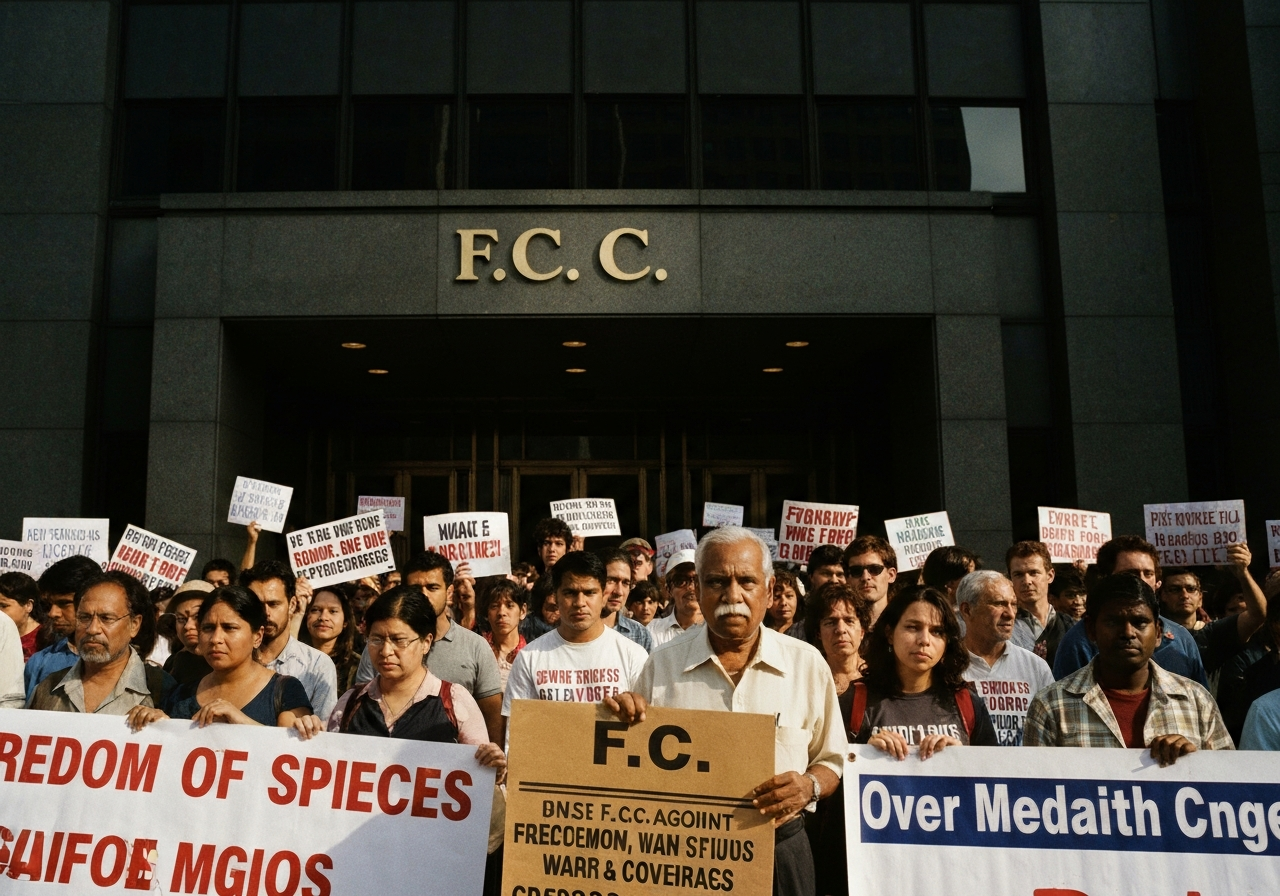
Lead: On March 14, 2026, Federal Communications Commission Chair Brendan Carr warned broadcasters in Washington that their licenses could be revoked if they do not change what he described as misleading coverage of the war with Iran. The statement followed a social media message from former President Donald J. Trump criticizing news coverage and a separate public complaint from Defense Secretary Pete Hegseth about a cable network’s reporting. Carr said broadcasters must operate in the public interest and tied enforcement to upcoming license renewal reviews. The warning intensified an ongoing dispute over media coverage of a conflict now in its third week.
Key Takeaways
- FCC Chair Brendan Carr issued a public warning on March 14, 2026, saying broadcasters could lose licenses if they fail to correct coverage he labeled misleading.
- Carr amplified a Truth Social post by Donald J. Trump that criticized news outlets and singled out a Wall Street Journal story reporting that five American refueling planes had been struck in Saudi Arabia.
- The statement linked enforcement to the FCC’s license-renewal process, a regulatory lever broadcasters depend on to remain on air.
- Defense Secretary Pete Hegseth also publicly criticized CNN’s coverage and referenced potential changes in ownership, escalating the political pressure on networks.
- Dow Jones & Company, publisher of The Wall Street Journal, did not immediately respond to requests for comment about the reporting cited by Mr. Trump.
- Legal scholars and press advocates say outright license revocations are rare and likely to face judicial review, raising questions about enforceability.
- The exchange comes as the war with Iran entered its third week, intensifying scrutiny of how U.S. broadcasters report battlefield and diplomatic developments.
Background
The United States and allied interests are in the third week of hostilities with Iran, and coverage of battlefield events, including contested reports about strikes on U.S. refueling aircraft in Saudi Arabia, has generated intense debate. In that environment, political leaders have increasingly sought to shape — and criticize — media narratives, using social platforms and official statements to press their views. The FCC, an independent federal agency, regulates broadcast licenses and assesses whether stations serve the “public interest, convenience, and necessity” when they seek renewal. Historically, license revocations or denials are uncommon and typically only follow prolonged compliance failures or serious statutory violations.
Brendan Carr, nominated and confirmed in recent years, has frequently intervened in debates over media regulation and perceived bias, emphasizing the agency’s oversight role. Broadcasters argue that editorial judgments are protected by the First Amendment and that regulatory threats can chill news coverage at moments when public information needs are high. The dispute also arrives amid broader political polarization over how the war is framed at home, the role of legacy news organizations and the rise of partisan social platforms as amplifiers of official commentary.
Main Event
On March 14, 2026, Mr. Carr posted a reprimand on social media accusing some broadcasters of airing “hoaxes and news distortions” and warned that stations should “correct course before their license renewals come up.” He then shared a Truth Social post by former President Trump that condemned mainstream coverage and attacked a Wall Street Journal headline about five American refueling planes reportedly struck in Saudi Arabia. Carr’s message framed the issue as one of regulatory compliance tied to the FCC’s statutory mandate to ensure broadcasters serve the public interest.
The exchange prompted immediate reactions from across the political and media spectrum. Defense Secretary Pete Hegseth used a news briefing to criticize CNN’s reporting on the war and said he looked forward to it being controlled by a private owner he named, intensifying the sense of coordinated pressure on networks. Media organizations noted the unusual nature of a regulatory head publicly threatening license actions over active news reporting, while press freedom groups warned of a chilling effect on coverage of national security developments.
Representatives for Dow Jones & Company, publisher of The Wall Street Journal, did not immediately reply to requests for comment about the specific story cited by Mr. Trump. Broadcasters that face license renewals typically undergo administrative review and have legal recourse if the FCC proposes sanctions; industry lawyers emphasize that revocations would likely trigger protracted litigation. At the same time, public statements by government officials can influence shareholder and advertiser sentiment, creating other nonregulatory pressures on newsrooms.
Analysis & Implications
Any attempt by the FCC to revoke or deny renewals on the basis of editorial content would confront significant legal hurdles. The First Amendment protects editorial discretion, and courts have historically been skeptical of regulatory action that appears to punish viewpoint. The FCC’s “public interest” standard is broad but not unlimited; proving that routine news coverage rises to the level of a license-threatening violation would require substantial evidentiary support and would almost certainly be litigated.
Even without successful enforcement, the chair’s warning could have immediate practical effects. Newsrooms under the threat of regulatory scrutiny may alter coverage choices to avoid controversy, which could reduce critical reporting at a time when accurate, independent information is vital. Advertisers and station owners, sensitive to regulatory and political risk, may press for more cautious editorial lines, amplifying the chilling effect beyond the legal domain.
The episode also highlights how political actors now use social platforms and public office to exert pressure on media. When a regulator openly echoes critiques from a political leader and ties them to formal review processes, the boundary between policy enforcement and political advocacy can blur, raising concerns among media-watchers and civil liberties organizations. Internationally, moves perceived as curbing press freedom could affect U.S. credibility when criticizing media restrictions abroad.
Comparison & Data
| FCC Enforcement Action | Typical Outcome |
|---|---|
| Fines (for indecency, technical violations) | Monetary penalties or consent decrees |
| License renewal challenges | Administrative hearings; settlements common |
| License revocations | Rare; usually after prolonged noncompliance or criminal conduct |
The table illustrates the range of tools the FCC historically uses. License revocations are unusual and typically reserved for severe or chronic violations; most disputes resolve through fines, negotiated settlements, or conditional renewals. Any novel use of renewal review as a tool for policing editorial content would likely prompt legal scrutiny and industry pushback.
Reactions & Quotes
Officials and media figures reacted rapidly, framing the exchange in legal and political terms. Below are representative public statements and their context.
“Broadcasters must operate in the public interest, and they will lose their licenses if they do not.”
Brendan Carr, FCC Chair
This statement, posted by the FCC chair on March 14, linked editorial concerns to the statutory renewal process and was widely reported as a direct regulatory threat tied to content decisions.
“Intentionally misleading.”
Donald J. Trump / Truth Social
Mr. Trump used that phrase to describe a Wall Street Journal headline about reported strikes on five American refueling planes in Saudi Arabia. His post was amplified by the FCC chair and helped frame the broader critique of news coverage.
“I look forward to the news network being controlled by the billionaire David Ellison.”
Pete Hegseth, U.S. Secretary of Defense
Mr. Hegseth’s comment at a public briefing criticized CNN’s reporting and referenced possible changes in ownership, adding another layer of pressure on a major cable network.
Unconfirmed
- The precise factual accuracy of the Wall Street Journal report that five American refueling planes were struck has been reported but contested in public commentary and is subject to independent verification.
- Whether the FCC will follow through with license revocations or formal renewal denials based solely on the editorial content of news reports remains unproven and would likely be litigated.
- Any direct coordination between political leaders and regulatory actions to influence specific network ownership or control has not been independently verified.
Bottom Line
The FCC chair’s public warning on March 14, 2026, marks an unusual intersection of regulatory authority and political critique in a high-stakes moment of international conflict. While the chair framed the message as an enforcement of the agency’s public-interest mandate, legal and constitutional protections make outright license revocations for editorial content unlikely without substantial evidence of statutory violations. Nonetheless, the public statement may produce immediate practical effects by altering newsroom behavior and increasing commercial and political pressures on broadcasters.
Observers should watch for formal FCC filings or notices of proposed action, which would open an administrative record and likely trigger judicial review. Equally important to monitor are follow-up statements from broadcasters, any requests for clarification from Congress or the courts, and whether market actors — owners, advertisers, or investors — change conduct in response to the regulatory rhetoric. The episode underscores the fragility of boundaries between regulation and political influence when national security and media narratives collide.
Sources
- The New York Times — news report on FCC chair statement and related reactions (news)
- Federal Communications Commission — agency website and regulatory materials (official)
- U.S. Department of Defense — official statements and press briefings (official)
- The Wall Street Journal — publisher of the reported story cited in public posts (news)