
In an internal memo circulated to staff and reported on 29 November 2025, the Food and Drug Administration’s new vaccine policy lead, Dr Vinay Prasad, outlined a far stricter approach to federal vaccine approvals that he said follows a review linking Covid-19 shots to at least 10 child deaths. The memo, which recommended re-examining annual flu-shot guidance, limits on giving multiple vaccines at the same visit and tighter safety-and-efficacy requirements for manufacturers, prompted immediate pushback from outside experts and some former FDA officials. Critics warned the changes could slow approvals, reshape immunization schedules and discourage vaccine innovation. Agency insiders and public-health specialists said the memo’s tone and the absence of peer-reviewed supporting evidence intensified concern about the plan’s scientific and policy implications.
Key takeaways
- The FDA memo from Dr Vinay Prasad, circulated internally and reported 29 November 2025, asserts a review found at least 10 children died “after and because of” Covid-19 vaccination, with myocarditis implicated.
- Prasad’s outline calls for re-evaluating annual influenza-shot policies, considering limits on co-administration of vaccines, and demanding more robust pre-approval safety and efficacy data from manufacturers.
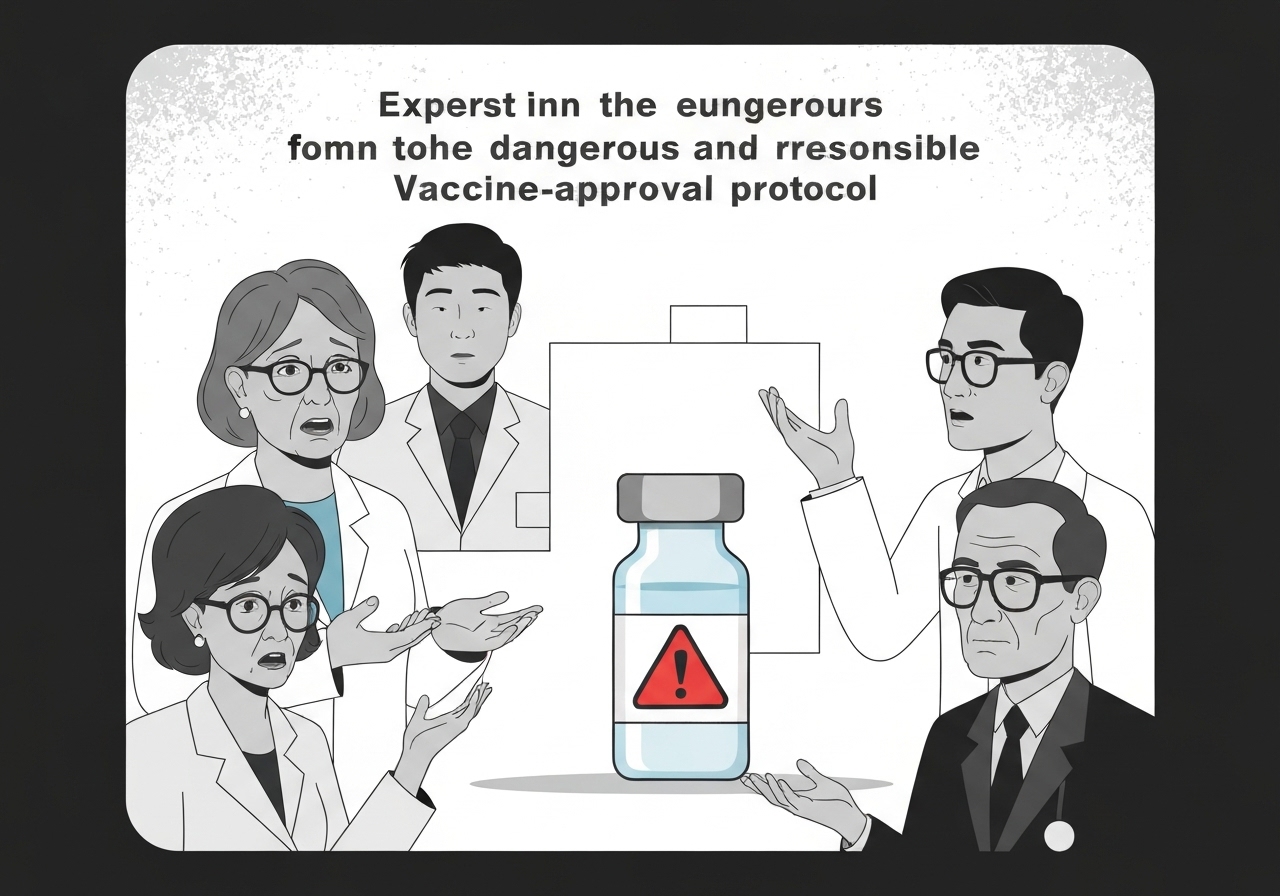
- Prominent vaccine scientists, including Dr Paul Offit, characterized the publicization of these claims without peer review as “dangerous and irresponsible.”
- Former FDA vaccine chief Dr Peter Marks said the memo’s “political tone” surprised him and urged careful investigation of the cited child-death reports.
- Public-health experts warn that requirements for much larger pre-approval studies could delay product launches, reduce industry appetite for new vaccines and slow updates to existing immunizations.
- The memo echoes positions advanced by Robert F. Kennedy Jr. and some anti-vaccine advocates who have long pressed for stricter proof of vaccine safety and efficacy.
- Recent agency policy moves already narrowed Covid vaccine eligibility in August 2025 to people 65+ or younger people with qualifying conditions.
Background
The FDA oversees licensure and approval processes for vaccines used in the United States, balancing the need for rapid availability with rigorous safety review. During the Covid-19 pandemic the agency authorized and later licensed multiple vaccines following large randomized trials and post-market safety monitoring; pediatric studies were completed for the shots that were recommended for children. Over recent years, debates over vaccine safety, rare adverse events and regulatory thresholds have intensified, especially among policy advocates pushing for more conservative approval standards.
Dr Vinay Prasad, whose policy direction has received public support from Robert F. Kennedy Jr., circulated an internal memo that staff and outside outlets obtained this week. The memo reportedly states that a recent internal review attributed at least 10 child deaths to Covid-19 vaccines, citing myocarditis as a likely mechanism. The document also proposes limiting co-administration of different vaccines and tightening evidence requirements for approval—moves that would alter long-standing federal immunization guidance and industry expectations.
Main event
The memo was first publicly reported by a PBS NewsHour correspondent’s post on X and was subsequently described in coverage by several national outlets on 29 November 2025. According to media reports, Prasad told staff the agency would rethink vaccination program policies and that those who did not align with the new principles should consider resignation. The communication reportedly framed the new protocol as a corrective step in light of the internal review’s findings.
Senior vaccine researchers and some former FDA officials immediately questioned the memo’s scientific grounding. Dr Paul Offit of Children’s Hospital of Philadelphia, after reviewing the memo, said the claim that vaccines killed 10 children should be subjected to peer review and formal publication before being used to reshape policy. Dr Peter Marks, who led the FDA’s vaccine center through much of the pandemic, said he found the memo’s tone “clearly political” and emphasized that adjudicating cause in complex pediatric fatality reports typically requires careful investigation.
Current and former FDA staff, plus outside public-health specialists quoted by national outlets, warned that raising pre-approval requirements to demand much larger trials would lengthen timelines for new products and updates. They said manufacturers would likely respond by slowing development or narrowing target populations, which could reduce availability of next-generation vaccines or updated formulations aimed at emerging strains.
The memo’s proposed limits on simultaneous vaccination, if enacted, would also conflict with the Centers for Disease Control and Prevention’s current immunization schedule, which routinely recommends multiple childhood vaccines at the same visit and allows adults to receive combined respiratory-virus vaccinations—such as flu, Covid and RSV—during a single appointment for convenience and to maximize uptake.
Analysis & implications
Scientifically, attributing deaths to vaccination is challenging. Several experts reiterated that a temporal link—death following vaccination—does not alone establish causation. Determinations typically rely on detailed case reviews, autopsy findings, adjudication by subject-matter experts and, when possible, aggregation of population-level data to assess excess risk. Releasing a policy-driving memo based on internal case reports without accompanying data or peer review raises concerns about premature policy shifts.
Policywise, stricter pre-approval criteria would trade speed and flexibility for greater conservatism. That shift could protect against rare adverse events being missed in smaller trials, but it also could delay access to beneficial vaccines and increase development costs. For manufacturers, higher evidentiary bars make investment riskier and could narrow the field of companies willing to pursue vaccine innovation—particularly for diseases with smaller markets.
Clinically, reconsidering co-administration guidance could have practical implications for vaccine coverage. Consolidated visits improve adherence; separating doses into multiple appointments may reduce overall uptake and inadvertently increase vulnerability to preventable infections, especially among children and older adults who benefit from concurrent immunizations.
Geopolitically and in public trust terms, the episode risks reinforcing vaccine hesitancy narratives. The memo’s alignment with themes long advanced by anti-vaccine advocates—and its backing by a high-profile figure like Robert F. Kennedy Jr.—may deepen divisions about how regulatory agencies should weigh evidence and communicate risk, complicating public-health messaging at a national level.
Comparison & data
| Aspect | Current (pre-2025 memo) | Proposed by memo |
|---|---|---|
| Co-administration | Multiple vaccines recommended at single visits (CDC schedule) | Consider limits on giving vaccines together |
| Approval evidence | Large randomized trials + post-market surveillance | Demand more extensive pre-approval safety and efficacy data |
| Covid vaccine eligibility (Aug 2025) | Authorized for 65+; younger only with qualifying conditions | Not directly changed in memo but policy stance is more restrictive |
The table summarizes qualitative contrasts reported by agency insiders and national outlets. It does not quantify trial-size increases that Prasad may demand, because the memo as publicly described did not supply specific numeric thresholds. Experts caution that without clear numerical standards, industry and providers will face uncertainty about future trial designs and timelines.
Reactions & quotes
Scientists and former regulators offered pointed critiques, urging transparent evidence and peer review before policy overhaul.
“It’s a dangerous and irresponsible thing to do.”
Dr Paul Offit, Children’s Hospital of Philadelphia (vaccine researcher)
Offit emphasized that extraordinary claims require extraordinary evidence and said such case reports belong in peer-reviewed literature for independent assessment.
“I was taken aback by the clearly political tone of the communication.”
Dr Peter Marks (former FDA vaccine center director)
Marks noted that causality in complex pediatric deaths is often debatable and requires deeper investigation than an internal memo provides.
“Determining cause of death after vaccination is a very difficult task and is best done with autopsy and expert review.”
Dr Kathryn Edwards, Vanderbilt University (vaccine expert)
Edwards said she would welcome access to the case details and urged that such findings be presented in peer-reviewed form for independent evaluation.
Unconfirmed
- The precise basis for the memo’s claim that at least 10 children died “after and because of” Covid-19 vaccination is not publicly available; ages, comorbidities, autopsy findings and causal adjudication methods were not disclosed.
- No peer-reviewed dataset, case series or named manufacturers have been provided to substantiate the memo’s causal attributions to myocarditis.
- It is not publicly confirmed whether the internal review followed standard fatality-adjudication protocols used in vaccine safety investigations.
Bottom line
The FDA internal memo attributed to Dr Vinay Prasad marks a potentially significant shift toward more conservative vaccine-approval criteria, anchored in assertions about child deaths after Covid vaccination and a desire for stricter evidence thresholds. If implemented, the changes could slow approval timelines, alter routine immunization practices and reshape industry calculations about vaccine development. However, the scientific credibility and policy prudence of moving on the basis of the memo hinge on transparent, peer-reviewed evidence; without that, the risk is that policy changes will be contested, slow, and counterproductive for public health.
For policymakers and clinicians, the priority should be clear: release the underlying data, subject the findings to independent review, and weigh any procedural changes against the demonstrated benefits of timely, broad vaccine coverage. How the FDA proceeds in the coming weeks will influence vaccine access, public trust and the trajectory of immunization policy in the United States.
Sources
- The Guardian (U.K. news outlet; original report provided)
- PBS NewsHour (U.S. public media report first noting the memo contents)
- The New York Times (U.S. national newspaper reporting on memo details and expert reactions)
- MedPage Today (U.S. medical news site reporting expert commentary)
- The Washington Post (U.S. national newspaper on potential pipeline impacts)
- U.S. Food and Drug Administration (FDA) (official regulator)
- U.S. Centers for Disease Control and Prevention (CDC) (official immunization guidance)