
Lead
The Federal Reserve is expected to deliver its third straight interest-rate reduction this Wednesday, with markets penciling in a 25 basis-point cut that would set the policy range at 3.50%–3.75%. The decision arrives amid a visibly divided Federal Open Market Committee, with some policymakers prioritizing labor-market support and others warning that additional easing could rekindle inflation. Officials are likely to pair the cut with cautious language and updates to the dot plot, GDP, unemployment and inflation forecasts. Together those communications may signal a pause in further cuts rather than a sustained easing campaign.
Key Takeaways
- The Fed is widely expected to cut rates by 25 basis points, lowering the federal funds target to 3.50%–3.75%.
- This would be the third consecutive reduction, following prior easing earlier this year.
- The FOMC remains split: some members argue for additional cuts to shore up jobs, while others worry easing risks sustaining inflation.
- Investors will scrutinize the dot plot from 19 officials (12 voting members) for clues on the path of future policy.
- Recent labor data show hiring down by 218,000 and layoffs up by 73,000, raising concerns about a cooling labor market.
- The Fed’s preferred inflation gauge registered 2.8% year-over-year in September, above the 2% goal.
- Markets and some analysts expect a potential balance-sheet pivot, possibly resuming limited bond purchases instead of allowing all maturing proceeds to roll off.
Background
The Fed has shifted from a restrictive stance over the past two years to a cautiously looser policy as inflation has moderated but not returned to target. Policymakers have repeatedly emphasized data dependence, producing oscillating signals that left markets uncertain about the pace and scale of easing. That uncertainty narrowed in recent weeks as several key officials — including New York Fed President John Williams — signaled openness to another cut, prompting markets to price in a 25 basis-point move.
At the same time, the committee’s internal balance remains fragile. The October meeting produced two formal “no” votes on the statement, and public remarks indicate there are persistent philosophical differences about how quickly to reverse the prior tightening cycle. The Fed’s communication tools — the post-meeting statement, Chair Jerome Powell’s press conference and the updated dot plot — are now as important as the numerical policy decision itself for shaping expectations.
Main Event
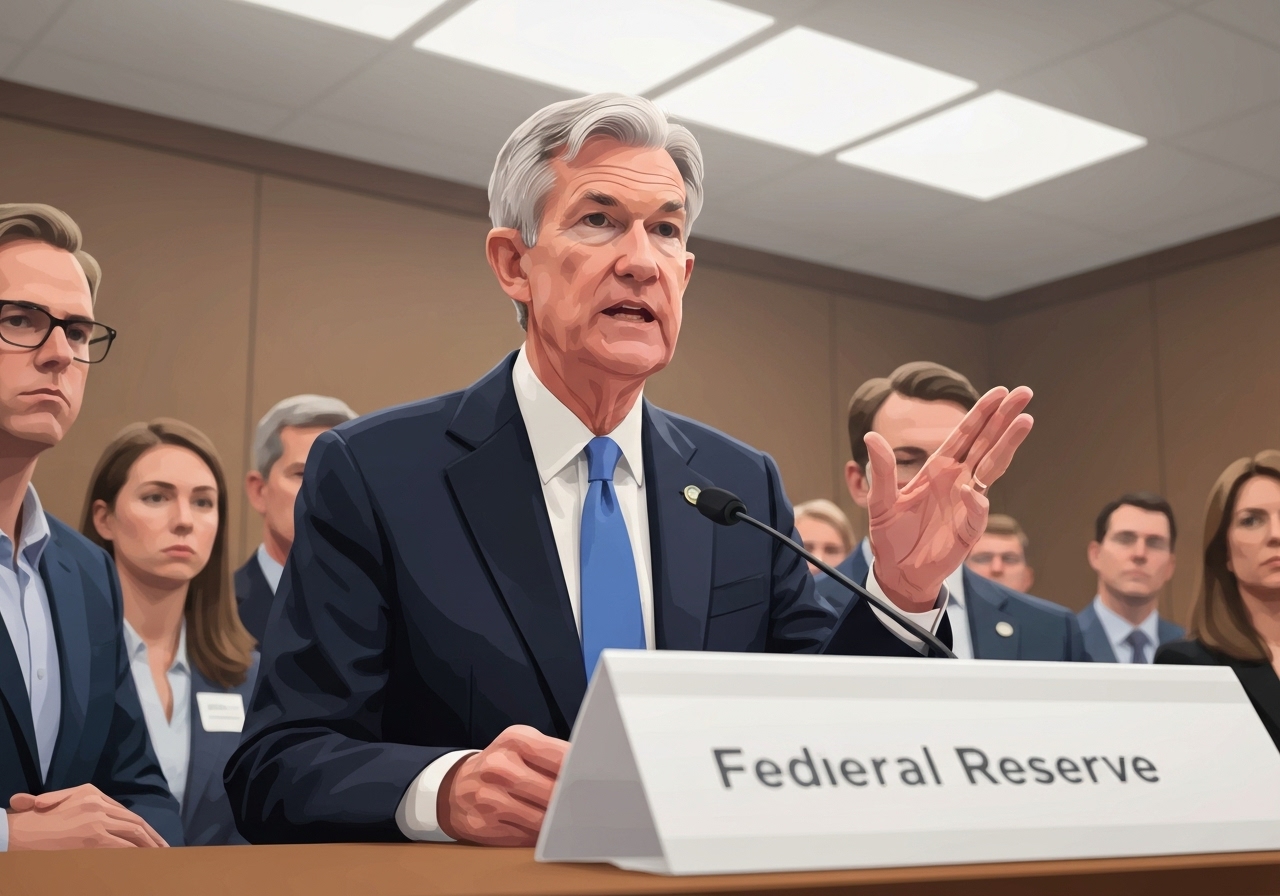
The rate decision and accompanying statement will be released after the FOMC concludes its meeting; Chair Powell’s press conference will follow and is expected to be the main vehicle for explaining mixed views inside the committee. Officials are likely to frame the move as a targeted adjustment to address slowing job growth while underscoring that inflation remains above the 2% objective. That framing aims to deliver a reduction in rate expectations without committing to an extended sequence of further cuts.
Markets will watch the dot plot closely: the anonymous projections from 19 participants (including 12 voters) show not only a central tendency but also the range of views. Analysts expect the dot plot to show a higher bar for additional easing — meaning fewer officials expect further cuts this cycle than some investors had hoped. Any upward revisions to the bar for future easing would be read as a restraint on market expectations.
Beyond rates and projections, the committee may clarify its plans for managing the balance sheet after last month’s signal to pause quantitative tightening. Some market participants expect the Fed to indicate a limited resumption of bond purchases to ease pressures in overnight funding markets, though officials would likely emphasize such purchases would be modest and not a return to large-scale quantitative easing.
Analysis & Implications
The likely 25 basis-point reduction is intended to balance two risks: preserving labor-market resilience and keeping inflation from re-accelerating. If the Fed successfully communicates that this is a near-term adjustment rather than the start of a multi-cut cycle, it can ease financial conditions slightly without materially loosening policy expectations. That outcome would support growth in the short run while giving the central bank room to respond if inflation resurges.
However, signaling a higher bar for further cuts raises the probability of volatility if incoming data deteriorate faster than officials anticipate. A hawkish cut can disappoint markets that had priced in a longer easing path, potentially tightening financial conditions again as risk sentiment adjusts. Conversely, if the Fed under-communicates the split inside the committee, it risks markets misreading the move as a prelude to more accommodation.
On the real economy, the combination of slowing hiring — reflected in a 218,000 decline in hires and 73,000 rise in layoffs in recent BLS data — and still-elevated inflation (2.8% on the Fed’s preferred gauge in September) creates a narrow policy corridor. Officials aiming to keep inflation on a downward path may prefer to stop after this cut; those focused on preserving employment will argue for more easing if labor-market weakness continues.
Comparison & Data
| Item | Most Recent | Prior |
|---|---|---|
| Federal funds target (expected) | 3.50%–3.75% | 3.75%–4.00% |
| Fed preferred inflation gauge | 2.8% (Sep) | — |
| Hiring (monthly change) | −218,000 | previous months mixed |
| Layoffs (monthly change) | +73,000 | previous months lower |
The table summarizes the immediate policy move and the most relevant macro indicators the Fed cites when setting policy. Together they illustrate why the committee is choosing a calibrated easing step while retaining optionality for later tightening or further cuts depending on incoming data.
Reactions & Quotes
Market and policy analysts emphasize the communicative role of this meeting: a cut accompanied by restrictive-sounding guidance could be intended to close the debate on further easing for now.
“The likeliest outcome is a kind of hawkish cut where they cut, but the statement and the press conference suggest they may be done for now,”
Bill English, former Fed monetary affairs director (academic)
Some regional Fed officials have publicly warned that inflation remains above target and that policy should stay relatively restrictive until inflation shows sustained progress.
“Inflation is not back to 2%, so policy needs to remain somewhat restrictive to push prices down,”
Loretta Mester, former Cleveland Fed president (policy)
Economists who follow committee voting patterns expect a small number of formal and informal dissents, reflecting the wide range of views on the path of rates and balance-sheet policy.
“It’s a tough meeting and we’ll likely see a few dissents as committee members express different views on policy and risks,”
David Mericle, Goldman Sachs economist (market research)
Unconfirmed
- Whether the committee will formally announce a resumption of bond purchases is unconfirmed and may be described only in guarded terms.
- The exact split of votes and number of formal dissents are not finalized until the meeting statement is released.
Bottom Line
The Fed is positioned to cut by 25 basis points while using its statement, dot plot and Chair’s remarks to signal caution about additional easing. That combination — a well-telegraphed, modest cut plus tightening-leaning language — is the defining feature of a “hawkish cut.”
For markets and businesses, the immediate effect should be a limited loosening of financial conditions; the longer-term trajectory will depend on upcoming inflation and labor-market reports. Watch the dot plot and Powell’s press conference for the clearest clues on whether this is the last move in this easing cycle or merely the next step in an uncertain path.
Sources
- CNBC (media report)
- Federal Reserve (official central bank)
- U.S. Bureau of Labor Statistics (official statistics)