
Lead
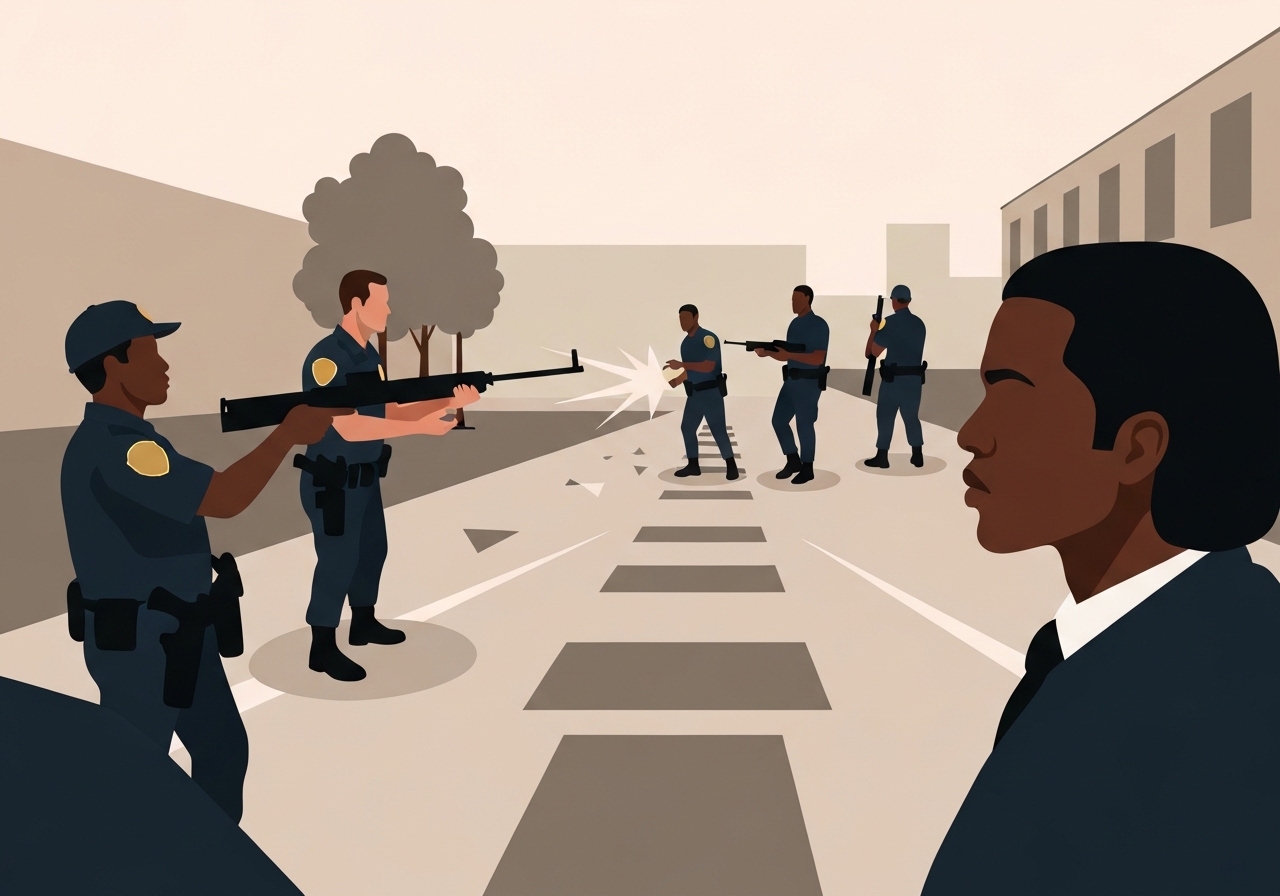
Federal agents were involved in a shooting Wednesday evening in north Minneapolis after a targeted traffic stop, leaving one adult male wounded in the leg and taken to a local hospital with non-life-threatening injuries. The Department of Homeland Security says the incident began at 6:50 p.m. when an individual from Venezuela fled a stop, crashed and was then involved in a struggle with agents. The episode drew a tense crowd in the Hawthorne neighborhood, with protesters sounding horns and chants while officers used crowd-control tactics. By 10:38 p.m., reporters said federal law enforcement had left the scene.
Key Takeaways
- Time and place: The encounter began at about 6:50 p.m. Wednesday in the Hawthorne area near North Lyndale Avenue and 25th Avenue/600 block of 24th Avenue North.
- Immediate outcome: One adult male was shot in the leg and taken to a hospital with apparent non-life-threatening injuries; DHS says the officer involved was also hospitalized.
- Arrests: DHS reported two additional people are in custody after the incident.
- Crowd size and tactics: Reporters observed roughly 100 people on scene; law enforcement used pepper spray, pepper balls and flash-bang devices while some protesters hurled objects.
- Official accounts differ: DHS describes a targeted traffic stop that escalated into a ground struggle and an attack on an officer by three people; social media posts from the man’s family allege different actions by agents, currently unverified.
- Political fallout: The event occurred amid protests and legal action over a recent DHS surge in the Twin Cities following the killing of 37-year-old Renee Good one week earlier.
Background
Federal officers have been operating in the Twin Cities in increased numbers over the past month, a deployment that state and local officials have publicly contested. That surge followed several high-profile incidents and prompted a wave of protests, legal challenges by Minnesota leaders and heightened public scrutiny of immigration enforcement tactics. One week before this episode, an ICE agent shot and killed 37-year-old Renee Good in south Minneapolis; that case intensified calls from activists and some officials for federal agents to leave the state.
Local leaders have framed the federal presence as a source of community tension. Minneapolis Mayor Jacob Frey and Governor Tim Walz have both spoken out, with city officials demanding removal of certain federal immigration operations and state leaders pursuing legal avenues. At the same time, federal agencies maintain that targeted operations are necessary to enforce federal immigration statutes and public-safety priorities.
Main Event
According to a DHS statement, agents performed a targeted traffic stop at about 6:50 p.m. when the subject — described by DHS as a person from Venezuela — fled in a vehicle, crashed and ran on foot. DHS says officers caught up with the person and a struggle ensued on the ground; at that point two other individuals allegedly emerged from a nearby apartment and attacked an officer with a snow shovel and broom handle.
DHS says an officer, fearing for his life during what the agency describes as an ambush by three people, fired defensive shots; the initial subject sustained a gunshot wound to the leg and was transported to a hospital. DHS further reported that the officer also received hospital care and that two additional people were detained at the scene.
On-the-ground reporting from KARE 11 described a large, tense crowd in the Hawthorne neighborhood. Protesters used horns and whistles and at least one ambulance left the scene. Minneapolis Police Chief Brian O’Hara said a 911 call reporting a shooting came in at 6:51 p.m. and later described some crowd actions as unlawful. By 10:38 p.m., local reporters said federal law enforcement had departed the area.
Analysis & Implications
The incident underscores deep friction between federal immigration enforcement and Minneapolis residents and officials. The deployment of DHS and ICE personnel to the Twin Cities has been politically charged; local leaders have argued it undermines community trust and civilian safety, while federal agencies frame targeted stops as law enforcement necessities. This episode will likely intensify debates about jurisdiction, tactics and oversight.
Operationally, the account offered by DHS — flight after a stop, a vehicle crash, a physical struggle and a subsequent multi-person attack — presents a sequence that federal authorities say justified defensive force. Independent scrutiny (bodycam, surveillance, witness statements) will be critical to corroborate timing, who initiated force and whether alternatives were available. Those findings will shape any administrative or legal reviews.
Politically, the shooting occurs amid a pending Minnesota legal challenge seeking to limit the DHS surge. Elected officials’ public demands that ICE leave the state, and the governor’s calls following the incident, are likely to increase pressure on federal leaders and could catalyze expedited negotiations or litigation steps. For residents, repeated high-profile confrontations risk further eroding trust in both local and federal policing.
On public safety, the presence of large, agitated crowds and the use of nonlethal crowd-control tools raise questions about escalation management. If officers continue to operate alongside federal agents, city resources and emergency responders will face continued strain, and community-police relations may be further frayed unless transparency and accountability processes are prioritized.
Comparison & Data
| Incident | Date/Timing | Outcome |
|---|---|---|
| North Minneapolis traffic-stop shooting | Wednesday, began ~6:50 p.m. | One man shot in leg; officer hospitalized; two others in custody; crowd ~100 |
| South Minneapolis shooting of Renee Good | One week earlier | 37-year-old Renee Good shot and killed by ICE agent |
The table highlights two nearby incidents within a short window: a non-fatal wound in the north and a fatal shooting in the south a week earlier. Both events have intensified public debate about the DHS/ICE presence in Minneapolis. Official reviews, medical reports and independent witness statements will provide more precise data on force used and sequence of events.
Reactions & Quotes
Local elected officials and agency spokespeople offered differing emphases in the hours after the incident.
“This evening, one adult male was shot by federal immigration enforcement agents… He was transferred to a local hospital with apparent non-life-threatening injuries.”
City of Minneapolis (social media post)
The city’s public statement also reiterated a demand that ICE leave the city and pledged support for immigrant and refugee communities.
“Fearing for his life and safety as he was being ambushed by three individuals, the officer fired defensive shots to defend his life.”
Department of Homeland Security (official statement)
DHS framed the officer’s actions as defensive after an alleged attack; DHS also said two others are in custody. In addition, Mayor Jacob Frey urged peaceful protest while stating he found the presence and tactics of some federal operations “unsustainable,” and Gov. Tim Walz publicly called for federal agents to leave the state shortly after DHS released its account.
Unconfirmed
- Family video claims that ICE agents struck the man’s vehicle prior to the crash and tried to enter the home; those specific assertions are not yet verified by independent evidence.
- Social media footage purports to show the immediate aftermath and family 911 calls, but full context, timestamps and source verification remain pending.
Bottom Line
The north Minneapolis shooting adds to a string of contentious encounters between federal immigration enforcement and local communities, arriving days after a fatal shooting in south Minneapolis. Key factual disputes — including how the stop escalated, whether agents attempted to enter a residence, and who initiated physical force — remain subject to verification by investigators.
Expect further scrutiny: official reviews and any released video or medical records will be decisive in determining whether procedures were followed and whether charges or administrative actions are warranted. Politically, the incident is likely to intensify pressure on both federal and state leaders, with possible legal and policy consequences in the weeks ahead.