
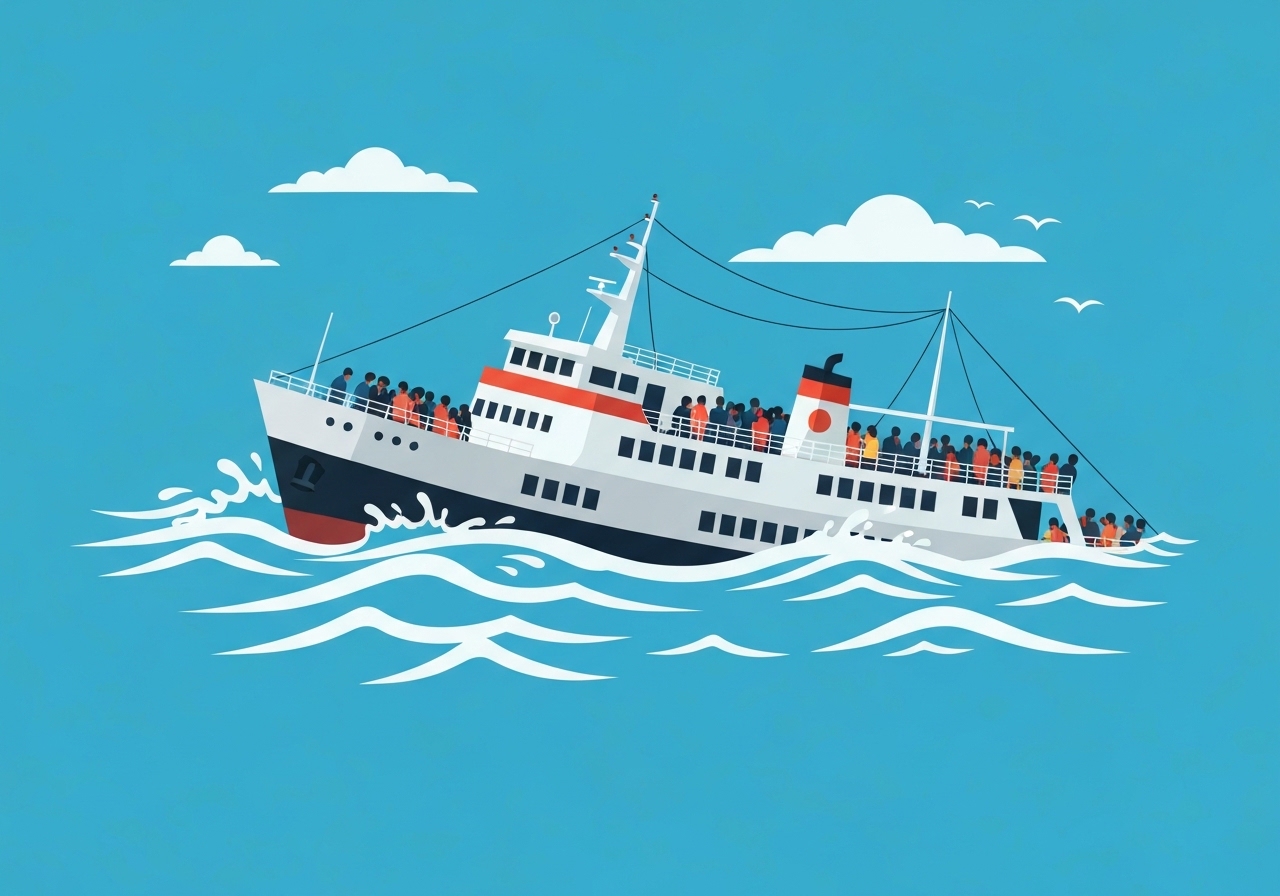
Lead: In the early hours of Jan. 25, 2026, the M/V Trisha Kerstin 3 — an inter-island cargo and passenger ferry — sank off Basilan province while en route from Zamboanga to Jolo in Sulu. Authorities say 332 passengers and 27 crew were aboard; rescuers have recovered at least 215 people and retrieved seven bodies so far. Local officials and the Philippine coast guard have led search-and-rescue operations alongside navy units and fishing boats. The vessel reportedly experienced technical problems before going under, and investigations are underway.
Key Takeaways
- Vessel and route: M/V Trisha Kerstin 3 sank while traveling from Zamboanga City to Jolo, Sulu on Jan. 25, 2026.
- People on board: Official manifests list 332 passengers and 27 crew — 359 people in total.
- Rescue figures: At least 215 people have been rescued as of the latest official update.
- Fatalities recovered: Seven bodies have been retrieved and brought to shore; recovery efforts continue.
- Local response: Rescue operations involve the Philippine coast guard, navy units and a fleet of local fishing boats operating in generally good weather.
- Preliminary cause: Officials reported apparent technical problems on the vessel; definitive cause remains under investigation.
- Context: The Philippines relies heavily on ferry transport; safety enforcement challenges and past disasters shape public concern.
Background
The Philippines is an archipelagic nation where ferries are a primary mode of inter-island travel, carrying passengers, vehicles and cargo between hundreds of ports. Because of that reliance, maritime safety and vessel maintenance are persistent national policy concerns, particularly for routes serving remote provinces in the south. Sea travel risks are amplified by seasonal storms, aging or poorly maintained vessels, overcrowding and uneven enforcement of safety regulations across regions.
High-profile maritime disasters have driven public scrutiny of safety standards. In December 1987 the passenger ferry Dona Paz collided with an oil tanker and sank in the central Philippines, causing more than 4,300 deaths and remaining the deadliest peacetime maritime accident in modern records. That catastrophe prompted regulatory reviews and reforms, but enforcement gaps and resource constraints have limited consistent implementation, especially on secondary routes and small operators.
Main Event
The M/V Trisha Kerstin 3 departed Zamboanga City bound for southern Jolo island in Sulu province. According to coast guard statements and local officials, the vessel encountered problems after midnight on Jan. 25 and subsequently sank in waters near Basilan. The owners and operators have not yet released a formal detailed timeline of mechanical failures or an official manifest beyond passenger and crew counts provided to authorities.
Search-and-rescue teams responded immediately. The Philippine coast guard and navy coordinated operations with nearby fishing boats; good weather aided surface searches and initial retrievals. Authorities reported bringing survivors and recovered bodies ashore at Isabela city in Basilan province, where provincial officials received people from the pier and arranged medical checks and temporary shelter.
Governor Mujiv Hataman confirmed arrivals at Isabela pier and reported that two deceased individuals were among those brought ashore there. Coast guard briefings cited apparent technical problems but stopped short of ascribing cause pending a vessel inspection and formal inquiry. Local emergency services have been processing survivors, while morgue and family-notification procedures are in progress.
Analysis & Implications
Short term, the priority is search, rescue and humanitarian response: accounting for people listed on the manifest, providing medical care and supporting families of victims. For many coastal communities, a single sinking can overwhelm local capacity and place sustained demands on provincial health and emergency services. Authorities will need to confirm passenger and crew lists and coordinate with national agencies to scale support if the casualty toll rises.
Medium- to long-term implications center on regulatory oversight and enforcement. If technical failure is confirmed, investigators will examine maintenance records, crew training, load handling and whether lifesaving equipment met legal standards. Past incidents have shown that legislative or regulatory fixes are insufficient without consistent inspection regimes and sanctions that deter unsafe practices among smaller operators.
Economically, repeated ferry incidents can disrupt commerce and mobility for island populations, affecting market access, supply chains and public confidence in sea transport. Politically, a high-casualty accident frequently triggers public pressure for reforms and can catalyze funding for coast guard capacity and port infrastructure upgrades — but sustained change depends on follow-through at national and provincial levels.
Comparison & Data
| Metric | Figure |
|---|---|
| Passengers (manifest) | 332 |
| Crew (manifest) | 27 |
| Total on board | 359 |
| People rescued (reported) | 215 |
| Bodies recovered | 7 |
| Unaccounted for (provisional) | unconfirmed |
The table lists official manifest numbers and recovery figures reported by authorities. Because passenger- and crew-tracking on many inter-island services is imperfect, the count of unaccounted-for persons remains provisional; investigators will reconcile manifests with survivors and casualty reports. The comparison to the 1987 Dona Paz disaster — which claimed more than 4,300 lives after a collision — underscores the scale of risk when maritime safety systems fail, although the causes and circumstances differ significantly between incidents.
Reactions & Quotes
Local and national officials have emphasized rescue efforts and the need for a thorough investigation while urging calm among relatives of passengers.
“I’m receiving 37 people here in the pier. Unfortunately two are dead.”
Mujiv Hataman, Governor of Basilan (provincial official)
The coast guard characterized the sinking as involving apparent technical problems and described ongoing search operations.
“Initial reports indicate the vessel experienced technical difficulties; search-and-rescue units are on scene.”
Philippine Coast Guard (official statement)
Observers and maritime-safety commentators note that the accident highlights systemic safety and enforcement challenges in archipelagic ferry operations.
“This event underscores persistent gaps in inspection and vessel maintenance that regulators must address to prevent future tragedies.”
Maritime safety analyst (independent expert)
Unconfirmed
- Final casualty count: the total number of fatalities and survivors remains unconfirmed pending reconciliation of all manifests and survivor lists.
- Exact cause: although technical problems are reported, the precise mechanical or operational failure leading to sinking is not yet verified.
- Crew outcomes: official updates have not detailed how many of the 27 crew members have been rescued or remain missing.
Bottom Line
The sinking of M/V Trisha Kerstin 3 is a serious maritime incident with immediate humanitarian and logistical consequences for Basilan and surrounding provinces. Current rescue operations have recovered many people but more work is needed to account for everyone listed on manifests and to support survivors and families.
Beyond rescue, the incident will likely prompt investigations into vessel maintenance, crew procedures and regulatory enforcement. Policymakers and regulators face pressure to convert lessons from this event into durable inspection and safety practices, but achieving that will require resources and coordination across national and local authorities.