
Lead
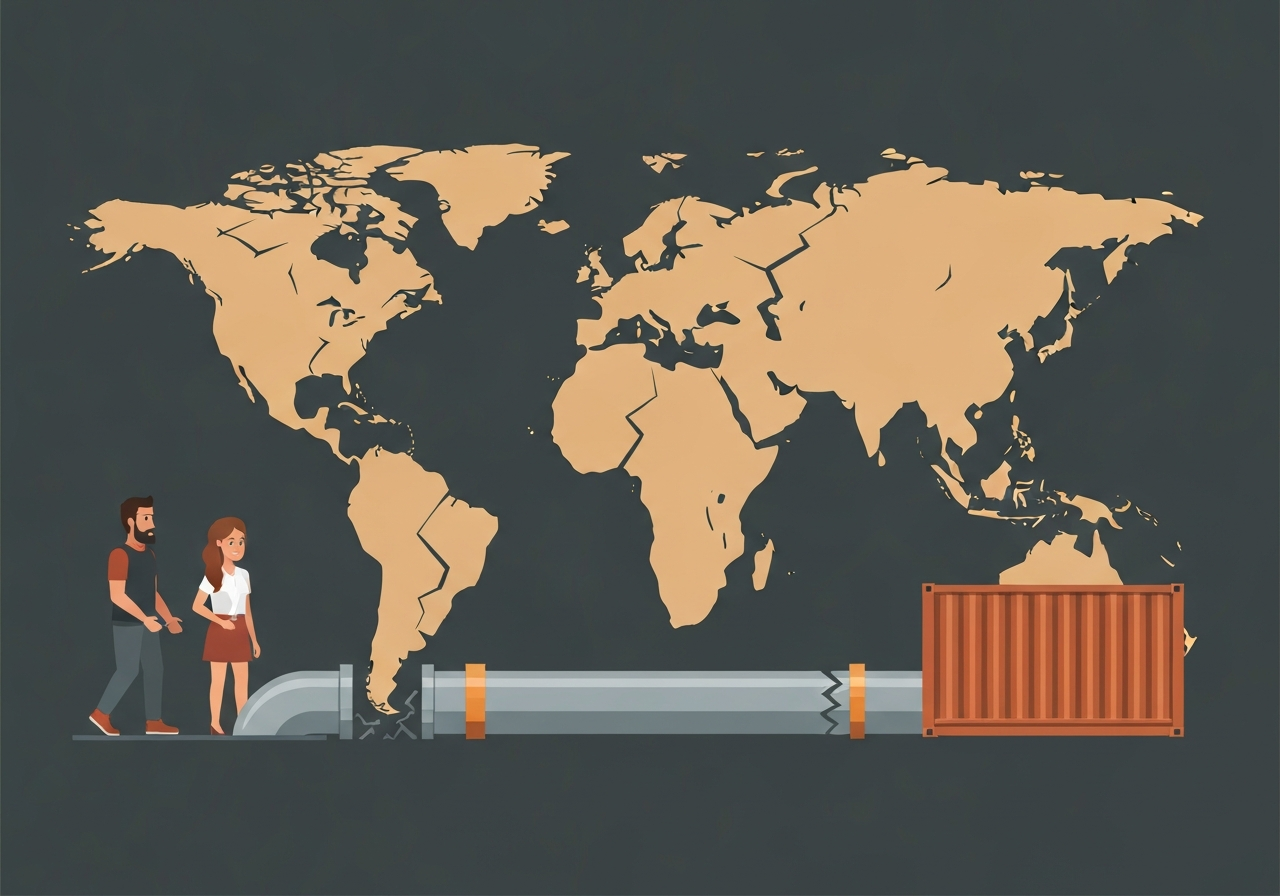
As the U.S.-led conflict with Iran continues into 2026, disruptions to fertilizer production and shipping have pushed prices higher and created supply bottlenecks that threaten crop planting this season. Key fertilizer shipments are delayed around the Strait of Hormuz, while plants in India, Algeria and Slovakia have reduced output because of surging natural gas costs. China has tightened exports and Russia’s ability to backfill supplies is constrained by attacks on its facilities linked to the war in Ukraine. Together, these factors are driving costs for farmers worldwide and raising the risk of localized food insecurity.
Key Takeaways
- Nearly one-third of global fertilizer shipments transit the Strait of Hormuz; recent disruptions have forced vessels to queue and delayed deliveries to major importers.
- Fertilizer production has slowed in India, Algeria and Slovakia due to rising natural gas prices, reducing global output by measurable volumes this quarter.
- China has imposed restrictions on fertilizer exports, tightening availability for markets in Southeast Asia and Africa.
- Russia — a top producer — has seen production and logistics hampered by drone strikes tied to the conflict with Ukraine, limiting its ability to offset Middle East shortfalls.
- Australian wheat acreage is reported down amid higher input costs; U.S. corn and soybean growers are seeking federal relief as fertilizer bills climb.
- Market intelligence firm ICIS reports a ‘‘very big jump’’ in fertilizer prices, which analysts say will likely be passed through to food prices in affected regions.
- If disruptions persist into the northern hemisphere planting window, some low-income importing countries face elevated risks of yield reductions.
Background
Most commercial nitrogen- and potash-based fertilizers are produced using natural gas as a feedstock and energy source, making prices and supply sensitive to disruptions in gas-producing regions. The Middle East is a major supplier of natural gas-derived fertilizer feedstocks and a significant transit route for shipments—hence the high exposure to conflict centered around the Strait of Hormuz. Historically, supply shocks in energy markets have propagated to fertilizer markets, pushing farmers to curb application rates or reduce planted area.
Before the current escalation, global fertilizer trade relied on diverse regional sources, including Russia, the Middle East, North America and China. That balance has narrowed as sanctions, export controls and military actions have constrained alternative suppliers. Major agricultural exporters and importers—India, Brazil, the United States, Egypt and Thailand—depend on steady fertilizer flows to maintain yields for staple crops, so interruptions can quickly affect planting decisions and expected production volumes.
Main Event
Since early 2026, shipments have backloged on approaches to the Strait of Hormuz because insurers and shipping firms reroute or delay tankers and bulk carriers amid heightened risk. Ports that normally handle granular and liquid fertilizer have reported longer unloading times and scheduling cancellations. In India, several plants announced temporary slowdowns after natural gas procurement costs spiked, constraining production and inventories ahead of peak sowing seasons.
China’s recent restriction on outbound shipments of certain fertilizer grades has tightened availability for nations in South and Southeast Asia that historically relied on Chinese exports for late-season replenishment. Meanwhile, factories and export infrastructure in Russia have experienced operational disruptions after a wave of drone strikes damaged plants and port facilities, reducing the practical spare capacity that might have softened the shock from the Middle East.
On the demand side, Australian growers say they will plant less wheat this season in response to input cost pressures. In the United States, farm groups representing corn and soybean growers have publicly pressed the federal government for emergency measures, citing sharply higher fertilizer invoices that risk squeezing margins. Traders report spot prices for several fertilizer grades at multiyear highs compared with the same period last year.
Analysis & Implications
The fertilizer bottleneck has immediate and medium-term implications for global food security. In the short run, higher input costs tend to reduce application rates or encourage substitution toward lower-yielding practices, which can cut per-hectare output. For countries already operating close to food import needs, even modest yield reductions can translate into higher food prices and greater vulnerability among low-income consumers.
Economically, elevated fertilizer costs compress farmer profitability and can distort planting decisions; for example, switching from input-intensive commodities to less demanding crops or leaving land fallow. That reallocation affects global commodity balances and could push prices for staple grains and oilseeds higher, with knock-on effects on food inflation and trade balances, especially in import-dependent nations.
Geopolitically, the situation underscores how interconnected energy, trade routes and agricultural inputs have become. Countries with domestic gas resources or diversified supply chains will fare better. Others dependent on a narrow set of suppliers or transit corridors face strategic exposure, which may prompt short-term emergency purchases, revised trade policies, or diplomatic efforts to reopen or secure alternative routes.
Comparison & Data
| Indicator | Typical Share / Status |
|---|---|
| Fertilizer shipments via Strait of Hormuz | ~30% of global trade |
| Major producers affected | Middle East (gas-linked), Russia (production & logistics) |
| Countries reporting plant slowdowns | India, Algeria, Slovakia |
| Export restrictions | China (select fertilizer grades) |
The table highlights key channels through which the Iran conflict has influenced fertilizer availability. While exact tonnage changes vary week to week, market monitors report price jumps and longer delivery lead times for nitrogen- and phosphate-based fertilizers. Analysts use shipment queues, port throughput and producer operating rates to estimate shortfalls; those indicators have trended in the direction of tighter supply since the conflict intensified.
Reactions & Quotes
“The disappearance of such a large portion of the world’s supply has produced a very big jump in fertilizer prices, with major producers like India facing potential shortages.”
Deepika Thapliyal, ICIS (market intelligence)
ICIS has flagged the price spike as a major driver of near-term market volatility, noting that producers and traders are reassessing availability for the planting season.
“Farmers are confronting input bills they did not budget for; many are asking policymakers for emergency support to avoid cutting plantings.”
U.S. farm trade group (public statement)
U.S. farm organizations have urged federal intervention, pointing to budgetary stress for growers who face expensive fertilizer at the start of the season.
“Export controls and higher gas costs are combining to limit domestic production in several countries, and we are seeing delayed shipments at critical ports.”
Industry port operator (logistics briefing)
Logistics firms report port congestion and insurance-driven rerouting as practical constraints that amplify the supply shock beyond the physical availability of fertilizer products.
Unconfirmed
- Exact tonnage of fertilizer currently trapped or delayed at sea remains variable and has not been published in a consolidated, verifiable dataset.
- Forecasts that specific low-income countries will experience acute food shortages directly caused by this fertilizer disruption remain projections and depend on crop, trade and policy responses.
- The duration of export restrictions and their domestic policy drivers in China have not been fully disclosed by Chinese authorities and could change rapidly.
Bottom Line
The continuing Iran conflict has created a concentrated risk to global fertilizer supply chains through disrupted transit, rising natural gas costs and limits on alternative producers. The immediate effect is higher input prices and logistical delays that threaten planting decisions this season; the most exposed regions include South and Southeast Asia and import-dependent African countries.
Policymakers can mitigate near-term pain by releasing strategic fertilizer stocks where available, easing temporary trade frictions, or offering targeted financial support to vulnerable farmers. Over the medium term, the shock is likely to accelerate efforts to diversify fertilizer sourcing, improve domestic production where feasible, and develop lower-input agronomic practices to reduce reliance on volatile global supply chains.
Sources
- The New York Times (news report)
- ICIS (market intelligence / industry analysis)
- Reuters (international news agency)
- Food and Agriculture Organization (FAO) (UN food security data and analysis)