
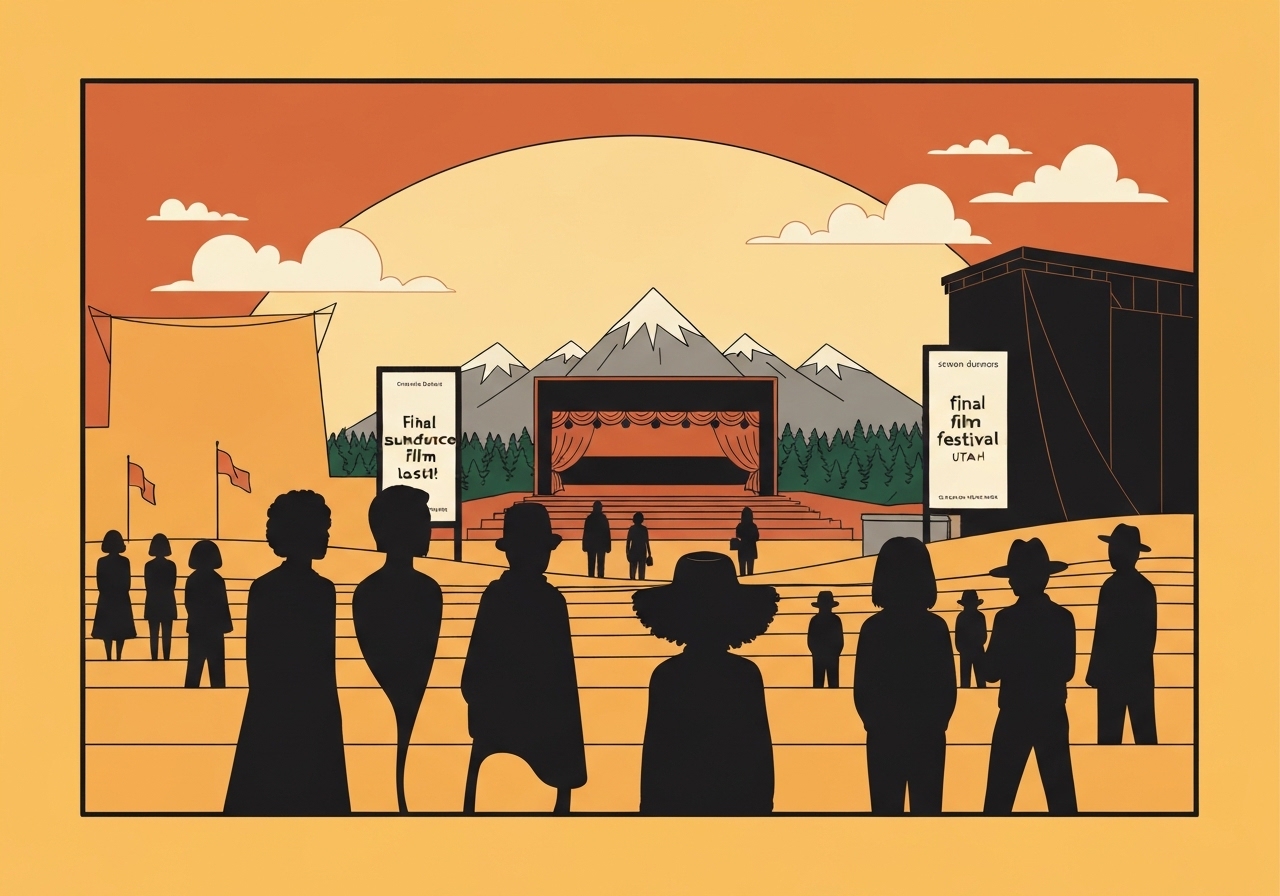
This year’s Sundance Film Festival in Park City, Utah, felt to many attendees like a farewell. Longtime patrons asked one another throughout the week whether they would follow Sundance when it relocates to Boulder, Colorado next year. Several regulars — some who have attended since the early 1990s or the late 1990s — said they plan to stop coming if the festival leaves its mountain home. The mood combined nostalgia for Robert Redford’s Park City vision with uncertainty about how the event will change in a new state.
Key Takeaways
- Many attendees at the 2026 Sundance Film Festival in Park City declared it the festival’s final Utah edition and questioned if they would attend in Boulder next year.
- Robert Redford, who died in September at age 89, founded Sundance and had earlier given his blessing for the move; his daughter Amy Redford sits on the Sundance Institute board.
- Amy Redford said the Institute’s lab programs will remain at the resort Redford founded, about 34 miles (54 kilometers) south of Park City.
- Some volunteers and industry professionals said they are curious about Boulder but worry the festival may lose elements of its identity outside Utah.
- Signs of farewell were visible on Main Street, including scarves reading ‘Our last Sundance 2026’ and other personal tributes from longtime attendees.
- Not all responses were negative: some filmmakers and artists said Boulder could offer new opportunities and broader diversity for programming.
Background
Sundance began in the Utah mountains as a refuge for independent storytellers, intentionally distant from Hollywood pressures. Robert Redford established the festival and related development programs more than four decades ago; he also founded a mountain resort that hosts lab programs for emerging filmmakers. Over time, Park City grew from a small, community-oriented festival site into an international industry hub, prompting organizers to reassess capacity and access issues.
Festival leaders said the decision to relocate followed a yearlong search in which multiple U.S. cities competed to host Sundance. Organizers cited concerns that Park City had become exclusive and that the festival had effectively outgrown the resort town’s infrastructure. Boulder won the bid; Redford, who attended the University of Colorado Boulder decades earlier, had provided his blessing before his death in September 2023.
Main Event
Across shuttle lines, lounges and Main Street, a common conversation thread emerged: will you keep coming to Sundance after the move? Butch Ward, a Fort Lauderdale media professional who has attended since the early 1990s, said he plans to stop attending if the festival moves. Ward framed this as a decision grounded in place-based attachment: he said a Sundance outside Utah would feel like a different festival.
Other longtime attendees expressed similar sentiments. Actor Suzie Taylor, who has come intermittently since 1997, linked the festival’s identity closely with Redford’s Park City vision and noted the emotional resonance of his passing before the last Utah edition. Julie Nunis, an actor from Los Angeles who has attended nearly every year since 2001, described the tradition of gathering in Park City as central to her Sundance experience and said she does not want to replicate that experience elsewhere.
At the same time, some volunteers and artists signaled openness to change. Lauren Garcia, a volunteer from Seattle for six consecutive years, said she might attend in Boulder out of curiosity but also felt a tangible sadness during the final Utah festival. Filmmaker and actor Nik Dodani welcomed the idea of a new state hosting Sundance because he sees potential to amplify diverse storytelling, while also worrying that Utah could lose certain cinematic communities.
Amy Redford acknowledged both loss and opportunity. She emphasized that the Institute’s lab programs — the part of her father’s legacy he valued most — will remain in Utah at the resort he founded about 34 miles (54 kilometers) south of Park City. She described Boulder as an opportunity to recapture the festival’s early spirit of experimentation while assuring that artist development in Utah would continue.
Analysis & Implications
The move raises questions about how much of a festival’s identity is place-dependent. Sundance’s cachet was built in the specific combination of mountain isolation, industry attention and Redford’s founding vision; relocating risks diluting those place-based associations while offering new logistical capacity and audience access. For many regulars, the Park City setting is not incidental but constitutive of the Sundance experience.
Economically, Park City and surrounding Utah communities have benefited from years of festival tourism; the long-term impact of the move on local businesses and municipal revenues is uncertain. Sundance organizers argue that larger venues and a different host city can expand accessibility and refocus attention on films rather than exclusivity. Whether such gains materialize will depend on programming choices, ticketing models and how the festival balances industry needs with public access.
Artistically, the decision to keep lab programs in Utah while moving the public festival to Boulder creates a bifurcated model: talent development remains tied to the mountain resort, while screenings and industry events shift to a new urban setting. This hybrid approach may preserve some of Redford’s intentions while enabling scale, but it also complicates the narrative of what Sundance represents.
Comparison & Data
| Feature | Park City (Utah) | Boulder (Colorado) |
|---|---|---|
| Historical role | Founding site; host for 40+ years | New host after yearlong search |
| Artist labs | Remain at nearby resort (~34 miles/54 km south) | Festival programming and screenings |
| Perceived strengths | Mountain community, legacy, tradition | University ties, new audience potential |
The table highlights the organizers’ plan to separate program development (remaining in Utah) from the public festival footprint (moving to Boulder) and underlines the central trade-off: continuity of mentorship versus a new public stage.
Reactions & Quotes
This is the last year of the festival in its true form, because a Sundance outside Utah just isn’t Sundance.
Butch Ward, longtime attendee
It’s not just a resistance to change. Robert Redford’s vision was rooted here. And isn’t it poetic that he passed right before the last one?
Suzie Taylor, actor and festival regular
Boulder will be a new adventure. It will feel like our beginnings when we were trying to figure things out, and that will have an important impact on what we do.
Amy Redford, Sundance Institute board member
Unconfirmed
- The exact share of current Park City attendees who will travel to Boulder in future years is unknown and will depend on ticketing, travel costs and programming.
- Predicted long-term economic effects on Park City and nearby communities after the festival’s relocation have not been verified; official impact studies have not yet been released.
Bottom Line
Sundance’s relocation to Boulder marks both an end and a new beginning: an end to Park City’s uninterrupted run as the festival’s public home and a beginning of logistical and programmatic experiments intended to broaden access. For many longtime festivalgoers, the move severs a place-based tradition that Robert Redford cultivated for decades. Organizers are attempting a compromise by preserving artist labs in Utah while moving public-facing events to Colorado.
How the festival’s identity evolves will depend on practical choices — programming, pricing, and how organizers nurture community ties in both states. Observers should watch for early indicators such as attendance composition, artist feedback and economic reports from Park City to assess whether Sundance can retain its core character even as it seeks to grow and diversify.
Sources
- Associated Press (news report)
- Sundance Institute (official organization website)