
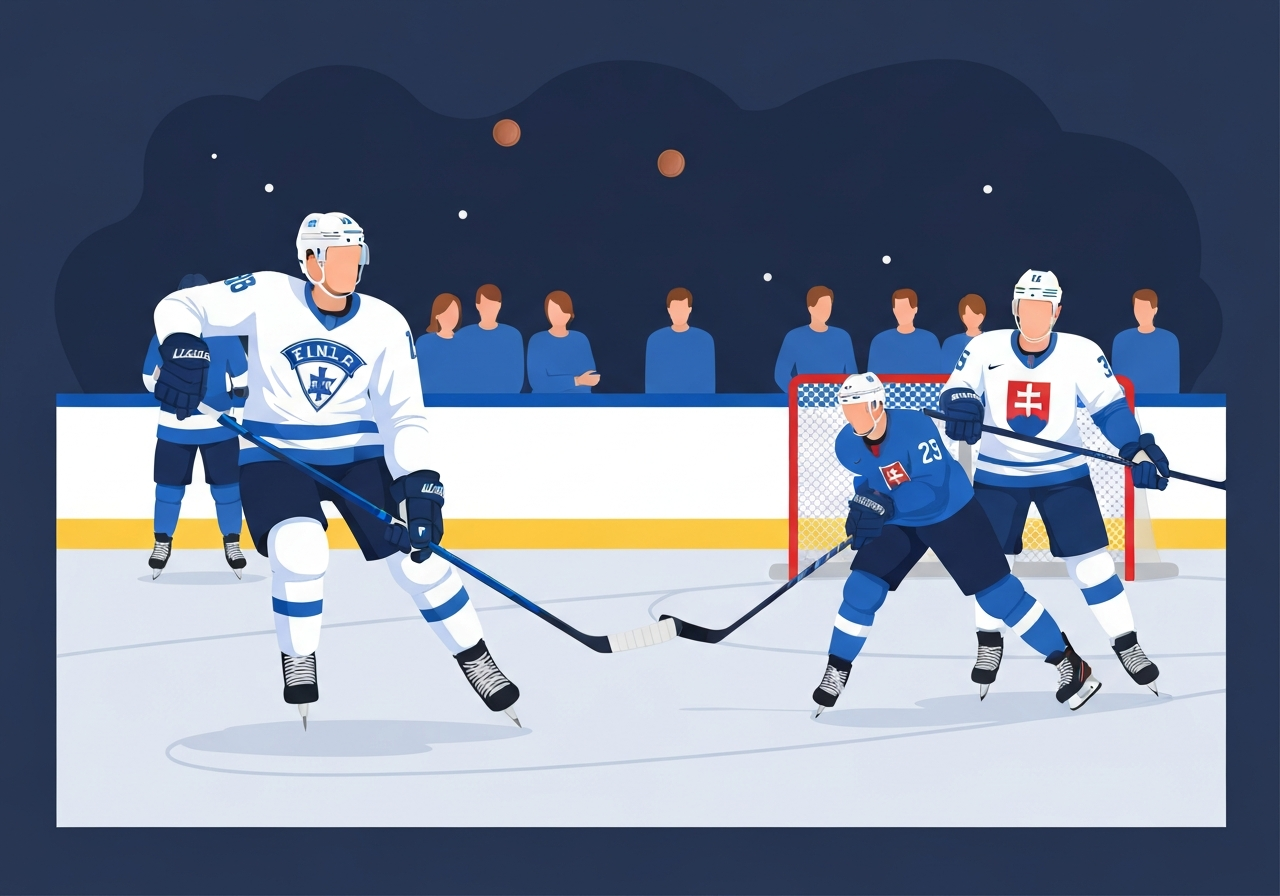
Lead: In Milan on Saturday, Finland rebounded from a heartbreaking semifinal loss to Canada to beat Slovakia 6-1 and secure the Olympic bronze medal. Veteran leaders and coaches rallied the squad after Friday’s collapse, refocused the roster and produced a dominant showing in the medal game. Slovakia, which had entered the weekend buoyed by a first-time Olympic podium in 2022, left without a medal and with visible disappointment among players and fans. The result underscored both Finland’s consistency at recent Olympics and Slovakia’s narrow but meaningful progress on the international stage.
Key Takeaways
- Finland defeated Slovakia 6-1 in the bronze-medal game in Milan on Saturday, converting a chance to finish on the podium after losing to Canada in the semifinals.
- Finland rallied under veteran voices including captain Mikael Granlund and defenseman Olli Määttä; Niko Mikkola emphasized the rarity and meaning of Olympic chances.
- Goal scorers for Finland included Sebastian Aho, Erik Haula, Roope Hintz, Kaapo Kakko and Joel Armia, with Haula and Armia adding empty-netters in the closing minutes.
- Slovakia, bronze medalists in Beijing 2022, finished fourth; Juraj Slafkovský had eight points in six games across the tournament but did not score in the bronze game.
- Statistics cited by team staff: 752 Canadians, 222 Americans, 83 Swedes and 39 Finns played at least 10 NHL games this season; Finland’s small NHL pool (39 players) contrasts with its deep Olympic medal record.
- Finland has medaled in five of the six Olympics played since NHL participation resumed in this era, a run that includes a Beijing gold and several podium finishes.
Background
Finland arrived in Milan carrying the weight of expectation and recent Olympic success, but the path to the bronze was bumpy. The team suffered a gutting semifinal loss to Canada after surrendering a two-goal lead, leaving the Olympic village quiet and the dressing room despondent on Friday night. Finnish veterans and staff — including assistant coaches Tuomo Ruutu and Ville Peltonen — repositioned the team’s focus toward one remaining objective: an Olympic medal that only comes around rarely in a player’s career.
Historically, Finland has outperformed its NHL-player pool in tournament play, turning a small set of elite professionals into consistent international success. The country’s style — disciplined two-way play and opportunistic offense, often summarized by the Finnish term ‘sisu’ — has produced medals across recent cycles. Slovakia, by contrast, won its first Olympic men’s hockey medal in Beijing 2022 and entered Milan hoping to build on that breakthrough despite fielding a much younger roster and fewer NHL regulars.
Main Event
The bronze game began with Finland pressing early and converting on chances, as Sebastian Aho and Erik Haula established a 2-0 lead in the opening periods. Unlike the semifinal, Finland did not retreat after taking a lead; the team sustained attacking pressure, forcing goaltender Samuel Hlavaj into heavy workload and eventually breaking through again in the third period. Slovak captain Tomáš Tatar provided a late second-period lifeline with a goal that made the score 2-1, but Finland extended the margin as Rohpe Hintz and Kaapo Kakko scored in the third.
Late in the game Joel Armia and Erik Haula added empty-net goals that reflected Finland’s control in the final minutes and removed any remaining hope of a Slovak comeback. For Finland, the victory was as much psychological as tactical: a recovery from the loss to Canada and a validation of messages delivered by senior players and coaches overnight. For Slovakia, the match felt like a lost opportunity; players and staff had expressed optimism 24 hours earlier but emerged visibly dejected after coming up short when a medal was within reach.
Individual storylines punctuated the match: Määttä, who experienced the disappointment of Sochi early in his career, took a veteran’s role in steadying the group; Juraj Slafkovský, Slovakia’s top-scoring forward in the tournament, finished with eight points but could not produce in the bronze game; and key Finnish absences — notably Mikko Rantanen (lower-body injury) and long-term absentee Aleksander Barkov — underscored the depth Finland leaned on to secure bronze.
Analysis & Implications
Finland’s victory in Milan reinforces a pattern: a nation with a relatively small NHL representation can convert cohesion, coaching and tactical discipline into sustained Olympic success. The Finnish model emphasizes two-way forwards, structured defensive schemes and opportunistic transitions, which offsets a limited talent pool measured strictly by NHL counts. That system delivered Finland a medal in five of the last six Olympics of this era, a remarkable rate given the numbers.
For Slovakia, a fourth-place finish is a mixed outcome. It lacks the immediate celebratory payoff of a medal, and players voiced acute disappointment; yet the tournament also demonstrated tangible progress. Slovakia beat Finland in the preliminary round, finished atop Group B via a last-minute goal against Sweden, and fielded the youngest roster in Milan while still reaching the final four. Those results suggest organizational momentum that could translate into a larger NHL presence in future cycles.
Sporting development, however, is neither automatic nor guaranteed. Slovakia’s pathway back to regular podium contention will likely require structural investments — player development, increased exposure to top-tier leagues and retention of emerging talent in high-level environments. For Finland, maintaining coaching stability and a pipeline that cultivates two-way responsibility will be critical to preserving its podium frequency when top-tier NHL players are available elsewhere.
Comparison & Data
| Country | Players with ≥10 NHL Games (this season) | Recent Olympic Medals (era) |
|---|---|---|
| Canada | 752 | Fewer podiums than Finland in last six NHL-era Olympics |
| United States | 222 | Fewer podiums than Finland in last six NHL-era Olympics |
| Sweden | 83 | Fewer podiums than Finland in last six NHL-era Olympics |
| Finland | 39 (7 goalies, 8 defensemen) | Five medals in six Olympics of this era, including Beijing gold |
The table underscores the contrast between raw NHL representation and tournament results. Finland’s small number of NHL players contrasts sharply with larger pools in Canada and the United States, yet Finland’s medal yield remains disproportionately high. That divergence points to systemic differences in player development and tournament preparation rather than simple talent counts.
Reactions & Quotes
We talked about how meaningful it is that you play in the Olympics. You probably have one or two chances in your whole career, you want something to remember it by.
Niko Mikkola, Finland defenseman
Everybody was a little disappointed, obviously — OK, a lot. But at the same time, the respect and appreciation for this tournament — you win a medal in the Olympics, it’s a big thing.
Olli Määttä, Finland defenseman
The guys that are already home, they don’t have a medal. And we don’t have one either. Right now, that’s how I feel. It sucks. Losing sucks.
Juraj Slafkovský, Slovakia forward
Unconfirmed
- Whether Slovakia’s fourth-place finish will immediately lead to a substantial increase in NHL players on future rosters remains uncertain and depends on player development and contract trajectories.
- The long-term impact of this tournament on Juraj Slafkovský’s NHL trajectory is unresolved; assessments about lasting career effects are speculative at this stage.
Bottom Line
Finland’s 6-1 bronze-medal victory in Milan is both a response to immediate disappointment and evidence of a resilient national system that converts limited top-league numbers into consistent podium results. Veteran leadership, coaching focus and a collective identity allowed Finland to reset after the semifinal loss and finish among the medals.
For Slovakia, the outcome is painful in the short term but carries constructive elements: an energetic young roster, meaningful wins in group play and a final-four appearance that can serve as a foundation. Whether that foundation produces a sustained return to the podium will hinge on development pathways and increased exposure to top-tier professional play.