
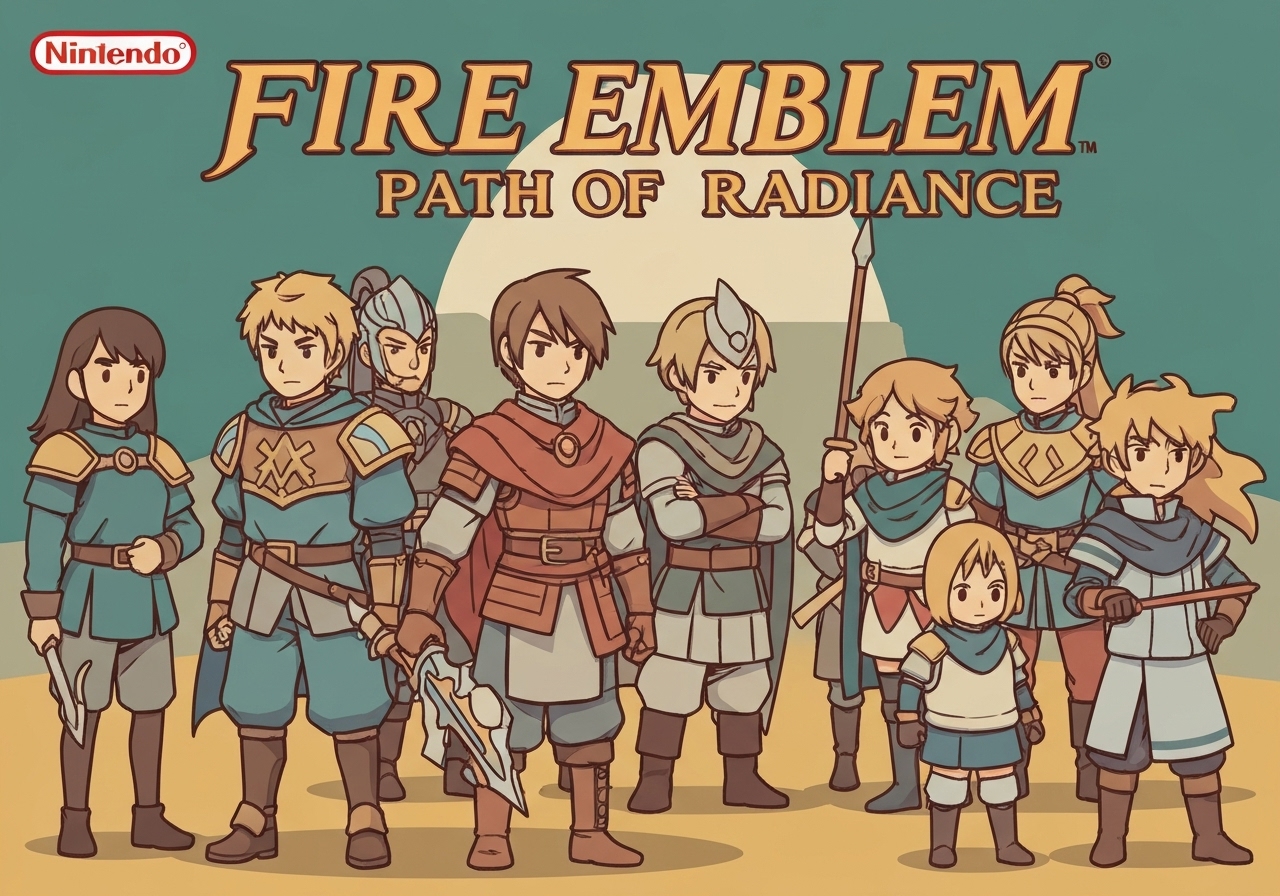
Lead
Nintendo has announced that Fire Emblem: Path of Radiance, the tactical role‑playing game first released for the Nintendo GameCube in 2005, is now available under the Nintendo Classics banner. The port preserves the series’ signature permadeath mechanics while presenting fully voiced cutscenes and 3D battle maps. The release brings Ike and the conflict on the continent of Tellius to a new audience on Nintendo’s modern platforms. Additional online features may require a Nintendo Switch Online membership and a Nintendo Account.
Key Takeaways
- Fire Emblem: Path of Radiance originally launched for Nintendo GameCube in 2005 and has been added to Nintendo Classics.
- The release includes fully voiced cutscenes and 3D battlefield maps consistent with the original GameCube presentation.
- The game retains permanent unit loss (permadeath): units defeated in battle are removed from the roster for the rest of the campaign.
- Story setting: the continent of Tellius, featuring the human beorc and the half‑human laguz races and escalating intergroup conflict.
- Protagonist: Ike leads a diverse cast through a narrative centered on rising threats and social tensions between beorc and laguz.
- Legal and service notes: © 2005 Nintendo / INTELLIGENT SYSTEMS; online features note that Nintendo Switch Online membership and a Nintendo Account are required for certain functions.
Background
Fire Emblem: Path of Radiance is the GameCube entry in Intelligent Systems’ long‑running tactical RPG franchise. On release in 2005 the title was notable for adopting fully voiced scenes and polygonal battlefields, moving away from purely sprite‑based presentation used in earlier series entries. Its combination of character‑driven storytelling and unforgiving combat — where defeated units can be permanently lost — helped solidify the series’ appeal among strategy RPG fans.
The narrative unfolds on Tellius, a continent defined by historical tension between beorc (humans) and laguz (half‑human, shapechanging peoples). That premise drives both the tactical challenges and the political themes of the game: alliances, prejudice, and wartime pragmatism. Over time the game’s characters, particularly protagonist Ike, have become recurring touchstones for the franchise and its community discussions about narrative and design choices.
Main Event
Nintendo’s announcement places Path of Radiance within the Nintendo Classics line, presenting the GameCube original to current players. The listing emphasizes the original’s audiovisual elements—fully voiced cutscenes and 3D maps—while noting the core battle rules remain intact, including permanent unit loss for fallen characters. The company also highlights that certain online services tied to the Classics offering will require a Nintendo Switch Online membership and a Nintendo Account for access.
Practically, the move makes one of the franchise’s most discussed entries more accessible to players without a GameCube or legacy hardware. For longtime fans, the release offers an opportunity to revisit the original pacing and character roster; for newcomers, it provides direct access to the storyline that introduced Ike and expanded the series’ tactical scope. The announcement page reiterates copyright attribution to Nintendo and Intelligent Systems dating to 2005.
Regional availability and exact platform support (for example, cross‑save or cloud features) are specified only in broad terms by Nintendo: some online components are noted as not available in every country. Pricing, store page details, and platform‑specific convenience features are handled through Nintendo’s storefront and associated purchase terms.
Analysis & Implications
Bringing Path of Radiance to Nintendo Classics is part of a broader effort to monetize and preserve legacy Nintendo titles for contemporary audiences. From a business perspective, repackaging notable GameCube-era entries can both attract lapsed players and introduce canonical series entries to new fans ahead of future franchise launches. The presence of a well‑known protagonist like Ike increases the title’s marketability across demographics.
From a design and preservation viewpoint, offering the original mechanics unchanged — notably permadeath — preserves the designer intent and historical gameplay experience. That choice will satisfy purists but may limit accessibility for players who prefer modern conveniences like mandatory revival or extensive save‑state systems. How Nintendo balances authenticity with optional accessibility settings will shape reception among different player groups.
Internationally, decisions about which legacy titles to reissue influence cultural memory of a franchise. Path of Radiance’s narrative dealing with race, conflict, and leadership may prompt renewed critical discussion around its themes in contemporary contexts. Meanwhile, the technical act of emulation or platform adaptation raises questions about fidelity to original audiovisual presentation versus enhancements for modern displays.
Comparison & Data
| Edition | Original Platform | Original Year | Notable Features |
|---|---|---|---|
| Original release | Nintendo GameCube | 2005 | Fully voiced cutscenes, 3D maps, permadeath |
| Nintendo Classics edition | Nintendo Classics / modern platforms | Reissued (announcement date on Nintendo site) | Preserves original voice and 3D maps; online features may require Nintendo Switch Online |
The table highlights that the core audiovisual and mechanical identity of the GameCube original is retained in the Classics edition. This continuity matters for preservationists and fans who prioritize the original experience over contemporary remakes or remasters. Specific added conveniences (save options, rewinds, display filters) are not detailed in the official announcement and should be verified on the product page.
Reactions & Quotes
“the brutal battle system where your units are gone for good if they fall in a fight!”
Nintendo Official Site (official announcement)
“Fully‑voiced cutscenes and 3D maps accompany the return”
Nintendo Official Site (official announcement)
“Nintendo Switch Online membership (sold separately) and Nintendo Account required for online features.”
Nintendo Official Site (official announcement / service notice)
Both community reaction and industry commentary are likely to focus on the authenticity of the release and on whether Nintendo will add modern accessibility options. Early fan responses typically emphasize nostalgia for the original cast and debate the ongoing merits of permadeath as a design choice.
Unconfirmed
- Whether the Nintendo Classics edition includes optional accessibility features (autosaves, revive toggles, rewind) is not specified in the announcement.
- Exact regional availability and launch date details for every market were not provided on the announcement page.
- Pricing and any launch discounts or bundled offers for Nintendo Classics versions were not detailed in the official notice.
Bottom Line
Nintendo’s addition of Fire Emblem: Path of Radiance to Nintendo Classics makes a culturally significant GameCube-era title widely accessible again while preserving its core audiovisual and mechanical identity. For veteran players, the release is a chance to replay an influential entry; for newcomers, it offers direct exposure to the Tellius setting and the franchise’s strategic roots.
Key points for readers to watch next are regional availability, whether Nintendo introduces optional accessibility options, and how the company prices and packages the Classics edition. Confirming those items on Nintendo’s storefront or the product page will clarify the hands‑on experience for different player preferences.