
Lead
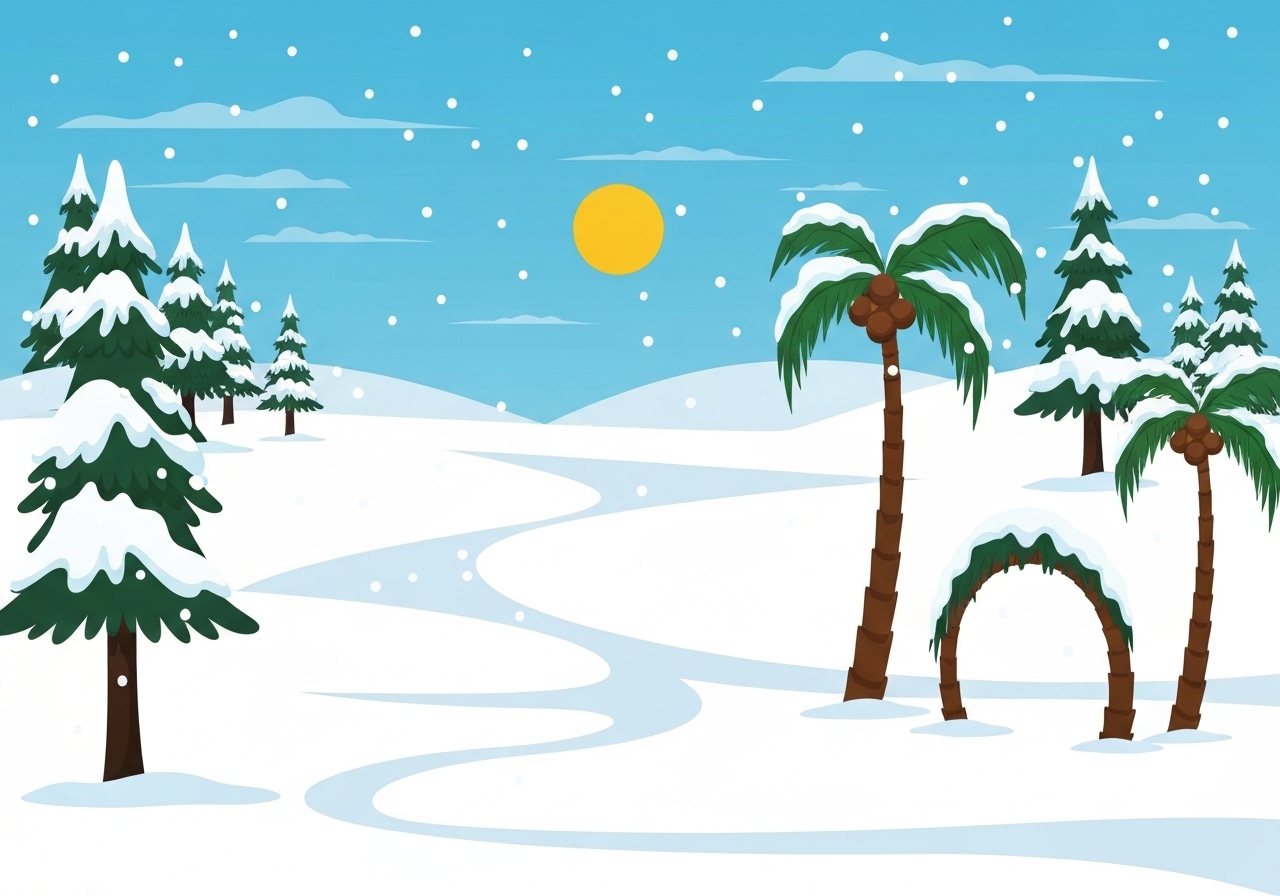
On Jan. 18, 2026, a narrow surge of frigid air turned late rain into brief snow across parts of Florida’s western Panhandle, marking the second notable snowfall in roughly a year for the region. Grass, rooftops and a few palm fronds recorded light accumulations that melted quickly on contact with warm surfaces, while nearby states from southeastern Alabama to southern Georgia also reported flurries. The same corridor saw far heavier snow on Jan. 21, 2025, when some locations recorded up to 8 inches (20 cm). Elsewhere, New England and the Upper Midwest faced separate winter impacts, including a blizzard warning in parts of Minnesota and North Dakota.
Key Takeaways
- On Jan. 18, 2026, parts of the western Florida Panhandle experienced brief snow that dusted grass and rooftops but largely failed to stick to roads.
- Less than a year earlier, on Jan. 21, 2025, the same areas received as much as 8 inches (20 cm) of snow, the most significant local snowfall since the late 1800s.
- Southeastern Alabama and southern Georgia also reported measurable flurries on Jan. 18, 2026, extending the rare southern event.
- New England forecasters predicted 3–5 inches (7–13 cm) for parts of Connecticut, Rhode Island and Massachusetts during evening hours, potentially affecting a 3 p.m. NFL kickoff in Foxborough.
- A blizzard warning was active through the evening for portions of northwest and west-central Minnesota and southeast North Dakota, where winds up to 55 mph (88 kph) could produce whiteout conditions despite only ~2 inches (5 cm) of expected snow.
- Chicago faced minimal accumulation but dangerously cold temperatures in the teens with wind chills near zero, posing travel and exposure risks.
- Social media showed flakes on beaches and palm trees, underscoring how locally unusual the precipitation was for the Deep South.
Background
Snow in this stretch of the Deep South is rare but not unprecedented. The Jan. 21, 2025 event left some Panhandle communities with up to 8 inches (20 cm) of snow—the most since the late 19th century in places—altering local expectations about what southern winter systems can deliver. Those earlier accumulations remained an outlier; climatologically, Florida is insulated from prolonged cold air masses that support sustained snowfall.
The Jan. 18, 2026 episode was produced by a cold front pushing a shallow pool of Arctic air far enough south to convert late showers into snowflakes across a narrow coastal corridor. State and federal forecast offices, local officials and residents all noted the tight spatial footprint: heavy effects hundreds of miles north and west contrasted with only flurries or a dusting in Panhandle communities.
Main Event
Sunday morning’s transition began as rain ahead of a cold front and changed to snow as temperatures briefly dipped below freezing in exposed surfaces and grassy areas. Photos and videos circulated showing light accumulations on rooftops and lawns, and rare images of snow tucked in palm fronds near the coast. Roadways, warmed by recent milder conditions, generally stayed wet rather than icy, and officials reported no widespread traffic incidents tied to the brief snowfall.
Across Georgia, Columbus and Macon recorded snow on the ground, and forecasts warned of slick spots that could complicate morning travel. In southeastern Alabama and southern Georgia, observers also reported scattered flurries, reinforcing that the southern reach of the cold air was not limited to Florida alone. Local emergency managers issued routine advisories but did not activate large-scale responses.
Farther north, New England meteorologists called for 3–5 inches (7–13 cm) across parts of Connecticut, Rhode Island and Massachusetts during afternoon into evening hours, with meteorologist Kyle Pederson noting the snow would be “wet and heavy” and timing it after a 3 p.m. kickoff in Foxborough. In the Upper Midwest, blizzard conditions were possible where wind gusts to 55 mph (88 kph) could create dangerous whiteouts even with limited new accumulation.
Analysis & Implications
The immediate impact in Florida was mostly symbolic and photogenic rather than disruptive, but it underscores a growing challenge for communities outside typical winter zones: rare events can still produce hazardous localized conditions because infrastructure and driver expectations are tuned to milder weather. Even brief snow can create slick bridges, shaded cul-de-sacs, and momentary disruptions at schools or transit hubs.
From a forecasting perspective, these narrow coastal snow bands highlight the sensitivity of precipitation type to small changes in temperature profiles near the surface. A shallow layer of subfreezing air that reaches only a few meters above ground can flip rain to snow for a short time and in a tight corridor, complicating guidance and messaging for emergency managers and the public.
Climatologically, a single or a pair of anomalous winters does not constitute a trend, but such events do feed local perception about changing weather patterns. Scientists caution against conflating isolated occurrences with long-term climate shifts; attribution requires systematic analysis of frequency and drivers across decades. Nonetheless, communities may need to reconsider preparedness for low-probability, high-impact winter events.
Comparison & Data
| Event Date | Location | Reported Snow |
|---|---|---|
| Jan. 21, 2025 | Florida Panhandle | Up to 8 in (20 cm) |
| Jan. 18, 2026 | Florida Panhandle | Light dusting; brief accumulation on grass/roofs |
| Jan. 18, 2026 | New England (parts) | 3–5 in (7–13 cm) forecast |
| Jan. 18, 2026 | NW/West-central MN & SE ND | ~2 in (5 cm) expected; gusts to 55 mph (88 kph) |
This table contrasts the deep-snow event of January 2025 with the shallow, coastal-limited snowfall of January 2026 and the concurrently forecast impacts elsewhere. The key takeaway: depth and persistence of cold air determine both accumulation and hazard. Local records and reporting show that 2025’s event remains far more significant in accumulation than the 2026 dusting.
Reactions & Quotes
Forecasters emphasized timing and scope to temper public concern while advising caution for late-afternoon travel:
“There’s a low-pressure system passing offshore and it’s close enough to bring us some snow, but far enough away not to be a major hit.”
Kyle Pederson, National Weather Service meteorologist
Officials in the Upper Midwest stressed the danger from wind-driven conditions rather than accumulation:
“Even with only a couple inches expected, 50+ mph gusts could create whiteout conditions and life‑threatening travel hazards.”
National Weather Service advisory
Local residents and social media users shared images and surprise, underscoring the event’s rarity and public interest in unusual weather in the Sunshine State.
Unconfirmed
- Reports of measurable accumulation on major roadways in the Panhandle remain unverified; local officials reported mainly grass and rooftop dustings.
- Some social media posts suggested wider coastal accumulations; these claims are inconsistent with official NWS spot reports and remain unconfirmed.
Bottom Line
The Jan. 18, 2026 snowfall in Florida was notable largely for its rarity and photographic appeal rather than for widespread disruption. It illustrates how marginal temperature profiles can create narrowly confined wintry conditions in places that rarely see snow.
For planners and the public, the episode is a reminder to heed forecasts even where significant accumulations are unlikely: short-lived snow can still create localized hazards. In the broader view, a couple of anomalous winters do not by themselves indicate climate-driven shifts, but they do test readiness in regions unaccustomed to winter weather.