
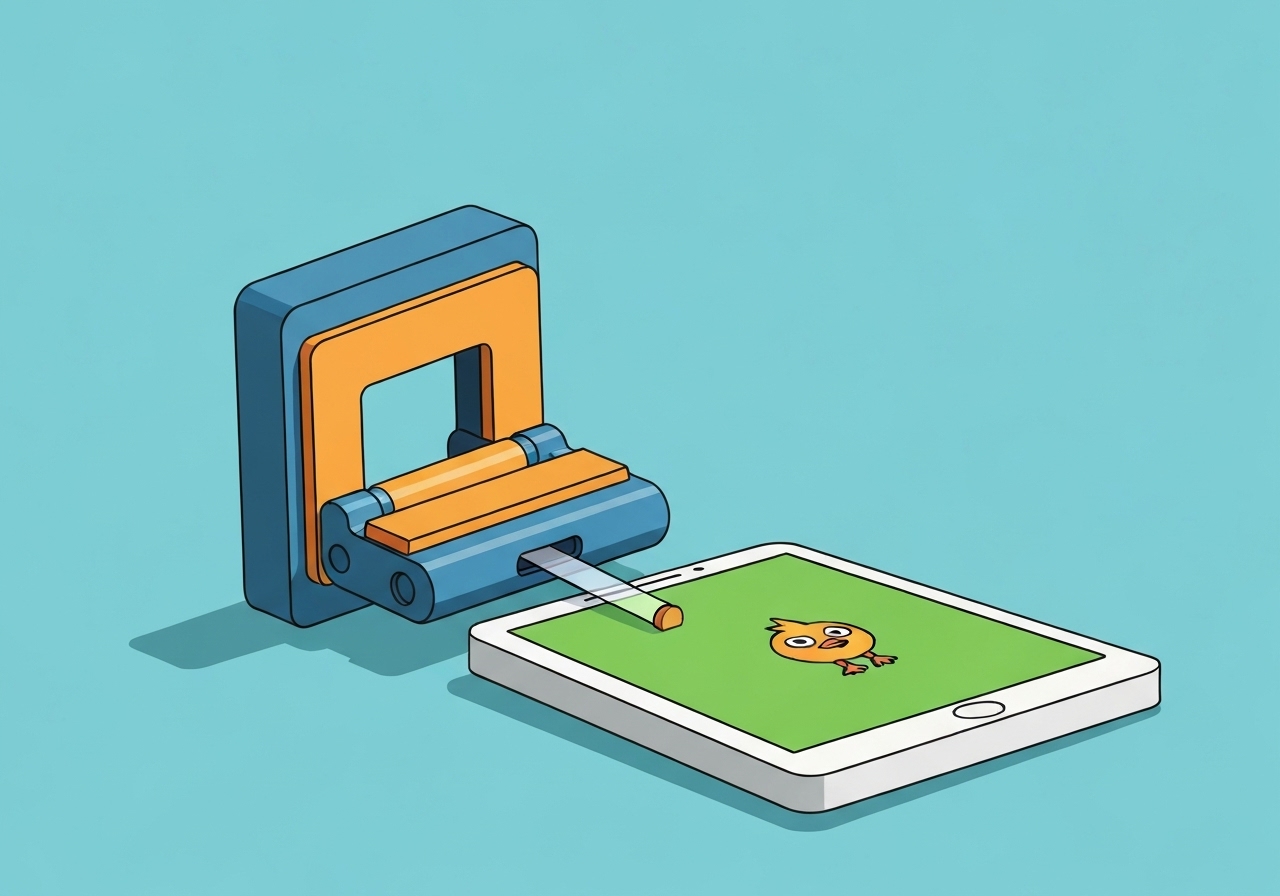
— A small web project called Foldy Bird, created by @rebane2001, converts a foldable phone’s hinge motion into the game’s sole control: fold or unfold to make the bird jump. The Chrome-based game runs only on Android foldables and is hosted at lyra.horse/fun/foldy-bird/. Early tests show it works on the Galaxy Z Fold 7 and Pixel 10 Pro Fold and forces a pronounced snap-open motion every time the player times a jump near an obstacle.
Key Takeaways
- Foldy Bird is a web-only Flappy Bird clone that uses fold/unfold gestures as input; it requires Chrome on an Android foldable device.
- The jump triggers at the end of an unfold motion, producing a sharp snap-open movement each time the player times a jump near a pipe.
- Developer: @rebane2001; play at lyra.horse/fun/foldy-bird/ (no app download required).
- Confirmed working on Galaxy Z Fold 7 and Pixel 10 Pro Fold in reported tests; Motorola Razr and some clamshell devices remain untested.
- The mechanic effectively encourages rapid, repeated hinge motions — a potential wear vector for foldable devices.
- The project is presented as an experimental, novelty web game rather than an official manufacturer test or stress tool.
Background
Foldable smartphones have rapidly evolved over the past several years but still present a different durability profile than slab-style phones. Manufacturers publish durability guidance and in some cases folding-cycle ratings, and those guidelines shape owner expectations about hinge longevity. Mechanical hinges add complexity: tiny tolerances, moving parts, and interactions with display materials make both design and long-term wear more challenging than for single-piece displays. Meanwhile, simple, input-driven games have historically been used as demonstrations of device capabilities — here, a classic one-button mechanic has been adapted to a physical motion.
Web developers and hobbyists often use device-specific sensors and events to craft playful experiments, particularly as the browser ecosystem adds APIs for foldable screens and multi-display setups. Foldy Bird follows that tradition by using the fold state as a control signal; unlike an app distributed through an official store, it runs from a developer-hosted web page and depends on browser behavior and device sensors. That context matters: the creator’s intent appears to be an amusing experiment, not an endorsed stress test by any manufacturer.
Main Event
The game’s control is straightforward: instead of tapping a touchscreen to make the in-game bird ascend, players fold and then unfold their device. According to tests reported alongside the project, the jump action fires at the very end of the unfold motion, which means players get a pronounced snap-open movement when they try to clear pipes. That timing turns a simple digital input into a repeated physical action with noticeable haptic feedback.
Foldy Bird runs in Chrome and detects foldable state changes exposed by the browser/device. The creator’s page gives an immediate invitation to play, and testers confirmed compatibility with larger foldables such as the Galaxy Z Fold 7 and Pixel 10 Pro Fold. There is no downloadable app or store listing — access is exclusively through the project URL — so anyone curious must visit the site on a supported device.
Players reported the experience as intentionally mischievous: the mechanic amplifies frustration and physical exertion in equal measure, encouraging quick reflexes and repeated snaps. The game’s minimal codebase and dependence on fold-state events make it an easy demonstration of how hardware affordances can be repurposed for gameplay, but they also raise questions about unintended wear from repetitive mechanical input.
Analysis & Implications
From a device-longevity perspective, Foldy Bird highlights a tension between playful use and mechanical limits. Foldable makers design hinges to tolerate many thousands of cycles, but consumer behavior that deliberately accelerates repetitive motions could increase wear compared with normal use patterns. Manufacturers typically reserve warranty coverage for defects rather than damage from deliberate misuse, so users who stress a hinge intentionally may face denied repair claims if a problem arises.
On the software side, the game underscores how quickly creative projects can repurpose device signals. Browser and web-platform vendors expose fold-related events to enable better app and layout experiences on new device classes; those same signals can be used for controls. That duality suggests vendors and OEMs may need clearer guidance or safeguards if unintended inputs become associated with hardware stress.
For consumers, the practical implication is simple: novelty web games that exploit physical device features can be fun but carry risk. Users should weigh the entertainment value against the cost of out-of-warranty repairs, and device makers may consider updating user guidance to discourage intentionally repetitive hinge stress. Retailers and repair services should also be prepared for questions about wear patterns that are software-driven rather than manufacturing faults.
Comparison & Data
| Device / Class | Reported Foldy Bird Result |
|---|---|
| Galaxy Z Fold 7 | Confirmed working in tests (pronounced snap-open on jump) |
| Pixel 10 Pro Fold | Confirmed working in tests (pronounced snap-open on jump) |
| Motorola Razr (clamshell) | Not tested / compatibility unconfirmed |
The quick device comparison above summarizes reported compatibility from early testers rather than exhaustive lab testing. It shows Foldy Bird functions on larger book-style foldables that expose fold-state events in Chrome; results for clamshell devices or older models may differ due to hardware or browser variations.
Reactions & Quotes
“fold/unfold your phone to jump.”
Foldy Bird project page (developer @rebane2001)
The project’s own instruction is literal and minimal, emphasizing the gimmick: a fold motion is the control. That design choice is what turns routine play into a physically repetitive action.
“it hurts my soul.”
9to5Google (technology site)
That blunt reaction from tech reporting captures the mix of amusement and cringeworthiness many testers describe — a reminder that novelty can quickly turn into a device-stressing habit.
Unconfirmed
- Long-term damage from playing Foldy Bird regularly is not proven; no longitudinal wear study has been published tied to this game.
- Compatibility with clamshell foldables such as some Motorola Razr models is untested and may vary by browser and firmware.
- Any specific manufacturer’s warranty responses to damage allegedly caused by this game have not been publicly documented.
Bottom Line
Foldy Bird is a clever, low-effort demonstration of how the foldable hinge can be treated as an input device; it is intentionally provocative in turning a software action into a repeated mechanical motion. As a novelty, it shows how quickly device affordances can be repurposed for entertainment, but it also exposes a practical consumer risk: deliberate, repeated hinge motion is a plausible vector for accelerated wear.
If you’re curious, try the game on a device you can afford to experiment with and avoid making it a habitual stress test. For owners of high-end foldables, the safer course is to treat such projects as one-off amusements rather than routine use, and to consult manufacturer guidance if you’re concerned about hinge longevity or warranty coverage.
Sources
- lyra.horse/fun/foldy-bird/ — project page by the developer (@rebane2001), primary project host (developer site)
- 9to5Google: Flappy Bird clone for foldables — technology reporting summarizing the project and tests (tech news)