
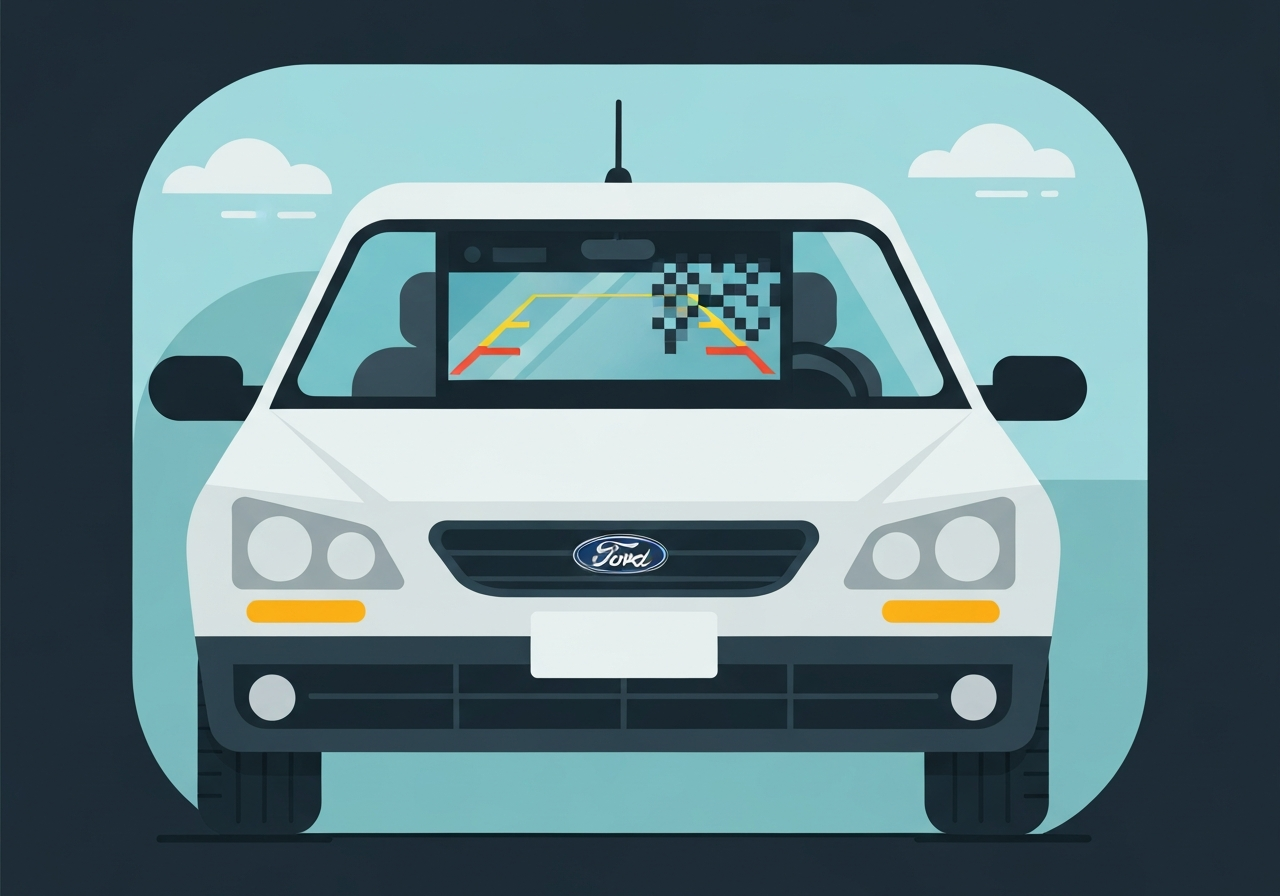
Lead: On March 7, 2026, Ford announced two U.S. recalls covering about 1.74 million vehicles after regulators identified defects in rearview camera displays that could raise crash risk. The National Highway Traffic Safety Administration posted notices this week showing one defect can cause an infotainment component to overheat and shut down, while another can display an inverted rearview image. Ford says it estimates all listed vehicles have the defects and reported no injuries tied to these flaws as of the recall filings. Owners will be notified by mail; remedies include an available software update for some models and a remedy in development for others.
Key Takeaways
- Two recalls affect a combined 1,739,260 U.S. vehicles: 849,310 Ford Broncos and Edges, and 889,950 Ford Escapes, Lincoln Corsairs, Aviators and Explorers.
- The Bronco and Edge issue stems from an internal Accessory Protocol Interface Module (APIM) component that may overheat, causing the rearview image to go blank while reversing.
- Escapes, Corsairs, Aviators and Explorers may present a flipped or inverted rearview image, potentially misleading drivers when backing up.
- Ford plans to deliver a free APIM software update for affected Broncos and Edges by late March 2026, via dealers or an over-the-air update.
- For the inverted-image recall, Ford says a final repair is still being developed; interim notices to owners will be mailed in the coming months.
- NHTSA warns both defects could increase crash risk, though Ford and regulators report no confirmed injuries or accidents so far.
- Vehicle owners can check recalls via NHTSA or Ford using their VIN or call Ford customer service at 1-866-436-7332.
Background
Rearview camera systems became federally required for new vehicles in the United States in 2018, and since then camera-based reverse visibility has become a core safety feature across automakers. The systems rely on camera hardware, wiring, and increasingly complex infotainment modules that process and display the camera feed on in-cabin screens. As automakers add larger touchscreens and integrated connectivity, more functions are consolidated into modules such as Ford’s APIM, raising the consequences of a single component failure. Recalls tied to infotainment and software have grown in frequency over recent years, reflecting both the complexity of modern vehicle electronics and regulators’ focus on human-machine interface failures that can create immediate safety hazards.
Ford’s current recall notices follow standard NHTSA procedures: the agency posts formal defect notices, manufacturers notify owners, and remedies are proposed or implemented. The models named in these notices span model years 2020 through 2026 across Ford and Lincoln brands, illustrating the cross-model use of shared modules and software. Historically, some automakers have been able to roll out over-the-air updates for software-related defects, while hardware fixes have required dealer visits; regulators and owners are watching which path each recall will follow.
Main Event
According to NHTSA documents filed this week, an internal component inside the APIM for certain 2021–2026 Broncos and 2021–2024 Edges may overheat and cause the infotainment unit to shut down. When that shutdown occurs, the rearview camera image can disappear while the vehicle is in reverse, removing the driver’s visual aid at a critical moment. Ford plans a free APIM software update as the remedy, with owner-notification letters scheduled to be mailed at the end of March 2026 and the update available at dealers or delivered over the air where applicable.
The separate recall covers certain 2020–2022 Ford Escapes and Lincoln Corsairs, plus 2020–2024 Lincoln Aviators and Explorers, which may display a flipped or inverted rearview image. An inverted image can invert left-right orientation, potentially causing a driver to misjudge the direction of obstacles when backing. Ford’s recall filing states a remedy is still under development for those vehicles, so interim owner letters outlining the safety risk will be mailed in the coming months while engineers finalize the fix.
Ford’s recall filings state the company estimates all affected vehicles contain the defects, and the automaker told regulators it is not aware of any injuries or crashes linked to either defect so far. NHTSA emphasized that both conditions could increase the risk of a crash if drivers are deprived of an accurate rearview display. The Associated Press reached out to Ford in Michigan for comment; Ford’s customer service and online VIN lookup remain primary channels for owners seeking details.
Analysis & Implications
The recalls underscore how the centralization of vehicle functions into infotainment modules creates single points of failure that can have safety consequences. In older vehicles, a failed reverse lamp or mirror required a simple hardware repair; now a software fault or thermal failure in a consolidated module can disable a mandated safety function across many models. That design trade-off—integration for user convenience and cost versus the risk of broader impact from a single failure—will be a recurring regulatory and engineering challenge.
Over-the-air updates offer a faster path to remediation for software-related defects and can reduce dealer burden, but they depend on vehicles being connected and on the defect being solvable by software alone. Ford’s choice to deploy an APIM software patch for Broncos and Edges reflects that dynamic; conversely, the lack of a ready remedy for the inverted-image issue suggests either a hardware component or a more complex software fix is required. Regulators and consumer advocates will watch whether Ford can deliver a timely permanent remedy for the second recall without undue delay.
There are broader market effects to consider: recalls on nearly 1.74 million vehicles can affect resale values for the specific models and increase dealer service demand. Insurance and liability exposure remains a potential concern if future incidents are linked to these defects, though no such claims have been reported yet. For policymakers, the episode could bolster calls for clearer standards on how integrated electronic modules are certified and how quickly over-the-air remedies must be made available.
Comparison & Data
| Group | Models | Units Affected |
|---|---|---|
| Recall A | Ford Bronco (2021–2026), Ford Edge (2021–2024) | 849,310 |
| Recall B | Ford Escape (2020–2022), Lincoln Corsair (2020–2022), Lincoln Aviator (2020–2024), Lincoln Explorer (2020–2024) | 889,950 |
| Total | Combined | 1,739,260 |
The table shows the recall groups and exact unit counts filed with NHTSA: 849,310 vehicles in the Bronco/Edge recall and 889,950 in the Escape/Corsair/Aviator/Explorer recall, for a total of 1,739,260 units. Presenting the recall in two groups clarifies why remedies and timelines differ: the APIM overheating defect has a software-based patch ready, while the inverted-image fault remains under investigation. These figures come directly from the formal NHTSA recall notices posted in March 2026.
Reactions & Quotes
Regulators framed the recalls as preventive measures intended to reduce the chance of collisions tied to impaired rear visibility. Below are representative statements and expert reaction with context.
Before the first blockquote, regulators pointed to the safety role of rearview cameras mandated since 2018 and noted that any loss of that view during reversing raises immediate risk. The NHTSA filing explicitly warned drivers that both types of display failures could increase crash risk.
‘These recalls address conditions that can deprive drivers of a required rearview image, which may increase the risk of a crash when reversing,’
NHTSA recall notice (regulator)
Ford provided procedural details in its recall filing and customer outreach plans while noting no known injuries to date. The company emphasized options for a software update where feasible and that owner notifications will be mailed as required.
‘We are notifying owners and will provide a free remedy for affected vehicles; software updates will be available via dealers or over-the-air for applicable vehicles,’
Ford filing/statement (manufacturer)
Independent safety analysts said the recalls highlight a systemic challenge: as more driving functions move to software-controlled modules, recalls will increasingly mix software and hardware solutions. Experts suggested owners should monitor official channels and avoid assuming a recalled issue is noncritical.
‘The mix of software and hardware in modern infotainment means recalls like these will become more common, and timely over-the-air fixes matter for safety and convenience,’
Independent auto safety analyst (expert)
Unconfirmed
- Whether the inverted-image defect is caused primarily by hardware, software, or a combination remains unspecified in the filing and is still under investigation.
- Exact timing for the permanent remedy for Escapes, Corsairs, Aviators and Explorers has not been set; Ford only indicated interim owner letters will be mailed in the coming months.
- It is not yet confirmed what proportion of affected vehicles will be reachable via over-the-air update versus requiring a dealer visit for repair.
Bottom Line
Ford’s two recalls affecting about 1.74 million U.S. vehicles show how modern vehicle electronics can create widely distributed safety impacts when a common module or software function fails. The APIM overheating fault has a software remedy ready for many Broncos and Edges, illustrating the advantage of OTA-capable systems for rapid mitigation. The inverted-image issue across several Ford and Lincoln models lacks a final fix, meaning owners should expect follow-up communications and potentially dealer service.
Owners of affected models should check NHTSA’s recall database or Ford’s VIN lookup as soon as possible and heed mailed notices when they arrive; if a vehicle displays a blank or inverted rearview image, drivers should avoid relying solely on the camera when reversing and use mirrors and direct observation until a remedy is applied. Regulators and industry observers will be watching whether the second recall is resolved quickly and whether this episode prompts broader attention to how integrated infotainment modules are validated for safety-critical functions.
Sources
- ABC News (news report summarizing AP filing) — media/press
- National Highway Traffic Safety Administration (NHTSA) recall notices — federal regulator
- Ford Motor Company recall lookup — manufacturer recall information
- The Associated Press (initial reporting contact) — news agency