
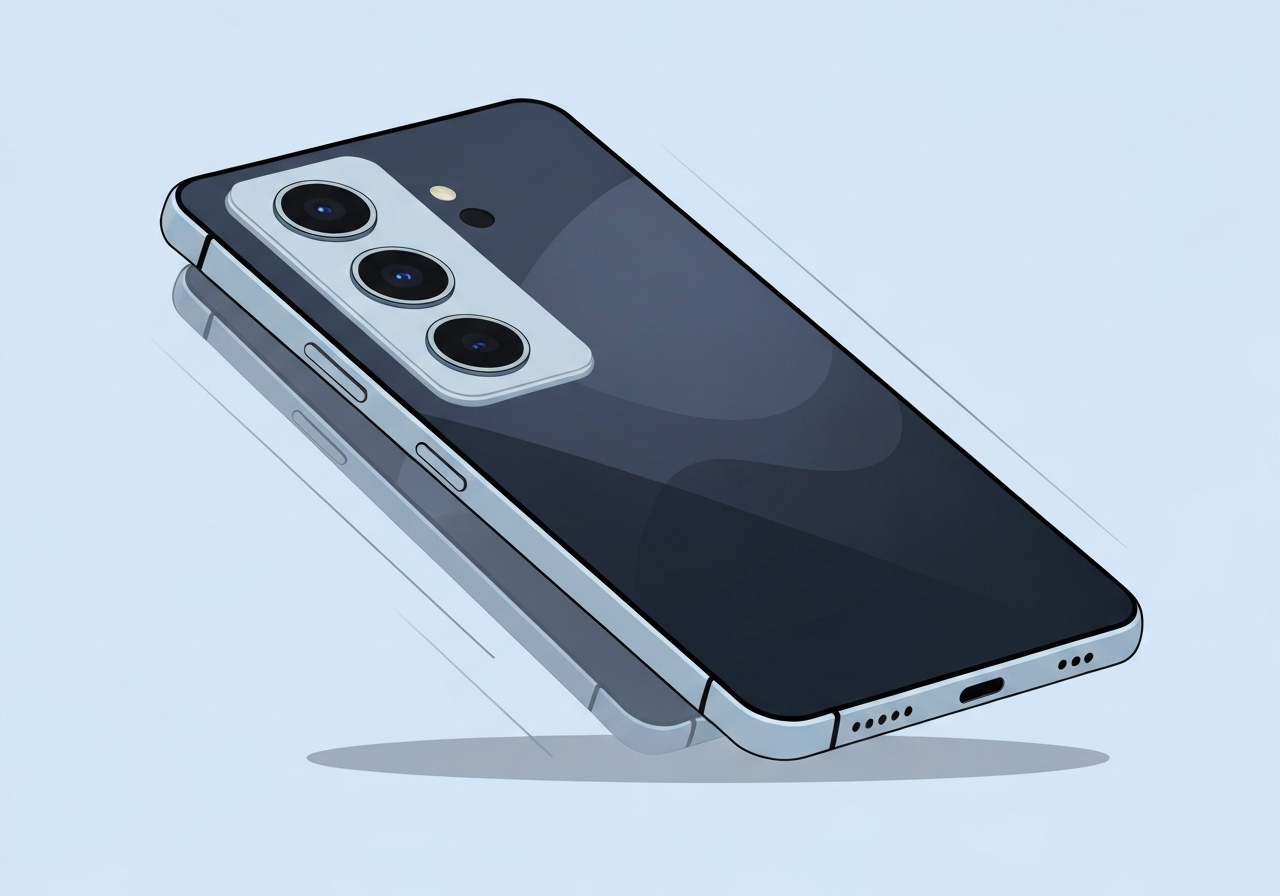
— Leaked images and a short video shared by OnLeaks show apparent dummy units of the Samsung Galaxy S26 Ultra with a noticeably raised camera island that mirrors the Galaxy Z Fold 7’s design. The units, which do not power on, display three primary lenses sitting on a small elevated platform on the left rear of the device. Observers say the new layout will likely increase the familiar ‘table wobble’ problem for users who place the phone flat. Samsung’s S26 series is still expected to launch in February.
Key takeaways
- OnLeaks posted images and a brief video on X/Twitter showing what appear to be Galaxy S26 Ultra dummy units, confirming a raised camera island on the rear.
- The mockups show three main lenses mounted on a small raised island, a visual design closer to the Galaxy Z Fold 7 than the S25 Ultra.
- The units in the leak do not power on, indicating they are non-functional prototypes or dummies used to preview physical design.
- Observers note the left-side, elevated camera cluster will likely exacerbate table wobble that users criticized on prior Samsung models.
- Reports suggest Samsung may have thinned the chassis this generation, which would require a larger camera module to house sensors and optics.
- The design issue is largely mitigated by cases; however, users who prefer caseless use, skins, or very thin cases will still feel the protrusion.
- The Galaxy S26 series remains scheduled for a February launch, keeping this design in the public eye ahead of official reveal.
Background
Over the past several generations Samsung has trended toward thinner chassis and ever-larger camera systems, balancing slim profiles against the space required for bigger sensors and periscope optics. The Galaxy S25 Ultra kept a more familiar stepped camera housing, but critics and users repeatedly flagged the left-offset module for causing phones to wobble when laid flat. In 2025 Samsung introduced a more prominent, island-style module on the Galaxy Z Fold 7; that layout brought new attention to how raised clusters affect desk stability and daily handling.
Leaks and prototype images have become a routine part of smartphone cycles, offering an early look at hardware decisions before official briefings. OnLeaks has published multiple CAD-based renders and physical mockups over recent years with a mixed track record: some details later matched final hardware, while others changed before launch. Smartphone makers face design trade-offs between optical performance, structural integrity, and user ergonomics; changes in one domain often ripple into accessory and repair ecosystems.
Main event
The latest visual leak surfaced via OnLeaks on X, showing static photos and a short clip of apparent Galaxy S26 Ultra dummies. The devices are unpowered but detailed enough to show edge curvature, button placement and — most noticeably — a camera island raised above the rest of the back panel. The three principal lenses sit together on that island rather than flush within the rear surface.
Compared with last year’s Galaxy S25 Ultra, the overall footprint and rounded corners look similar, but the island-style module is a clear departure in rear styling. The leak’s video highlights how far the module projects from the chassis; when the mockup rests on a flat surface it tips more noticeably than S25 Ultra units in prior hands-on footage. Photographs suggest the island is slightly offset toward the device’s left side, a placement that has previously been linked to uneven wobble when a phone is used while lying flat.
Commentators have framed the change as a direct influence from the Z Fold 7’s aesthetics and engineering choices, which already showed a doubly-raised camera area. The most commonly offered technical explanation is that Samsung reduced chassis thickness for the S26 line while accommodating larger sensors and stabilization systems, forcing optics to occupy a taller module. For many users, the simplest mitigation will be buying a case of suitable thickness; for others who prefer caseless setups the bump will be a persistent nuisance.
Analysis & implications
Ergonomically, a raised, left-side island increases the mechanical moment when the phone rests on a surface, amplifying the tilt when tapping or typing. That effect is proportional to both the protrusion height and how far it is offset from the device’s center of mass. For reviewers and consumers who habitually use large phones on tables, the design could become a common complaint in early hands-on coverage and long-form reviews.
From a market perspective, Samsung’s decision highlights a repeated tension in flagship design: prioritize camera performance and minimal thickness, or prioritize flatness and surface stability. Accessory makers typically respond quickly — expect slim cases engineered to level the rear surface within weeks of the launch. However, caseless users, buyers of skins, and those preferring minimal protection may view the new module as a deterrent.
There are secondary implications for device durability and repairability. Taller camera modules are more exposed to impacts and may require larger repair assemblies if damaged, potentially raising replacement costs. Retailers and carriers could adjust accessory bundling or promotional messaging to emphasize cases that counteract wobble, and reviewers are likely to test the phone’s stability as part of ergonomics evaluations.
Comparison & data
| Model | Camera layout | Position | Wobble risk |
|---|---|---|---|
| Galaxy S25 Ultra | Stepped module | Left-side | Moderate |
| Galaxy S26 Ultra (leak) | Raised island with three lenses | Left-side, elevated | Higher |
| Galaxy Z Fold 7 | Double-raised island | Left-side, very elevated | High |
The table above summarizes qualitative differences visible in leaks and past releases; exact protrusion heights and weights are not available for the S26 leak units. Even without precise measurements, visual evidence suggests a step increase in wobble risk versus the S25 Ultra, and parity with the Fold 7’s elevated layout.
Reactions & quotes
OnLeaks published images and a short video showing mockups of the S26 Ultra with a clearly raised camera island, helping to clarify the phone’s intended rear geometry.
OnLeaks (social leak)
“The Fold 7 could double as an old-school telegraph” — an industry comment pointing to how the Fold’s bump exaggerated wobble in everyday use.
Droid-Life (tech site)
Unconfirmed
- The exact height and dimensions of the S26 Ultra camera island have not been confirmed by Samsung or measured from a final production unit.
- The claim that a thinner chassis is the primary reason for the larger bump is an industry-accepted hypothesis but not officially verified.
- It is not confirmed whether every S26-series model will use the same island-style module or if the feature will be limited to the Ultra variant.
- The authenticity of prototype details rests on OnLeaks’ sourcing; while historically often accurate, leaked mockups are not definitive until Samsung’s announcement.
Bottom line
The OnLeaks material paints a clear picture: Samsung’s Galaxy S26 Ultra appears to adopt an island-style, left-offset camera cluster that visually and mechanically increases the phone’s tendency to wobble when placed on a table. For many users the issue will be trivial when a case is used, but it may become a frequent talking point in early reviews and hands-on coverage for those who value caseless aesthetics or minimal protection.
Practically, accessory makers and retailers will likely supply cases designed to neutralize the raised module quickly after launch, reducing consumer friction. For buyers deciding now, the trade-off is familiar — better optics and a thinner phone versus a less stable flat-on-table experience — and that balance will shape initial reception when Samsung unveils the S26 series in February.