
Lead
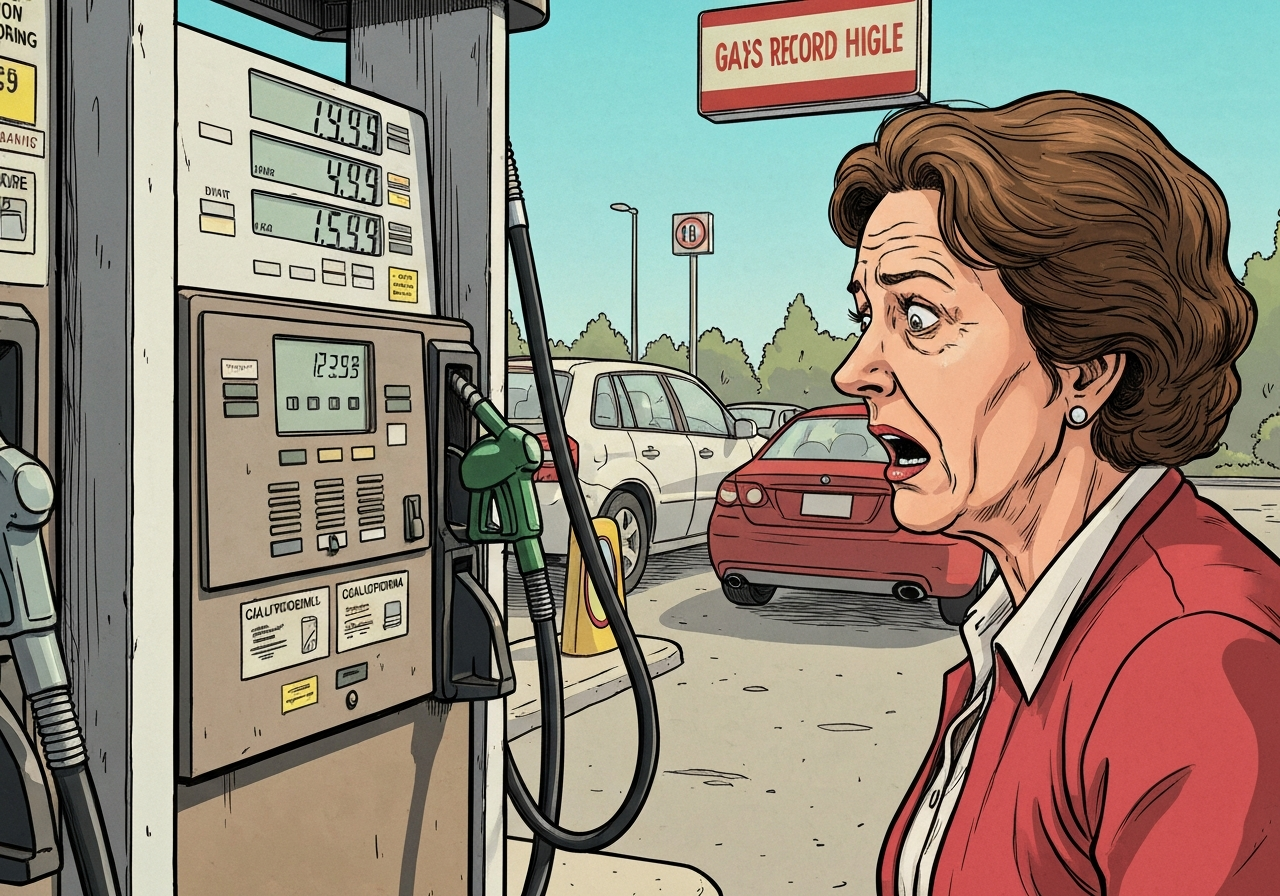
Drivers across the United States are paying the most at the pump in more than a year as the U.S.-Iran war has interrupted global oil flows. On Tuesday the national average for regular unleaded rose to about $3.54 per gallon, according to AAA, marking the highest level since mid-2024 and a roughly 21% jump from a month earlier. The surge followed U.S.-Israeli strikes on Iran and severe disruptions to traffic through the Strait of Hormuz, a critical export route. Market volatility and seasonal fuel transitions are complicating how—and when—any relief will reach consumers.
Key Takeaways
- The U.S. national average for regular unleaded gasoline reached about $3.54 per gallon on Tuesday, the highest since mid-2024 (AAA).
- Prices rose roughly 21% compared with one month earlier, reflecting a rapid short‑term increase in pump costs (AAA analysis).
- The shock followed U.S.-Israeli strikes on Iran and major disruptions in the Strait of Hormuz, creating one of the largest supply shocks in recent oil-market history (market reports).
- U.S. crude briefly topped $100 per barrel earlier in the week and later hovered near $84 per barrel as traders reacted to conflict-related risk.
- Bespoke Investment Group calculated the recent three-day pump-price jump as the largest since Hurricane Katrina in 2005, underlining the speed of the move.
- Officials including President Donald Trump and Defense Secretary Pete Hegseth offered conflicting timelines and tones about the conflict’s duration, introducing political uncertainty for affordability debates.
- Analysts at Raymond James and retailers warn that even if crude stabilizes, downstream margins and seasonal blend changes could keep pump prices elevated for weeks.
Background
The global oil market relies on stable shipping through chokepoints such as the Strait of Hormuz, which handles a significant share of seaborne crude and refined-product exports. Disruptions there quickly ripple through benchmark prices because alternative export routes and spare capacity are limited. In early March 2026, U.S.-Israeli strikes on Iranian targets and subsequent retaliatory actions significantly curtailed movements through the strait, tightening available supply almost immediately.
Before this month’s escalation, the national average for gasoline had fallen to levels not seen since 2021, driven by weaker demand and ample global supply in late 2025 and early 2026. Still, markets remain sensitive: past geopolitical shocks—including the 2022 Russia-Ukraine war—show how quickly local events can push crude and retail fuel prices upward. For U.S. consumers, fuel affordability is a salient political issue, particularly ahead of the November midterm elections that will determine control of Congress.
Main Event
Last week’s military action and the ensuing campaign disrupted tanker traffic and raised short-term risk premia on oil, prompting a rapid repricing across futures markets. Oil rose above $100 per barrel early in the week on heightened supply risk and later traded near $84 as some short-term selling and technical adjustments occurred. Those swings transmitted to retail prices fast: AAA reported a national average of about $3.54 per gallon on Tuesday, up from substantially lower levels just weeks earlier.
Market commentators noted the dramatic speed of the move, with Bespoke Investment Group comparing the three-day pump-price climb to the largest such jump since Hurricane Katrina in 2005. Retail chains and independent stations face choices about whether to immediately pass higher crude costs to consumers; many retailers reported pressure on margins if they delay price increases. Raymond James analyst Bobby Griffin highlighted that if crude continues rising, retailers will have to “chase” higher wholesale costs, but if crude stabilizes, margins may be squeezed for several weeks.
Officials have offered differing signals about the conflict’s likely duration and intensity. President Donald Trump said he expects the war to end “very soon,” aiming to reassure consumers and markets, while Defense Secretary Pete Hegseth warned of particularly intense strikes on certain days, feeding short-term volatility. Meanwhile, industry leaders such as Aramco’s CEO warned of potentially severe consequences for global oil supplies if disruptions persist.
Analysis & Implications
The immediate economic impact is twofold: higher pump prices directly increase household energy bills and raise transportation costs for goods, which can feed into broader consumer-price measures. For many households, a persistent upward move in gasoline will erode discretionary spending power and add political pressure on incumbents focused on cost-of-living narratives. With the midterms approaching, rising fuel costs could reshape voter sentiment in key districts where gasoline price sensitivity is high.
From a market-structure perspective, the shock highlights limited spare export capacity and the concentration of crude flows through a few maritime chokepoints. That concentration makes the market particularly vulnerable to regional conflicts; even modest physical disruptions or insurance‑cost spikes can force chartering and routing changes that tighten immediate availability. Traders’ willingness to pay a risk premium will depend on the perceived length of the disruption and the credibility of political efforts to reopen or secure alternate routes.
Policy responses will matter. Strategic petroleum reserves (SPRs) can blunt short-term price spikes if governments release stockpiles, but such releases are typically calibrated and may not fully offset a prolonged hit to seaborne flows. Fiscal and monetary policymakers will also monitor pass-through effects: stubbornly higher fuel costs could complicate inflation targeting and consumer-income measures, altering central-bank calculus if the shock broadens beyond energy prices.
Comparison & Data
| Reference point | Average price (regular) | Change vs. one month earlier |
|---|---|---|
| Mid‑2024 (approx.) | ~$3.00/gal | — |
| Mar 10, 2026 (current) | $3.54/gal | +21% |
The table shows a quick comparison between the recent national average and prices in mid-2024; the 21% month-on-month rise reflects the unusually rapid nature of this shock. Historically, events such as major hurricanes and geopolitical crises have produced similar short bursts of upward pressure, but the combination of a key maritime chokepoint being disrupted and seasonal fuel transitions amplifies the current move. Analysts caution that headline crude figures (e.g., a brief $100+ spike) often overstate sustained price levels; retail pumps adjust based on both wholesale moves and retailer inventory timing.
Reactions & Quotes
Government and industry voices responded rapidly as prices climbed, offering both reassurance and warnings that highlighted uncertainty.
“I expect the war to end very soon,”
President Donald Trump (statement)
President Trump’s comment aimed to reassure consumers and markets that the conflict would not be prolonged. The remark aligns with political messaging on affordability but does not change immediate market mechanics that are driving price moves.
“This could have catastrophic consequences for the global oil market,”
Amin Nasser, CEO, Saudi Aramco
Aramco’s chief executive underscored the scale of the disruption facing regional oil and gas infrastructure. Industry leaders’ assessments tend to influence trader risk premia and can harden market reactions if downtime or damage is expected to be lengthy.
“Those factors combined with elevated crude oil prices lead to higher pump prices,”
Aixa Diaz, AAA spokesperson
AAA’s spokesperson pointed to the interaction of seasonal blending, wholesale crude moves, and supply interruptions as the proximate cause of rising retail prices. AAA’s weekly averages provide the benchmark most consumers and many media outlets cite.
Unconfirmed
- Exact duration of shipping disruptions in the Strait of Hormuz remains uncertain and depends on ongoing military operations and diplomatic developments.
- Precise timing for when seasonal summer-blend gasoline will fully replace winter blend at all U.S. distribution points varies by region and is subject to refinery scheduling.
- Estimates of the total volume of crude temporarily taken offline by the conflict are still being reconciled by market analysts and official sources.
Bottom Line
The immediate effect of the U.S.-Iran war has been a sharp and rapid rise in U.S. pump prices, with the national average around $3.54 per gallon and a roughly 21% month-on-month increase. This spike reflects both direct supply disruptions via the Strait of Hormuz and seasonal changes in gasoline formulation that typically push prices higher in spring. For consumers, any sustained crude-price elevation will translate into weeks of higher retail costs, even if wholesale prices moderate quickly, because of inventory timing and retailer pricing practices.
Policymakers and market participants will watch a few indicators closely: the length of shipping disruptions, announcements on strategic stock releases, and signs that refineries can absorb blend changes without passing full costs to consumers. In the near term, expect volatility to continue as new information about the conflict and shipping availability emerges; for voters and households, the focus will be how prolonged higher gasoline costs affect everyday budgets and political calculations ahead of the midterms.
Sources
- CNBC (news report summarizing AAA data and market reactions)
- AAA Gas Prices (industry data and weekly national averages)
- Bespoke Investment Group (market analysis referenced for historical three-day moves)
- Saudi Aramco (company statements and executive commentary)