
Lead
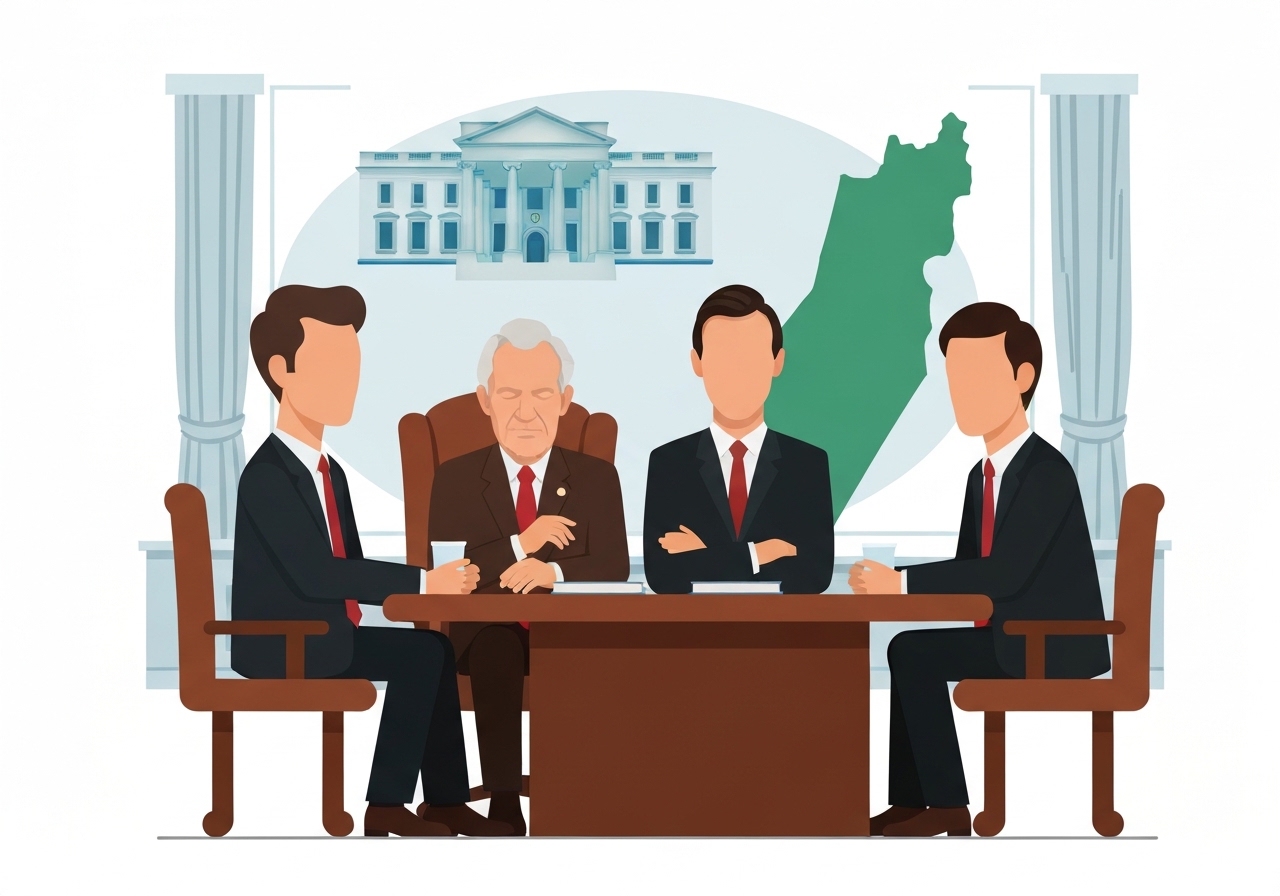
On 16 January 2026 the White House unveiled a seven-member Gaza “board of peace” that President Donald Trump will chair to guide reconstruction and interim governance in the territory. The founding executive board names include former British prime minister Tony Blair, Senator Marco Rubio, and Jared Kushner, alongside World Bank president Ajay Banga and property developer Steve Witkoff. The announcement follows the October 10 US-backed ceasefire plan and the formation of a Palestinian technocratic committee to run day-to-day Gaza affairs. The White House said the board will oversee portfolios ranging from governance capacity-building and reconstruction to capital mobilization and regional relations.
Key takeaways
- The White House announced the seven-member founding executive board on 16 January 2026; President Trump will serve as chair.
- Named board members include Tony Blair, Marco Rubio, Jared Kushner, Ajay Banga, Steve Witkoff, and former UN envoy Nickolay Mladenov as High Representative.
- Two senior advisers, Aryeh Lightstone and Josh Gruenbaum, were appointed to manage day-to-day strategy and operations; Maj Gen Jasper Jeffers was named to lead an International Stabilisation Force (ISF).
- The board is tied to phase two of a US-brokered plan launched on 10 October 2025 that accompanied a ceasefire and the release of remaining hostages held by Hamas.
- Officials say the board will focus on governance, reconstruction, investment attraction and large-scale funding; aid shortages and sporadic violence since the ceasefire continue to complicate recovery efforts.
- Tony Blair’s appointment is likely to be controversial in the region because of his role around the 2003 Iraq war and his past service as Quartet representative (2007–2015).
- Israel continues to control parts of Gaza and has demolished thousands of structures since the ceasefire, complicating reconstruction logistics and humanitarian access.
Background
The announcement comes after a ceasefire and hostage-release arrangement that the White House describes as phase one of a broader settlement that began on 10 October 2025. That agreement halted large-scale hostilities and secured the release of remaining hostages, creating a window for political and reconstruction planning. Washington says phase two will move beyond immediate stabilization to institutional reconstruction, security architecture and attracting large-scale external finance.
Past international efforts to manage post-conflict Gaza have run into political obstacles, competing claims of legitimacy, and regional sensitivities. Tony Blair served as the Quartet’s special representative after leaving UK office in 2007 but resigned in 2015 amid perceptions that he was too aligned with Israeli positions. Local Palestinian actors, regional Arab states, Israel and international financial institutions are all stakeholders with differing priorities for security, governance and economic revival.
Main event
The White House released the list of founding executive board members on 16 January 2026, naming seven individuals to oversee discrete portfolios tied to Gaza’s stabilization and longer-term recovery. The roster includes high-profile political and business figures: Tony Blair, Senator Marco Rubio, Jared Kushner, Ajay Banga, Steve Witkoff, and Nickolay Mladenov in the role of High Representative for Gaza. Trump described the board in promotional terms and said further appointments were expected in the coming weeks.
Two senior advisers, Aryeh Lightstone and Josh Gruenbaum, will manage day-to-day strategy and operations for the board, according to the White House. Separately, Maj Gen Jasper Jeffers, the former head of US special forces, was appointed to lead an International Stabilisation Force (ISF) intended to oversee security across Gaza. The administration framed these moves as establishing both political and security mechanisms that complement the Palestinian technocratic committee led by Ali Sha’ath, a Gaza native and former Palestinian Authority deputy minister.
The White House statement laid out that each board member will have a defined portfolio—governance capacity-building, reconstruction, regional relations, investment attraction, and capital mobilization were named explicitly. Officials said the United States will work closely with Israel, key Arab nations and the international community on the transitional framework. The release emphasized a US commitment to mobilize resources but provided limited operational details on timelines, force size, or funding pledges.
Reactions in the region and in Washington were mixed. Supporters framed the board as a vehicle to marshal international expertise and private capital quickly; critics warned that the lineup risks undermining local legitimacy and could inflame political sensitivities in a population wary of outside interference. Observers also noted unresolved security questions, including whether Hamas will accept a disarmament requirement that Israel has listed as essential.
Analysis & implications
The creation of a US-led executive board signals Washington’s intent to take a central coordinating role in Gaza’s recovery, potentially streamlining donor engagement and private investment. If the board can unlock capital and coordinate reconstruction logistics, it could accelerate rebuilding of infrastructure and services. However, success depends on tangible delivery of humanitarian assistance, restoration of basic services and demonstrable improvements in security and freedom of movement for civilians.
Tony Blair’s inclusion is a double-edged sword: his international experience and contacts could help secure donor confidence and technical support, but his reputation in parts of the Middle East may limit acceptance among Palestinians and some Arab states. That reputational friction could constrain cooperation with local institutions and hamper efforts to build the political legitimacy of interim governance arrangements led by Palestinians, such as the 15-member technocratic committee headed by Ali Sha’ath.
Security arrangements remain the most uncertain element. The appointment of Maj Gen Jasper Jeffers to head the ISF indicates Washington expects a coordinated security presence, but the ISF’s mandate, composition and rules of engagement are not yet public. Without a clear, widely accepted security framework and progress on disarmament discussions with Hamas, reconstruction projects and the return of displaced residents could be delayed, increasing the risk of renewed instability.
Comparison & data
| Entity | Role announced |
|---|---|
| President Donald Trump | Chair of the founding executive board |
| Tony Blair | Executive board member (governance/mediation capacity) |
| Marco Rubio | Executive board member (US political liaison) |
| Jared Kushner | Executive board member (investment and regional relations) |
| Ajay Banga | Executive board member (finance, World Bank president) |
| Steve Witkoff | Executive board member (reconstruction/investor relations) |
| Nickolay Mladenov | High Representative for Gaza |
The table summarizes announced roles to clarify responsibilities shared by participants from government, finance and private sector backgrounds. Compared with previous international coordination mechanisms, this board mixes political figures, private developers and an international financial institution head—an arrangement designed to pair political weight with access to capital. Whether that mix will overcome local political objections or simply centralize decision-making in Washington remains a primary question for analysts and regional partners.
Reactions & quotes
Domestic lawmakers and analysts offered sharply different takes on the board’s timing, composition and likely effectiveness, reflecting partisan and practical concerns about implementation and oversight.
“The success of phase two of the ceasefire in Gaza depends on full implementation of phase one, which is still lacking in several key areas, including delivery of humanitarian aid… The war must finally end before the peace can be built.”
Rep. Rosa DeLauro (Democrat, U.S. House)
Rep. DeLauro’s remarks underscore congressional pressure tied to humanitarian access, cessation of strikes and accounting for final victims and hostages. Lawmakers have signaled that continued funding and political support in Washington could hinge on measurable progress on those fronts.
“I’ve always liked Tony, but I want to find out that he’s an acceptable choice to everybody,”
President Donald Trump (October, quoted)
Trump’s earlier comment about Blair illustrates the administration’s awareness that Blair’s appointment risks regional backlash. White House officials said they would consult partners in the coming weeks as they finalize additional appointments and operational plans.
“I hope he can find time to attend Board of Peace meetings between meetings about invasions of Venezuela, Iran, Greenland, Canada, and Minneapolis.”
Seth Masket (Political Scientist, University of Denver)
Seth Masket’s social media quip reflects broader skepticism among some scholars and commentators who view the announcement as politically theatrical absent concrete implementation details on funding, force composition, and Palestinian buy-in.
Unconfirmed
- Exact funding commitments: public announcements have not listed the size or sources of large-scale funding the board will secure.
- ISF mandate and composition: details about the International Stabilisation Force’s personnel, troop contributors, and rules of engagement remain undisclosed.
- Hamas’s position on formal disarmament: there has been no public, verifiable commitment from Hamas to full disarmament as demanded by Israel.
Bottom line
The White House’s Gaza “board of peace” aims to centralize international political, financial and operational support for reconstruction and governance, combining high-profile political figures, private-sector leaders and multilateral actors. If the board succeeds in coordinating funding and clearing operational hurdles, it could accelerate recovery efforts; yet its effectiveness depends on securing Palestinian legitimacy, clear security arrangements and concrete donor commitments.
Major risks include regional backlash to certain appointments, particularly Tony Blair, unresolved security arrangements including disarmament, and persistent humanitarian shortfalls. For the board to move beyond announcement and into measurable progress, the administration must publish operational plans, firm funding pledges, and clear mechanisms for Palestinian and regional participation in the weeks ahead.