
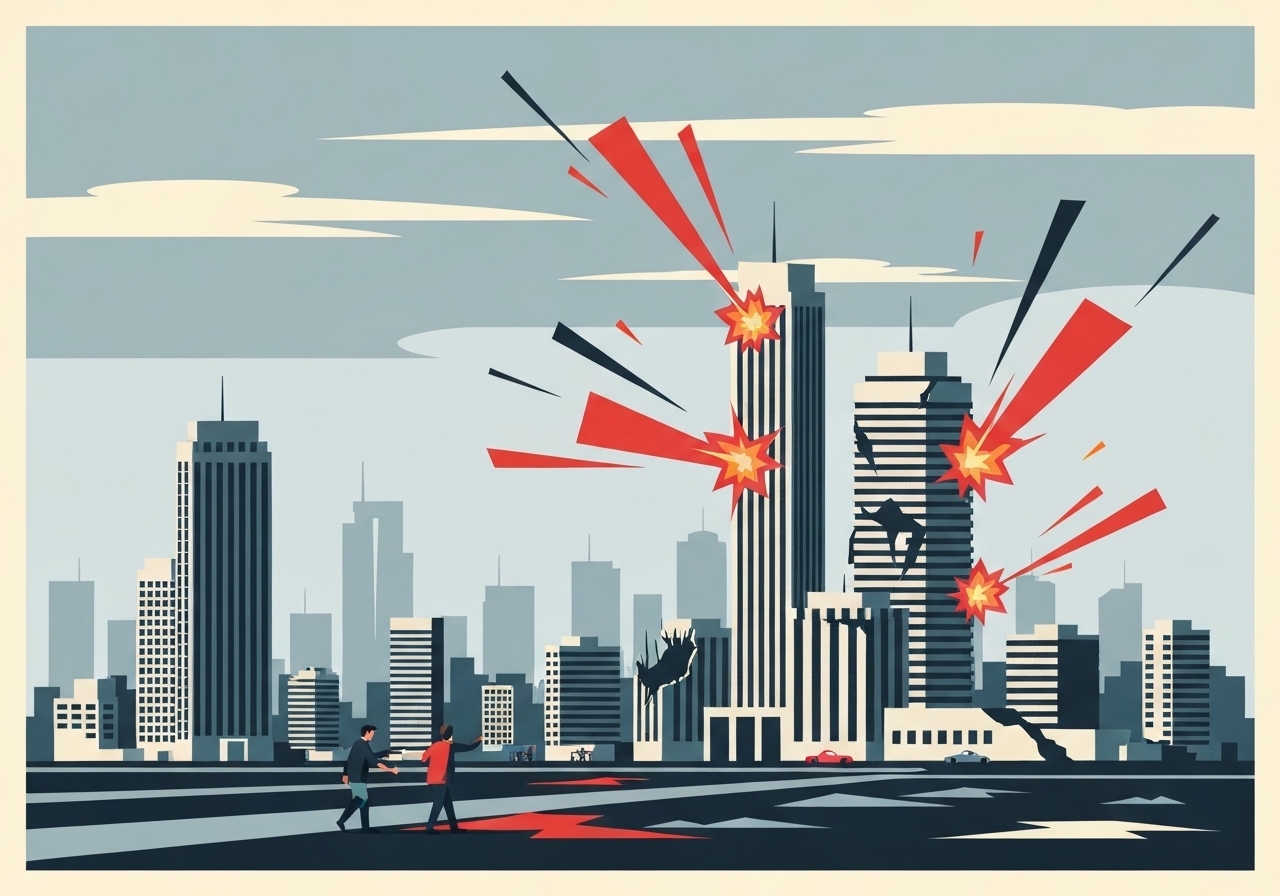
On Sept. 6, 2025, the Israeli military ordered residents of Gaza City to move south and struck multiple high-rise towers as it intensifies operations to seize control of the city of nearly 1 million. Hospital officials reported at least 27 people killed in the latest strikes; elsewhere medical sources said dozens more died while trying to reach food distribution points. Aid agencies warn that forcing a large-scale southward evacuation would deepen an already declared famine and overwhelm southern encampments. Displaced families, many repeatedly uprooted since Oct. 7, 2023, say there is nowhere safe to go.
Key Takeaways
- At least 27 people were reported killed in the most recent Israeli strikes on Sept. 6, 2025, according to Gaza hospital officials.
- The Israeli military announced evacuation orders and said it struck at least one 15-story residential tower in Gaza City after warning residents to leave.
- Medical sources reported 11 people killed at the Zikim crossing while gathering for food on Sept. 6; Gaza health officials said 23 were killed across the territory the previous day.
- The world’s leading hunger monitors declared Gaza to be officially in famine last month; aid groups say a mass move south would worsen food, shelter, water and sanitation crises.
- Israel says it has taken control of about 40% of Gaza City; the military estimates about 20 hostages remain alive of 48 reportedly still held in Gaza.
- Since Oct. 7, 2023, around 1,200 people were killed in the initial Hamas-led attack and 251 were abducted; Gaza health ministry reports more than 64,000 Palestinians killed in Israel’s campaign.
Background
The current phase of fighting follows the Oct. 7, 2023 Hamas-led incursion into southern Israel that killed roughly 1,200 people and saw 251 people taken hostage. Israel launched a large-scale retaliatory campaign that has included sustained airstrikes, ground operations and a blockade of the Gaza Strip. Over nearly two years the territory’s civilian infrastructure—hospitals, water systems, markets and housing—has been repeatedly damaged or destroyed, creating chronic shortages of food and medicine.
Humanitarian organizations have repeatedly warned that restrictions on aid access and recurring attacks on distribution points have pushed parts of Gaza into famine conditions. Many families displaced from northern neighborhoods have moved into makeshift encampments in Gaza City and the south; those sites are overcrowded and lack adequate sanitation, shelter and medical services. International actors have proposed ceasefires and exchanges to free hostages, but durable agreements have not been achieved.
Main Event
On Sept. 6, Israeli forces issued public evacuation notices calling on Gaza City residents to relocate southward into a military-defined “humanitarian zone” that the army said now includes parts of Khan Younis and the encampment of Muwasi. The military said it would attempt to enable field hospitals and provide water and food inside the zone. Aid organizations cautioned that the proposed zone is already overstretched and that services on the ground are insufficient to absorb further displacement.
Shortly after warning two multi-story towers that Israeli officials said were being used by militants, the military reported striking one of them; local media and residents identified the building as Sousi Tower, a 15-story residential block. Witnesses described a brief warning followed by an attack that left the tower collapsing in a cloud of dust and flattened nearby tent shelters. Residents said they were given only minutes to collect belongings.
Gaza health facilities reported receiving bodies of people shot while seeking food at crossings into Israel; Shifa Hospital said it received 11 bodies on Sept. 6 from an incident at the Zikim crossing. Medical staff and patients described chaotic aid sites where crowds surge toward limited U.N. and NGO deliveries. Gaza health authorities say more than 2,000 Palestinians have been killed at distribution points in recent months.
Analysis & Implications
The Israeli push into Gaza City represents both a tactical and political escalation. Militarily, seizing urban terrain aims to disrupt command-and-control nodes Hamas may use and to pressure the organization over hostages. Urban operations, however, are historically protracted and casualty-intensive, and they increase the risk to civilians sheltering in dense neighborhoods and high-rises.
Humanitarian consequences are profound. Humanitarian actors warn that moving large numbers of already displaced people into the south will stress scarce water, sanitation and shelter capacity and likely increase disease and malnutrition. With famine already declared, interruptions to aid flows or attacks near distribution points can accelerate mortality among children, the elderly and medically vulnerable.
Politically, the operation complicates mediation prospects. Popular protests inside Israel demanding a rapid return of hostages are adding pressure on Prime Minister Benjamin Netanyahu, who faces criticism that military escalation risks the hostages’ safety. Regional actors and international mediators have offered ceasefire frameworks at various times; however, Israel’s insistence on long-term security controls in Gaza is a central sticking point for Hamas and regional mediators.
Comparison & Data
| Metric | Reported Number | Source Type |
|---|---|---|
| People killed in latest strikes (Sept. 6, 2025) | 27 | Gaza hospitals (media) |
| People killed at Zikim crossing (Sept. 6, 2025) | 11 | Shifa Hospital (medical) |
| Gaza fatalities since offensive began | 64,000+ | Gaza Health Ministry (official) |
| Hostages remaining in Gaza | 48 reported; ~20 estimated alive | Israeli military (official) |
The table above summarizes figures cited by local hospitals, Gaza health authorities and Israeli military statements. Numbers differ between sources — particularly casualty totals — reflecting the divergent reporting standards and the difficulties of verification in active conflict zones. Analysts stress that independent verification on the ground is limited, and figures should be read with that caveat.
Reactions & Quotes
Israeli military spokespeople framed the strikes as necessary to neutralize alleged Hamas positions in civilian structures. Humanitarian and medical actors described the humanitarian toll and risk to civilians attempting to reach life-saving aid.
“We have redrawn the humanitarian zone boundaries and ordered civilians to move south to reduce risk from operations.”
Israel Defense Forces spokesperson
The military’s public messaging emphasizes warning procedures before strikes and promises of aid inside the proposed zone. Critics and aid groups counter that warnings of minutes cannot guarantee civilian safety or access to food and shelter.
“These high-rises are residential; attacking them endangers families and aid delivery.”
Hamas spokesperson (denying military claims)
Hamas denied military allegations that militants used residential towers for operations and said residents have been targeted. Independent verification of combatant use of specific buildings is limited under current conditions.
“We keep receiving bodies from distribution-site incidents; people are killing to survive.”
Mohamed Abu Selmiya, director, Shifa Hospital
Medical staff report repeated lethal incidents at crossings and distribution points. Hospitals, already strained, say treating wounded and managing dead is overwhelming their capacities.
Unconfirmed
- Allegations that specific towers were used as Hamas command centers remain contested; independent, third-party verification of militant use of the named high-rises is not yet available.
- Exact numbers of civilians inside buildings at the time of strikes are not independently confirmed; casualty counts may change as access improves.
- Claims about the military providing comprehensive services (field hospitals, water lines, food) inside the renamed humanitarian zone are not fully documented on the ground.
Bottom Line
The Israeli order to evacuate Gaza City and the targeting of high-rise buildings mark a significant escalation with immediate humanitarian consequences. With famine already declared and distribution channels fragile, pushing more displaced people into overcrowded southern zones risks higher mortality and more overwhelmed health services.
Politically and militarily, the move aims to degrade Hamas capabilities and increase pressure over hostages, but it also raises the likelihood of prolonged urban combat and complex legal and ethical questions about civilian protection. Observers and aid agencies say the international community’s capacity to monitor, verify and respond fast will be critical to preventing further deterioration.
Sources
- Associated Press — Israel-Hamas coverage (International news agency)
- United Nations / Humanitarian updates (International humanitarian monitoring)
- Gaza Health Ministry updates (Local health authority)
- Israel Defense Forces official statements (Official military statements)