
Lead
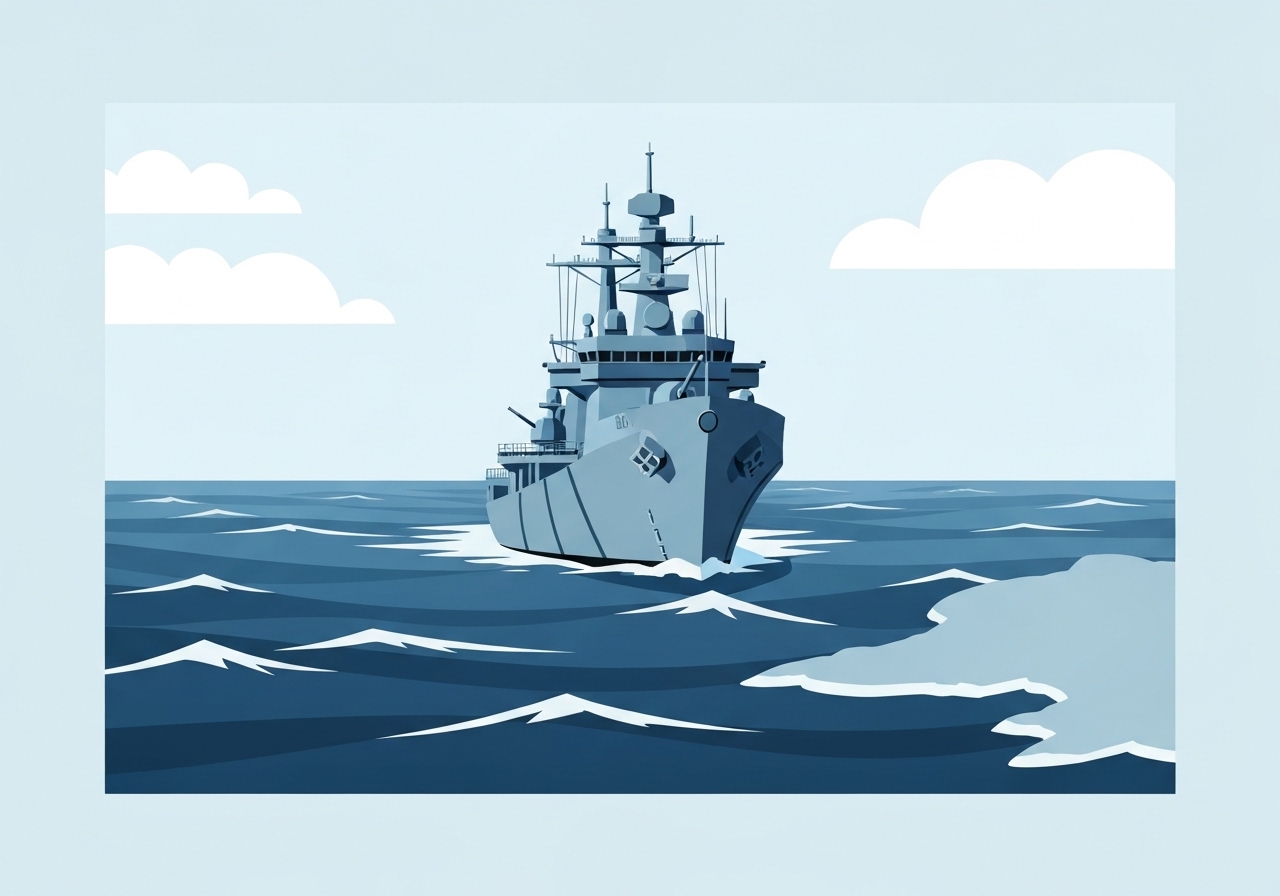
On 11 November 2025 the US Navy confirmed that the USS Gerald R. Ford, the service’s newest and largest aircraft carrier, has entered the US Southern Command area that covers Latin America and the Caribbean. The carrier sailed with a strike group of destroyers, a nuclear-powered submarine nearby and aircraft staged in Puerto Rico, marking what US officials call an intensified effort against maritime narcotics trafficking. Venezuela’s government responded by declaring a wide-ranging military and militia mobilization, calling the deployment a direct threat. The arrival is being read across the region as the most significant US naval presence since the 1989 Panama operation.
Key Takeaways
- The USS Gerald R. Ford arrived in the US Southern Command area on 11 November 2025 with more than 4,000 sailors and dozens of tactical aircraft aboard, according to US Navy statements.
- The carrier leads a strike group that includes multiple destroyers and is operating alongside a nuclear submarine and aircraft based in Puerto Rico—described by officials as the largest US presence in the region in decades.
- US officials frame the deployment under a drug-interdiction campaign tied to President Donald Trump’s broader ‘war on drugs’; US airstrikes on suspicious vessels since September have been linked to at least 76 deaths in South American waters.
- Venezuelan president Nicolás Maduro announced what he called a massive deployment of land, sea, air, river and missile forces, plus civilian militia, to counter the US naval presence.
- At the Celac summit in Colombia, 58 of 60 attending nations signed a declaration rejecting the use or threat of force; Venezuela and Nicaragua abstained from that joint text.
- Analysts warn the deployment could increase diplomatic strain across the hemisphere and raise the risk of maritime incidents between US and Venezuelan forces.
Background
Tensions between Washington and Caracas have been elevated for years, rooted in disputes over Venezuela’s contested 2024 election and US policy responses. The Trump administration has emphasized counter-narcotics operations in regional waters, linking maritime interdiction to broader efforts to degrade transnational criminal networks. Since September, US strikes on vessels suspected of narcotics trafficking have been reported to have caused at least 76 fatalities in South American maritime zones, a statistic that has drawn international concern and scrutiny.
The arrival of a carrier strike group revives historical sensitivities in Latin America about US military power: officials and analysts note that the current force posture is the most visible US presence since the 1989 invasion of Panama. Regional diplomacy has been cautious—many governments publicly stressed peaceful resolution of disputes while avoiding direct confrontation with Washington. The Community of Latin American and Caribbean States (Celac) issued a general rejection of force in a joint declaration at a summit in Colombia, although the document did not name the United States directly.
Main Event
The US Navy announced on 11 November 2025 that the Gerald R. Ford carrier strike group entered the Southern Command area of responsibility to support maritime security operations. US defence spokespeople described the deployment as intended to boost detection, monitoring and disruption of illicit trafficking in Caribbean and Pacific approaches to South America. The strike group comprises the carrier itself with over 4,000 personnel, embarked tactical aircraft, accompanying destroyers and supporting vessels; additional US aircraft and a nuclear submarine are operating from Puerto Rico.
Venezuelan state media broadcast footage of senior military leaders across multiple states and the government announced the mobilization of ground, riverine and air forces, plus missile assets and local militia units. President Nicolás Maduro framed the deployment as a continental threat and accused Washington of preparing conflict. Caracas characterized its measures as defensive and warned of responses to any perceived provocation in its territorial waters or airspace.
US officials, including Pentagon spokespeople, presented the operation as part of law enforcement and anti-narcotics activity rather than a preparation for direct conflict with Venezuela. They emphasized coordination inside US command structures and with regional partners where possible. Still, the visibility and scale of the carrier strike group’s presence have prompted both diplomatic protests from Caracas and concern among other Latin American capitals about escalation risks.
Analysis & Implications
The deployment serves multiple US objectives: a public demonstration of naval capability, a platform for extended aerial surveillance and interdiction, and political signaling to both domestic and international audiences. For the Trump administration, linking the carrier to the ‘war on drugs’ helps frame the operation in law-enforcement terms, but doing so risks conflating interdiction missions with classical power projection. That ambiguity complicates legal and diplomatic messaging and increases the likelihood that incidents at sea could be interpreted as hostile acts.
Regionally, the move places neighbouring states in a tense diplomatic position. Leaders such as Brazil’s Lula have sought to de-escalate verbally while pursuing economic negotiations with Washington; many governments prefer legal and political solutions for the Venezuelan crisis rather than military pressure. The Celac declaration rejecting the use or threat of force reflects a broad regional preference for diplomacy, even where member states diverge on bilateral relations with Caracas or Washington.
Operationally, a carrier strike group enhances US surveillance, interdiction and rapid-response capacity across broad maritime areas, but it is not a silver bullet against dispersed narcotics smuggling networks. Those networks adapt to intensified patrolling by shifting routes, relying on smaller, harder-to-detect craft, or moving cargo ashore. A sustained focus on naval assets may reduce trafficking in some corridors while pushing activity elsewhere, producing displacement rather than elimination of flows.
Politically, the deployment may harden positions inside Venezuela, where the Maduro government can use an external threat narrative to consolidate domestic support. Conversely, some analysts argue that sustained pressure could create openings for negotiated political transitions; however, this remains highly uncertain and depends on international coordination, sanctions dynamics and internal Venezuelan political cleavages.
Comparison & Data
| Aspect | Current Deployment (Nov 2025) | Reference Point (1989) |
|---|---|---|
| Main US naval asset | USS Gerald R. Ford carrier strike group; >4,000 sailors; dozens of aircraft; accompanying destroyers; submarine present | US invasion of Panama involved large amphibious, air and ground forces; cited as last comparable scale in regional presence |
| Rationale stated | Counter-narcotics, maritime security | Region-wide strategic objectives, regime change operations |
| Regional diplomatic response | Celac declaration rejecting use or threat of force; mixed statements from capitals | Widespread regional concern; varied international reactions |
The table frames the 2025 deployment as the most conspicuous US naval concentration in the hemisphere since 1989, while highlighting differences in stated purpose and legal framing. Quantitative comparisons are limited by sparse public data on exact ship counts and force compositions for the 1989 reference point; contemporary figures for the Gerald R. Ford group are better documented in official Navy releases.
Reactions & Quotes
US defence officials framed the move in operational, counter-narcotics terms and highlighted the carrier’s capabilities for surveillance and interdiction. Venezuelan authorities framed it as a direct geopolitical and territorial threat and called for regional and international pushback. Other regional leaders called for restraint and political solutions.
These forces will bolster our capacity to detect, monitor, and disrupt illicit actors and activities in the region.
Sean Parnell, Pentagon spokesperson (US Navy statement)
The Pentagon spokesperson’s comment was released alongside operational details and the personnel count, reinforcing the administration’s framing of the mission as focused on drug interdiction rather than direct confrontation with a sovereign state.
The United States is fabricating a new war; this is the greatest threat our continent has faced in the past 100 years.
Nicolás Maduro, President of Venezuela (state media)
Maduro’s rhetoric accompanied televised military speeches and the announcement of broad mobilization measures. Caracas emphasized defensive preparations and sought to rally domestic and international support against what it described as imperial aggression.
We are a zone of peace. We don’t need war here. The problem in Venezuela is political and must be solved through politics.
Luiz Inácio Lula da Silva, President of Brazil (summit remarks)
Brazil’s president called for diplomacy and avoided direct naming of the United States in the Celac joint statement, reflecting the delicate balance some governments are trying to strike between maintaining regional stability and managing bilateral ties with Washington.
Unconfirmed
- That US strikes since September which are tied to the drug campaign were directly authorized by the Gerald R. Ford strike group; official statements link some operations to broader interdiction efforts but not all attributions are publicly detailed.
- The exact size and armament details of Venezuela’s militia mobilization are not publicly verified; Caracas has released footage and announcements but granular unit-level data remain undisclosed.
- Analyst assertions that the buildup is primarily intended to force President Maduro from power are interpretive; while some experts cite political signaling, direct causal links are not established publicly.
Bottom Line
The arrival of the USS Gerald R. Ford in the Southern Command area on 11 November 2025 is both an operational escalation and a potent symbol. Washington presents the deployment as a law-enforcement and counter-narcotics measure, equipping the US with extended surveillance and interdiction capabilities; Caracas interprets it as a geopolitical threat and has responded with wide military mobilization.
For the region, the immediate risks are diplomatic fallout, potential maritime incidents, and further polarisation of domestic politics in Venezuela. Key developments to watch are: how US interdiction operations are coordinated with regional partners, whether any encounters at sea produce casualties or legal disputes, and whether diplomatic channels—within Celac and bilaterally—can reduce the likelihood of unintended escalation.
Sources
- The Guardian (news report summarising US Navy announcement and regional reactions)
- US Navy (official site; press releases and statements regarding carrier operations)
- Venezuelan State Television (VTV) (official state media coverage of government statements and military mobilization)
- Community of Latin American and Caribbean States (CELAC) (regional organization; summit communiqués and joint declarations)