
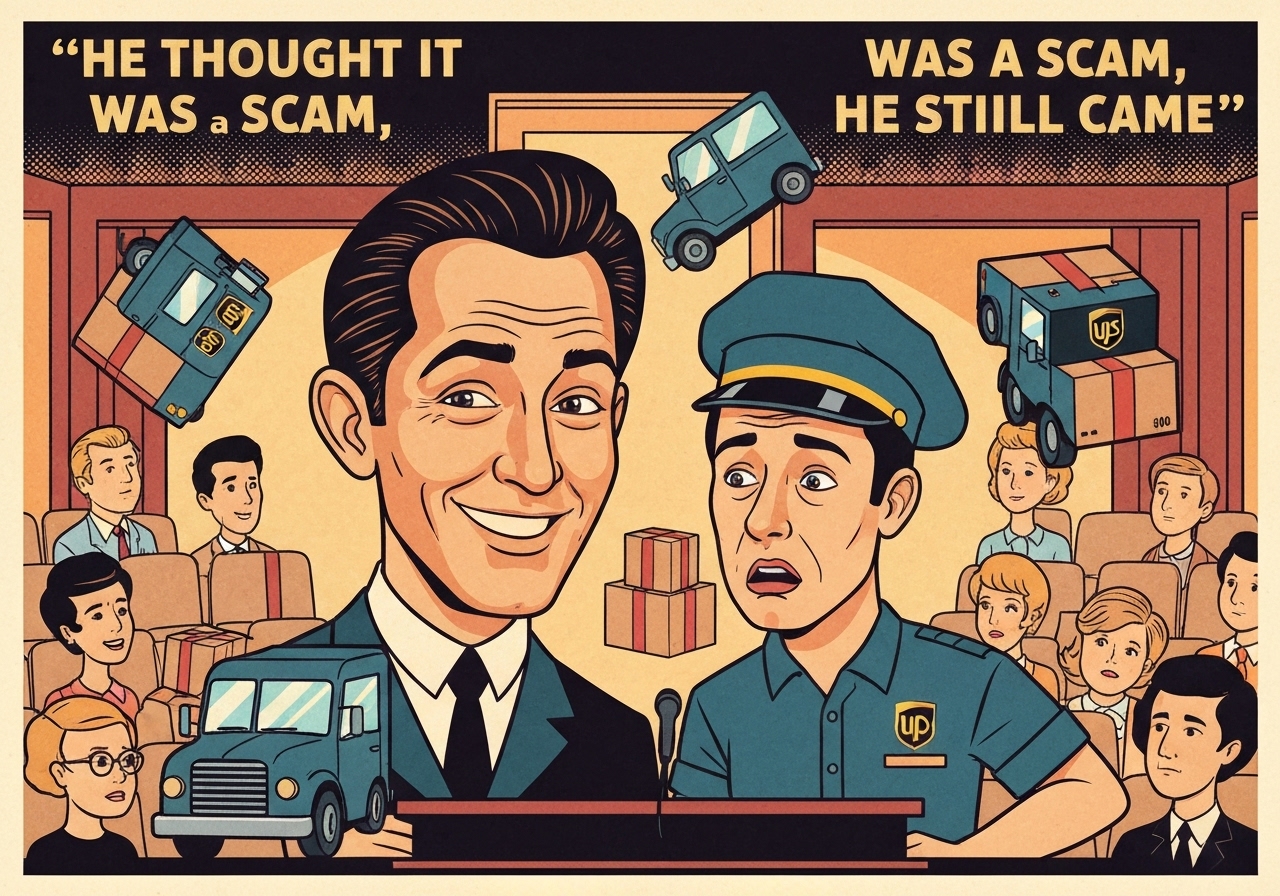
Glen Powell used his Saturday Night Live opening monologue to finish a four-year-old personal story: the actor flew in the UPS driver who witnessed a family celebration years earlier to prove the moment was real. Powell said he was first offered an SNL hosting slot tied to the original premiere of Top Gun: Maverick but lost the chance when the film was delayed by COVID-19. To settle a running joke—his family had taken a selfie with the delivery driver, who later believed Powell’s hosting claim was a scam—Powell tracked the man down, flew him to New York and surprised the audience by bringing him onstage. The driver, identified as Mitch, joined Powell for a new selfie and sat in the crowd for the show.
Key Takeaways
- Glen Powell recounted during his SNL monologue that he had been slated to host the show four years earlier in connection with the original Top Gun: Maverick premiere.
- Powell says the Top Gun: Maverick premiere was delayed because of the COVID-19 pandemic, costing him the earlier hosting slot.
- At the earlier family celebration, a UPS driver took a commemorative selfie with Powell and his relatives; that driver later doubted Powell’s story.
- Powell’s sisters located the UPS driver, named Mitch; Powell flew Mitch to New York to attend the SNL episode and verify the earlier moment.
- Mitch initially thought the invitation was a scam but ultimately attended and was brought onstage for a new photo with Powell.
- Powell used the moment to make a lighthearted point about patience, publicity tied to film releases, and everyday workers’ role in celebrity narratives.
Background
Saturday Night Live commonly books guests who are promoting major film and TV projects; studios and agents often coordinate hosting appearances to coincide with premieres. Powell says his original invitation to host was connected to the planned release of Top Gun: Maverick, a high-profile studio tentpole whose date moved during the COVID-19 disruption. The pandemic altered release calendars across Hollywood, affecting promotional schedules and guest bookings for late-night platforms.
Incidental encounters—delivery workers, fans, and noncelebrity bystanders—sometimes enter celebrity narratives and become part of promotional moments. In Powell’s telling, a UPS driver’s presence at a family celebration became a running joke after the actor’s hosting opportunity was postponed. Powell’s decision to bring that driver to SNL reframed a private snapshot as a public moment with clear PR and human-interest value.
Main Event
During his monologue, Powell described receiving a sudden call offering him an SNL host spot tied to Top Gun: Maverick’s premiere. He and his family were celebrating that phone call when a UPS driver delivering a package joined them for a selfie to commemorate the occasion. When the film’s release moved and Powell’s hosting offer evaporated, the driver later assumed Powell had exaggerated the story.
Powell recounted how his family, particularly his sisters, tracked down the driver—identified by Powell as Mitch—and secured his cell number. To remove any doubt, Powell said he flew Mitch from his city to New York to attend the SNL taping. According to Powell, Mitch initially suspected the outreach was a prank or scam, but he accepted the invitation and was present for the broadcast.
Onstage, Powell called Mitch forward and the pair took another selfie, completing the arc that began years earlier. Powell used the anecdote to make a closing joke about patience and the value of everyday workers, quipping that the best things don’t happen overnight and that no one understands that better than UPS.
Analysis & Implications
On the surface, the episode is a lighthearted human-interest moment: a celebrity resolving a long-running family joke in front of millions. But it also illustrates how promotional calendars and pandemic-driven delays reshaped Hollywood’s routines. A film delay that moved a major premiere can cascade across media appearances, altering who gets promotional platforms such as SNL—often a pivotal stage for rising and established actors alike.
Powell’s tactic—turning a private anecdote into a televised beat—also demonstrates how modern celebrity storytelling blends publicity, authenticity, and social-media-ready visuals. By delivering a real person from an everyday job into a primetime moment, Powell generated a shareable narrative that reinforces relatability while serving PR ends. The stunt is emblematic of how stars craft narratives that feel spontaneous but deliver clear media value.
There are cultural implications as well: the presence of a UPS driver on SNL momentarily disrupts the separation between celebrity and labor, making visible the ordinary workers who intersect with public figures. That visibility can humanize a star, but it also raises questions about consent, representation and the afterlife of such moments for the noncelebrity participants—areas outlets and producers increasingly must consider when staging surprises.
Comparison & Data
| Moment | What Happened |
|---|---|
| Original invitation | Offered to Powell tied to Top Gun: Maverick release, ~four years earlier |
| Delay | Top Gun: Maverick release postponed due to COVID-19, affecting promotional plans |
| Resolution | Powell flew UPS driver Mitch to New York and brought him onstage during a 2025 SNL monologue |
The table above places Powell’s anecdote alongside the pandemic-driven disruption that shifted promotional timelines. While exact original invitation dates were not disclosed publicly, Powell’s account frames the gap at roughly four years, and the monologue served as public closure of that interval.
Reactions & Quotes
Powell framed the moment as both personal and performative, using short quips to set up the surprise and land an affectionate payoff with the audience.
“The women in my family are terrifying,” Powell said, describing how his sisters tracked down the driver.
Glen Powell (during SNL monologue)
He also summarized the arc of waiting and eventual payoff when introducing Mitch onstage, turning a private family joke into an on-air beat.
“He thought it was a scam, but he still came,” Powell said, explaining why bringing Mitch to the show mattered to him.
Glen Powell (during SNL monologue)
Unconfirmed
- Powell’s account that the UPS driver definitively believed he was a liar rests on the actor’s recollection and has not been independently corroborated by the driver in a separate statement.
- Specific logistics of how Powell’s family located Mitch (exact methods and timeline) are described by Powell and his family and have not been independently documented.
Bottom Line
Glen Powell’s decision to bring a UPS driver to his SNL monologue is a small but revealing example of how celebrity narratives are constructed in the social-media era: a private moment is elevated into a public, verifiable beat that serves both personal closure and publicity goals. The incident also highlights the lingering effects of COVID-era scheduling changes on promotional strategies for films like Top Gun: Maverick.
For viewers, the exchange offered a feel-good resolution and a reminder that backstage logistics and everyday workers sometimes become part of the stories celebrities tell. For industry watchers, it underscores how carefully staged authenticity can be an effective tool in modern publicity campaigns; whether similar surprises will become more common depends on how producers weigh spontaneity against consent and long-term impact for noncelebrity participants.
Sources
- Variety — entertainment press (original report of Powell’s SNL monologue)