
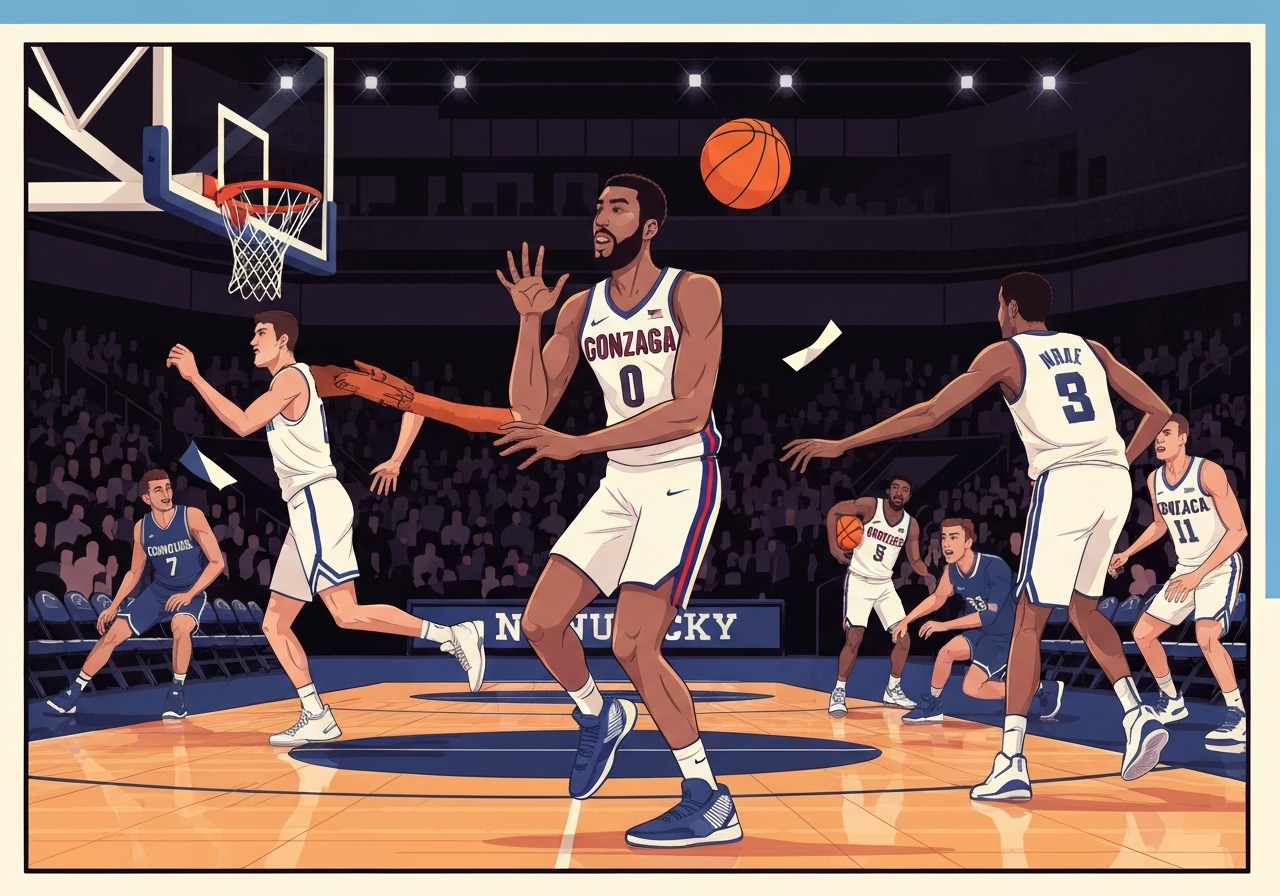
Lead: In Nashville’s Bridgestone Arena on Friday night, No. 11 Gonzaga overwhelmed No. 18 Kentucky, winning 94-59. Gonzaga shot 57 percent from the field and 50 percent from three, while Kentucky managed just 27 percent overall and 21 percent from long range. The Zags’ balanced attack featured 28 points and 10 rebounds from Graham Ike and 20 points from Branden Huff. The loss deepens early-season questions for Kentucky, which fell to 0-4 against ranked opponents.
Key takeaways
- Final score: Gonzaga 94, Kentucky 59 — a 35-point margin at Bridgestone Arena in Nashville before roughly 18,000 spectators.
- Gonzaga efficiency: 57% field-goal shooting and 50% from three-point range for the game.
- Kentucky struggles: 27% overall shooting, 21% from three; missed the team’s first 10 attempts and 26 of its first 31 shots.
- Top performers: Graham Ike (28 points, 10 rebounds) and Branden Huff (20 points) led Gonzaga’s attack.
- Kentucky statlines: Otega Oweh 16 points, Collin Chandler 11 points; Jalen Lowe returned from injury and finished 0-for-5 with one point and one assist.
- Rebounding: Gonzaga 43, Kentucky 31 — a decisive edge on the glass that fueled second-chance offense.
- Program context: Kentucky is 0-4 versus ranked teams this season and suffered its largest margin of defeat since a 34-point loss at Duke to open 2019.
Background
Gonzaga entered the matchup coming off a lopsided loss a week earlier, but the Bulldogs used the intervening week to reset and produce a dominant performance in Nashville. Kentucky arrived with lofty expectations—significant roster investment and a new coaching voice intended to shift culture—but injuries and inconsistent play had already created unease among fans and analysts. Bridgestone Arena has been unforgiving to the Wildcats in recent postseason and neutral-site games; last March Kentucky lost by 29 to Alabama in the SEC Tournament at the same building.
Historically, Kentucky is one of college basketball’s marquee programs and public patience often runs only as long as results. Gonzaga, meanwhile, has developed a reputation as an efficient offensive team that can exploit defensive lapses and control tempo. The matchup was therefore framed as a test of Kentucky’s defensive cohesion and Gonzaga’s ability to rebound from recent adversity. Stakeholders on both sides—coaches, athletic directors and boosters—were watching closely for signs of trajectory.
Main event
The game opened explosively: Gonzaga sprinted to a 19-2 advantage before many fans were fully seated, setting a tone that never eased. Kentucky’s early offense stalled — the Wildcats missed their first 10 shots and converted only 5 of their first 31 attempts — allowing Gonzaga to accumulate easy transition points and comfortable spacing for outside shots. By halftime the Zags had built a commanding lead and maintained separation through the second half.
Graham Ike, limited to a single point in Gonzaga’s previous loss to Michigan, produced a complete response with 28 points and 10 rebounds, converting in the paint and on mid-range opportunities. Branden Huff added 20 points and missed only twice, a level of efficiency that magnified Kentucky’s defensive breakdowns. Gonzaga’s ball movement and shooting balance forced Kentucky into rushed possessions and contested looks.
Kentucky’s offense lacked rhythm and shooting touch. Otega Oweh and Collin Chandler provided some resistance with 16 and 11 points respectively, but no other Wildcat reached double figures. Jalen Lowe returned from a shoulder injury but was unable to generate offense, going 0-for-5 and finishing with one point and one assist. On the glass, Gonzaga outrebounded Kentucky 43-31, a margin that contributed directly to second-chance scoring and scoreboard separation.
Analysis & implications
Strategically, Gonzaga’s performance exposed structural issues in Kentucky’s defense: perimeter closeouts were late, rotations were slow, and help defense failed to deter drives or secure defensive rebounds. Those failures compounded as the game progressed, turning early misses into momentum and confidence for the Zags. For Kentucky, the loss is not simply cosmetic; it reveals schematic and execution gaps that opposing coaches can game-plan against if left unaddressed.
On a program level, Friday’s result intensifies pressure on Kentucky’s staff to find consistent two-way lineups and reliable shooting. The Wildcats’ 0-4 mark against ranked teams signals difficulty handling high-level competition and will affect NCAA Tournament résumé discussions if it persists. Recruiting narratives and donor expectations are also likely to be impacted by public perception of sustained underperformance.
Gonzaga’s victory reasserts the program’s ability to dominate tempo and shooting efficiency even after setbacks. The Bulldogs’ balanced scoring and rebounding edge suggest a roster capable of sustaining success against top opponents. Nationally, a win of this margin boosts Gonzaga’s resume and may shift midseason rankings and matchup expectations for both programs.
Comparison & data
| Metric | Gonzaga | Kentucky |
|---|---|---|
| Final score | 94 | 59 |
| Field-goal % | 57% | 27% |
| 3-point % | 50% | 21% |
| Rebounds | 43 | 31 |
| Top scorer | Graham Ike (28) | Otega Oweh (16) |
The table above highlights the core statistical gaps that decided the game: shooting efficiency and rebounding. Kentucky’s three-point conversion fell to 10-for-47 over the last two games (10-of-37 referenced over two recent outings), a trend that, if it continues, will force offensive schematic adjustments and could lower the team’s offensive rating significantly. Gonzaga’s offensive balance—two players in the 20s supported by team spacing—illustrates the matchup problems the Bulldogs pose.
Reactions & quotes
The tone on national television underscored the scale of Kentucky’s problems late in the game.
“Mark Pope has several things that are going to keep him up nights.”
Jimmy Dykes, ESPN broadcast
Local coverage framed the outcome as a decisive repudiation of Kentucky’s early-season narrative.
“They don’t have mercy rules in college basketball.”
WDRB game report
Analysts noted Gonzaga’s efficiency and Kentucky’s offensive drought as central takeaways; postgame commentary emphasized the need for adjustments from Kentucky’s coaching staff and for sustained consistency from Gonzaga going forward.
Unconfirmed
- No official public statement from Kentucky’s coaching staff or athletic department detailing any lineup changes for upcoming games was available at the time of publication.
- Reports that injuries alone account for the scale of Kentucky’s loss have not been corroborated by medical or team releases; the margin likely reflects performance gaps as well as personnel limits.
Bottom line
Gonzaga’s 94-59 win in Nashville was a comprehensive performance that combined efficient shooting, strong rebounding and timely scoring. The result bolsters Gonzaga’s national standing and raises expectations for how they will fare against other top opponents this season. For Kentucky, the loss is a clear warning: schematic and execution issues must be addressed quickly to prevent a damaging slide in rankings and postseason positioning.
Fans and administrators should watch the Wildcats’ next stretch of games for evidence of tactical adjustments and improved shot selection. The Bulldogs, meanwhile, have reinforced a message of resilience after a recent setback, and their margin of victory will be examined as a measure of readiness for the remainder of the schedule.