
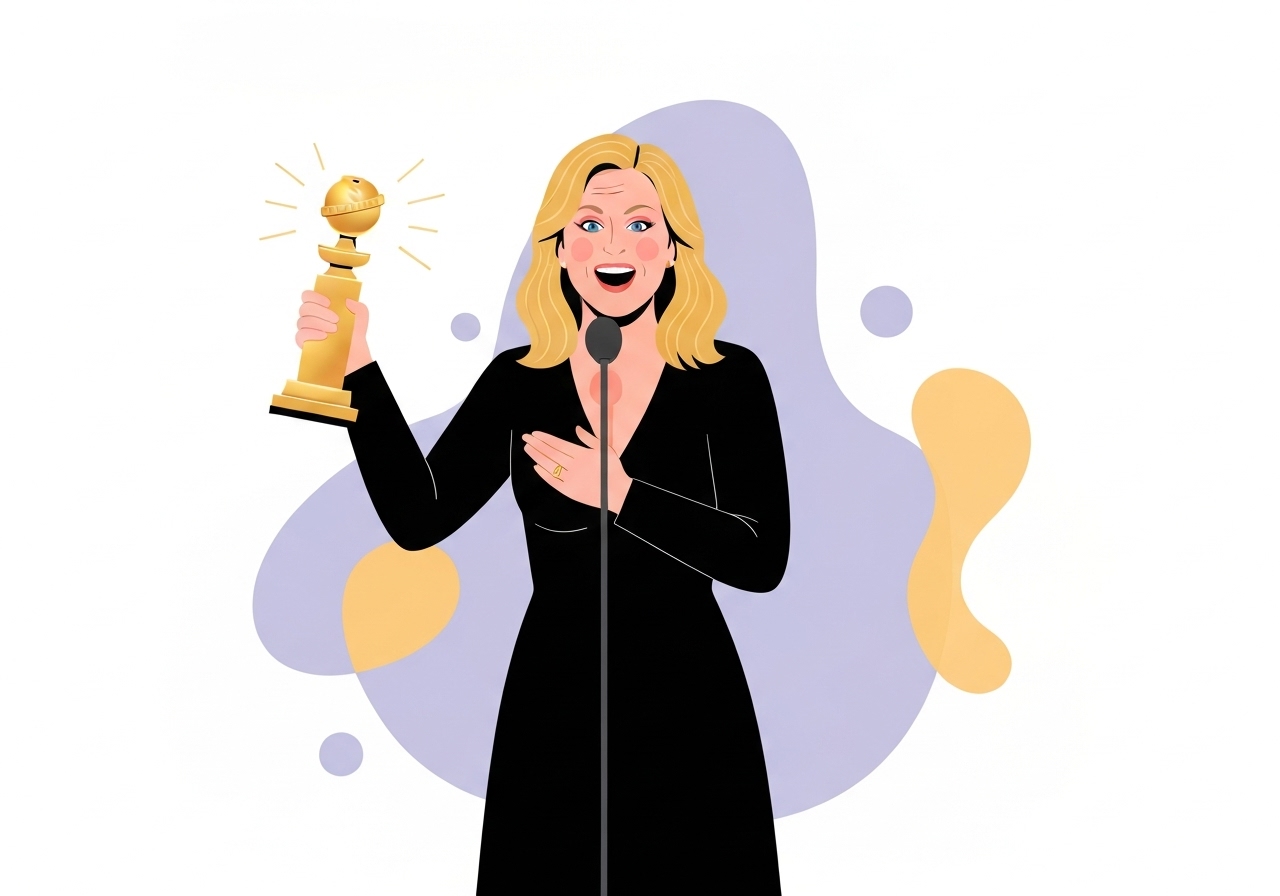
At the Golden Globe Awards this year, Amy Poehler’s new show Good Hang With Amy Poehler won the inaugural Golden Globe for Best Podcast, marking the ceremony’s first salute to the medium. Launched about ten months ago from Paper Kite Productions in partnership with The Ringer, the podcast quickly drew attention for guest-heavy episodes featuring peers such as Martin Short, Ike Barinholtz, Quinta Brunson, Tina Fey and Rashida Jones. Poehler accepted the award from presenter Snoop Dogg and used her brief speech to acknowledge her newcomer status in podcasting while celebrating the show’s intent: laughter and connection. The category itself was chosen from a pool of 25 eligible podcasts invited to submit entries, with selection overseen by Globes data partner Luminate.
Key Takeaways
- Good Hang With Amy Poehler won the first-ever Golden Globe for Best Podcast, becoming the category’s inaugural winner.
- The show debuted roughly 10 months ago via Paper Kite Productions and The Ringer and rose quickly on audience and industry radars.
- The category’s nominee slate included Armchair Expert, Call Her Daddy, SmartLess, The Mel Robbins Podcast and Up First, selected from 25 eligible entries vetted by Luminate.
- Poehler has a long Golden Globes history: she has received three acting nominations for Parks and Recreation and has hosted the ceremony four times.
- Snoop Dogg presented the podcast award; Nikki Glaser performed a pre-recorded sketch that referenced other nominees and branded ad parody bits.
- The Globes created this podcast category following last year’s Best Performance in Stand-Up Comedy on Television addition, reflecting expanding recognition of new entertainment formats.
Background
The Golden Globes added the Best Podcast category as part of a broader industry shift: audio-first, personality-led productions now command large, engaged audiences and significant advertising revenue. Awards bodies have increasingly adapted to capture cultural moments beyond film and TV, following the Globes’ establishment of the stand-up television category in 2024. Podcasts vary widely in production scale—from independent interview shows to studio-backed celebrity efforts—and the Globes’ choice to invite 25 eligible titles to submit reflects an attempt to balance scope with quality control.
Paper Kite Productions, Amy Poehler’s production company, partnered with The Ringer to launch Good Hang, leveraging Poehler’s long comedy network to attract high-profile guests early on. That rapid guest list helped the show amass buzz and critical attention within months of its launch, a pattern increasingly common when established entertainers enter podcasting. Industry partners such as Luminate supplied the data framework the Globes used to determine which shows could submit, signaling an intent to ground eligibility in measurable reach and activity.
Main Event
The awards moment unfolded with presenter Snoop Dogg handing Poehler the Golden Globe for Best Podcast. Poehler opened by noting she’s new to the medium and expressed respect for podcast creators, then lightened the moment with a joke about celebrity-hosted shows and NPR. She framed Good Hang as a deliberately compassionate, laughter-focused project: a place for shared joy rather than ridicule. The acceptance was brief but positioned the win as both personal and emblematic of the format’s cultural rise.
Earlier in the ceremony, host Nikki Glaser introduced the category with a pre-recorded sketch parodying Nicole Kidman’s AMC preroll spots, riffing on the idea of communal viewing—and listening—rituals. The sketch included short clips that mimicked small-talk promotional bits from nominees such as SmartLess and Call Her Daddy, and staged mock ad interruptions, including a Tinder gag and a socks spot voiced in the style of another podcast host. Marc Maron made a cameo near the sketch’s end to jokingly invoke a well-known podcast ad buyer.
The official Best Podcast nominee list published by the Globes paired celebrity-led shows with a news program: Armchair Expert With Dax Shepard, Call Her Daddy, Good Hang With Amy Poehler, SmartLess, The Mel Robbins Podcast and Up First. According to the Globes, the nominees were drawn from 25 podcasts invited to submit entries; Luminate provided the eligibility and data framework. That selection process narrowed a crowded field into a short list representing a range of styles and audiences.
Analysis & Implications
The Globes’ formal recognition of podcasts signals that mainstream awards institutions regard audio as a mature field worthy of traditional honors. For producers and talent, a Golden Globe can translate into higher industry visibility, stronger sponsor interest and expanded distribution opportunities. For a recent entrant like Poehler, the prize validates a cross-medium strategy: using established celebrity clout to accelerate a show’s growth while bringing entertainment-industry attention to podcasting’s creative possibilities.
At the same time, the nomination list highlights tensions within podcast awards: should recognition favor independent, reporter-driven journalism or celebrity-hosted entertainment? The nominees blended both, but the inclusion of Up First—an established news program—alongside celebrity chat shows suggests the Globes sought to represent different subgenres. How future eligibility and judging criteria evolve will determine whether awards reinforce commercial, star-driven podcasts or uplift smaller, editorially focused productions.
Commercial implications are immediate. Studios and advertisers watch awards as signaling events: a Globe can increase CPMs for ad inventory and justify larger production budgets. For production companies like Paper Kite and networks like The Ringer, the win provides leverage in negotiations for platform exclusives, sponsorships and advertising deals. Over time, consistent awards attention could encourage more established actors and creators to invest in serialized audio projects.
Comparison & Data
| Podcast | Host(s) | Type |
|---|---|---|
| Good Hang With Amy Poehler | Amy Poehler | Celebrity interview/comedy |
| Armchair Expert | Dax Shepard | Celebrity interview |
| Call Her Daddy | Alex Cooper | Cultural/lifestyle |
| SmartLess | Jason Bateman, Will Arnett, Sean Hayes | Celebrity interview/comedy |
| The Mel Robbins Podcast | Mel Robbins | Advice/self-help |
| Up First | NPR hosts | News/daily |
The table shows the nominees’ dominant formats: interview-led and personality-driven programs. That mix points to why the Globes framed the category to include both entertainment and information-focused audio. As awards recognize multiple podcast subgenres, future categories or subrecognitions may emerge to reflect these structural differences.
Reactions & Quotes
Acceptance and backstage reaction combined gratitude, humor and industry awareness. Poehler positioned the show as joy-first and thanked listeners and collaborators for allowing the team to continue producing episodes.
“I have great respect for this form…We just have such a good time making it.”
Amy Poehler, acceptance remarks
Presenter Snoop Dogg offered a playful take on the medium’s competitiveness and his own potential future involvement, framing podcasts as a lively battleground for culture and personalities.
“It is popping right about now.”
Snoop Dogg, category presenter
Host Nikki Glaser used the pre-recorded sketch to both lampoon and honor podcast conventions, illustrating how the Globes staged the new category with self-aware humor.
“We come here to laugh, to cry…that indescribable feeling when the episode starts to play.”
Nikki Glaser, pre-recorded sketch
Unconfirmed
- Snoop Dogg’s on-stage comment about entering awards races is playful and not an official declaration of future awards campaigns.
- Specific internal scoring or weighting used by the Globes and Luminate to evaluate podcast submissions has not been publicly released.
Bottom Line
The Golden Globes’ introduction of a Best Podcast award and Amy Poehler’s win for Good Hang underline podcasting’s elevated cultural status and commercial importance. The category rewarded a high-profile, guest-driven show that leveraged celebrity networks and production backing to achieve rapid visibility.
Going forward, the Globes’ choices will shape industry incentives: producers may prioritize award-friendly formats, platforms could bid for exclusive content, and the definition of excellence in podcasting may widen to include distinct subgenres. Listeners and creators alike should watch how eligibility rules and judging criteria evolve, since those details will determine which kinds of audio work receive prestige and support.