
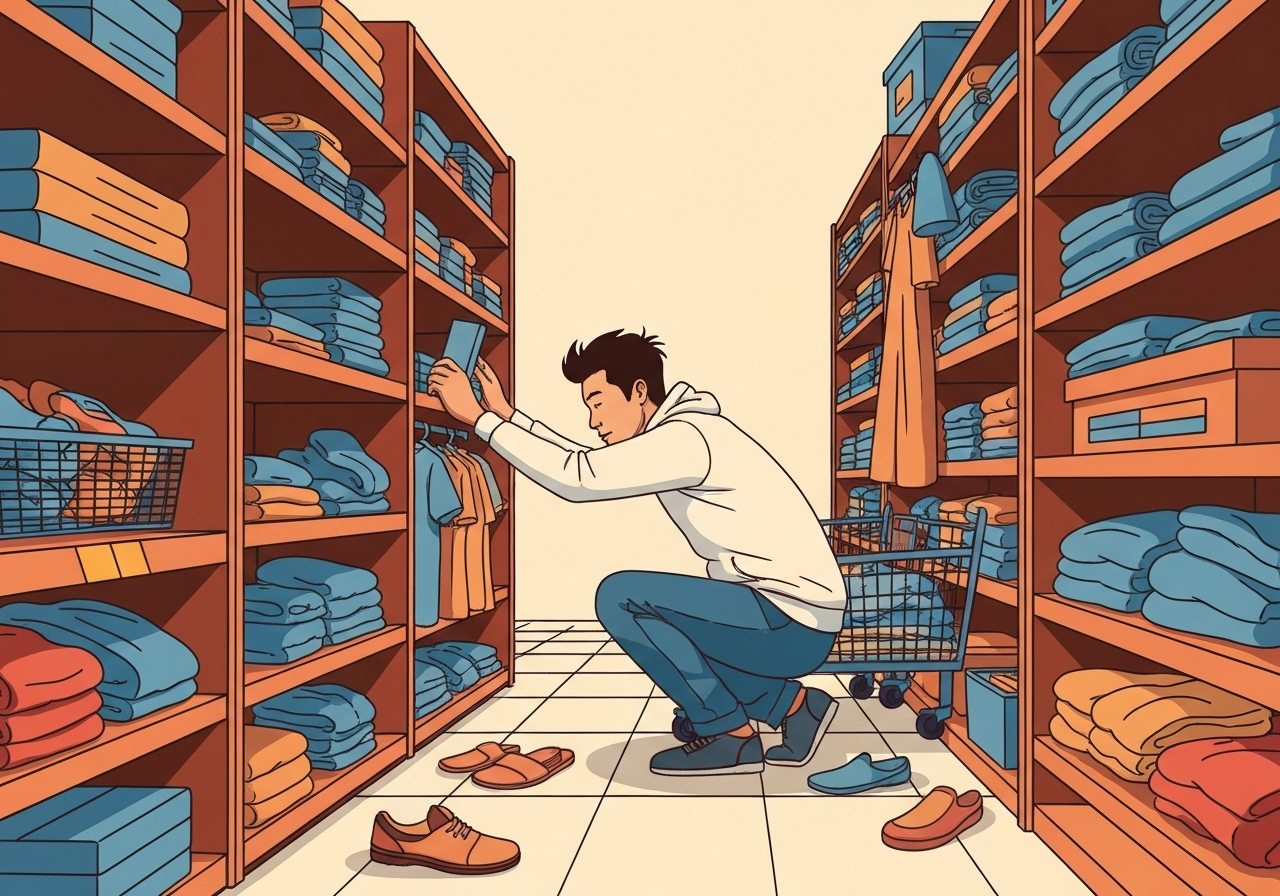
Last week a local shopper posted photos from a neighborhood Goodwill that showed aisles stacked and disorganized, and the images quickly drew attention online. The poster shared the images to the r/thriftgrift subreddit, asking whether the scene — overflowing racks and unsorted merchandise — was normal. The post sparked a lively discussion among thrifters and regular shoppers, with many criticizing the store’s upkeep while others urged caution before generalizing. The episode highlights tensions between thrift operations, donor flows and shopper expectations.
Key takeaways
- The photos were shared to r/thriftgrift, a Reddit community for thrift-related finds and gripes; the thread prompted dozens of comments within hours.
- Images showed multiple aisles with piled goods and little visible sorting, which the poster described as a habitual problem at that location.
- Several commenters attributed the condition to poor local management and said Goodwill stores typically sort and tag donations daily.
- One user, who said they have shopped across the east coast of Canada and the U.S., called this location the worst they had seen.
- Shoppers noted that cluttered shelves can deter visits and reduce resale value, potentially affecting the nonprofit’s revenue and diversion-from-landfill goals.
Background
Thrift retailers such as Goodwill operate on donated goods, volunteer hours and paid staff to collect, sort and resell items. Goodwill Enterprises is a large nonprofit network that funnels retail proceeds into job-training and community programs; local store performance can vary widely depending on donations, staffing and volunteer support. Standard retail practice in many thrift operations includes daily sorting of donations, colored-tag rotation and floor care to keep inventory attractive to buyers.
In recent years the secondhand market has expanded as consumers seek bargains and environmentally friendly options. That growth has increased both donation volume and pressure on local stores to process goods promptly. When stores fall behind, backlogs of unsorted merchandise can accumulate, producing the cluttered conditions seen in the Reddit photos and prompting customer complaints that are visible online.
Main event
The Reddit poster uploaded multiple images of one Goodwill location’s sales floor, describing persistent disorganization at that branch. In the thread they asked whether keeping shelves in such a state was common, and urged other users to weigh in. Commenters responded quickly: many called the display a sign of weak local oversight and said the appearance was not representative of most Goodwill stores they had visited.
Other users described personal reactions ranging from frustration to stress when encountering similar conditions. One commenter wrote that cluttered aisles make it difficult to find items and reduce confidence that merchandise has been inspected for damage. Several shoppers also noted that poorly managed stores can signal safety or quality-control issues, even when prices remain attractive.
Not everyone agreed the images proved systemic failure. Some participants cautioned that a single visit or a few photos do not capture full operational constraints—temporary staffing shortages, donation surges after holidays, or backlog during inventory transitions can create short-term disorder. The Reddit conversation mixed first-person observations with calls for local managers to improve floor standards and donor education.
Analysis & implications
Visible disorganization in a well-known thrift chain can erode shopper trust and reduce foot traffic, which in turn strains revenue that supports social programs. If local stores lose buyers because of presentation, the chain’s ability to fund employment services or community initiatives could be affected. Conversely, a one-off lapse is less damaging if the network can respond with targeted management support.
Operationally, thrift retailers face a balancing act: processing donated volume quickly enough to keep inventory fresh while maintaining quality control. Labor constraints, rising donation rates and uneven volunteer contributions can create processing bottlenecks. Where staffing or budget shortfalls exist, management may prioritize essential functions over daily tidying, producing visible clutter that frustrates customers.
There are broader environmental stakes. Thrift stores help divert goods from landfills by enabling reuse; when shoppers are deterred by messy conditions and purchase rates drop, items may remain unsold and eventually be discarded. Improving store presentation and donor communication can therefore have both financial and environmental benefits.
Comparison & data
| Aspect | Typical thrift standard | Condition shown in photos |
|---|---|---|
| Daily sorting | Daily or regular tagging and rotation | Apparent backlog, unsorted stacks |
| Floor appearance | Walkable aisles, organized racks | Cluttered aisles, merchandise stacked |
| Shopper experience | Browseable selection, confidence in quality | Difficulty browsing, reduced confidence |
The table compares commonly expected thrift-store practices with the conditions visible in the shared images. While qualitative, the contrasts help explain why commenters reacted strongly: presentation directly affects browseability and perceived value. Retail managers often track simple operational metrics—like time from donation to floor, tag rotation rates, and shrinkage—to diagnose such issues.
Reactions & quotes
Several users summarized their impressions of the photos and the store’s upkeep before and after seeing the images.
“Poor management,”
Reddit commenter
The commenter used the phrase to attribute the messy presentation to local oversight rather than the broader organization; other users echoed that sentiment and called for clearer standards and accountability.
“This made me physically stressed,”
Reddit commenter
Another shopper described an emotional response common among regular thrifters when confronted with disorganization that makes searching for items harder. Multiple respondents linked the reaction to wasted time and diminished enjoyment of bargain hunting.
“I’ve never seen one this bad,”
Reddit commenter (claims shopping across east coast Canada & U.S.)
That comment framed the photos as unusual compared with experiences in other stores, but it remains an individual observation rather than systematic evidence about the chain.
Unconfirmed
- The exact location and date of the photos were not provided in the Reddit post, so chain-level conclusions cannot be confirmed.
- Claims that the store “never” cleans or organizes are user assertions without independent verification.
- It is unverified whether the observed condition reflects an ongoing operational failure or a temporary backlog due to recent donations or staffing changes.
Bottom line
The Reddit thread drew attention because the images contradicted many shoppers’ expectations of thrift-store presentation and quality control. While commenters largely blamed local management, the photos alone cannot establish whether the issue is systemic across Goodwill or isolated to one branch. For shoppers, the episode is a reminder to check local reviews and visit in person when possible.
For Goodwill and similar organizations, the incident highlights how quickly a single location’s appearance can spark broader reputational conversations online. Improving on-the-floor sorting, donor guidance and clear communication about temporary backlogs could reduce customer frustration and help sustain both resale revenue and environmental benefits of reuse.
Sources
- Yahoo Lifestyle — online news report summarizing the Reddit thread and public reactions
- r/thriftgrift — community forum where thrift shoppers share finds and complaints (user-generated content)
- Goodwill.org — organization website (official)