
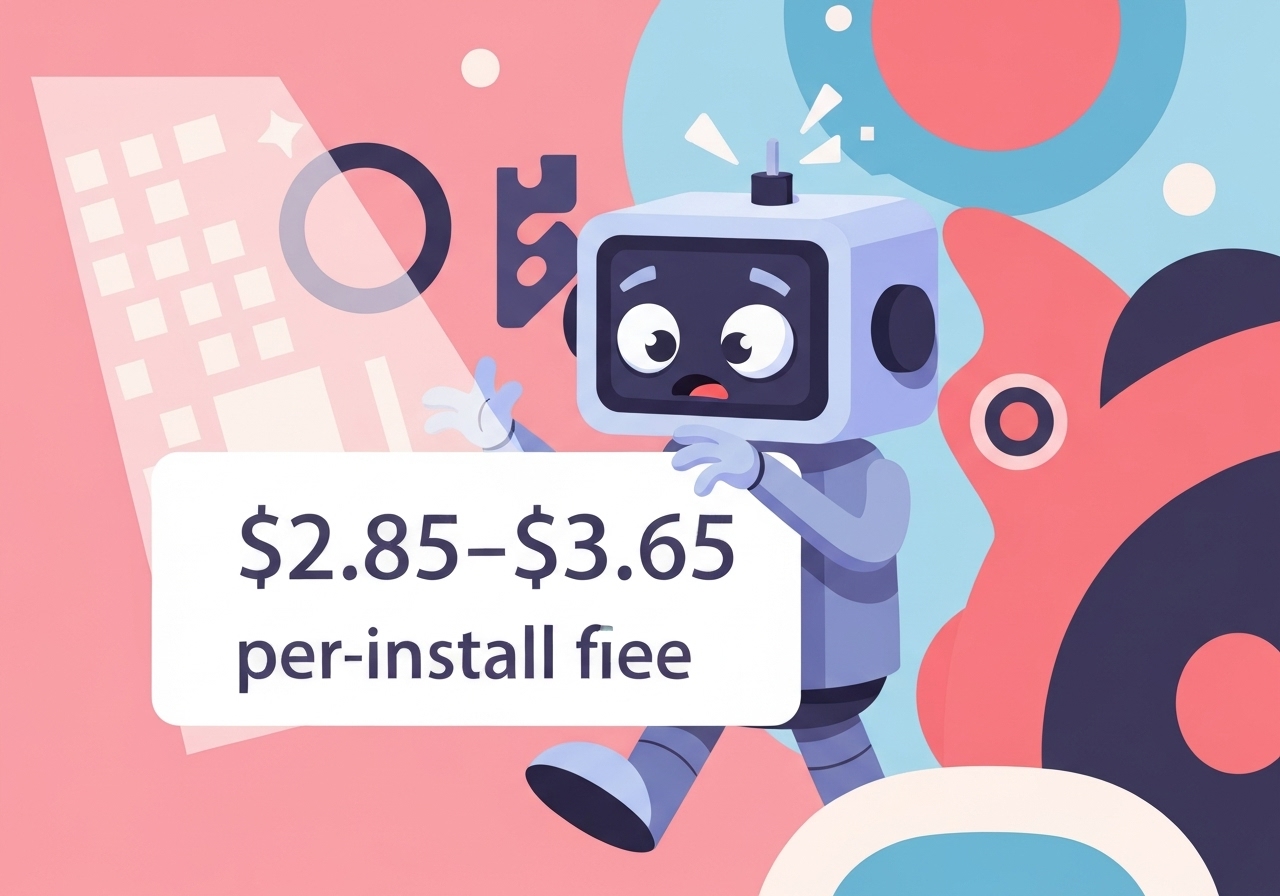
Google set a January 28 enrollment deadline for new programs that would let Android apps use external download links and alternative billing in the US, while attaching notable fees and reporting rules. Under the company’s updated support pages, installs that occur within 24 hours of a user clicking an external link would carry a $2.85 charge for apps and $3.65 for games, along with platform revenue shares on in‑app transactions. Developers must still submit apps for Play review, integrate Google’s tracking API and report all transactions if they want to participate. Epic Games says it opposes the proposed service fees and will challenge them if they are imposed.
Key takeaways
- Google published enrollment rules with a January 28 deadline for two US programs: “external content links” and “alternative billing.”
- Installs occurring within 24 hours of an external link click would incur a per‑install service fee of $2.85 for apps and $3.65 for games.
- For the external‑links pathway Google would take a 20% cut of in‑app purchases and 10% of auto‑renewing subscriptions; alternative billing would carry a 25% cut for purchases and 10% for subscriptions.
- Developers in either program must submit apps to Play review, use a Google API to track installs/transactions and report all transactions (including $0 trials) within 24 hours.
- Some fees would be capped at 10% on the first $1 million of developer revenue, compared with Google’s existing 15% cap, effectively a 5 percentage‑point adjustment for qualifying small developers.
- Google says it is not yet collecting these fees, but has signaled it intends to apply them in the future if implemented.
- Epic has agreed to the January 28 timeline but explicitly opposes the service fees and plans to litigate if Google starts charging them.
- A separate proposed settlement between Google and Epic could supersede these rules if accepted by the court; Judge James Donato has scheduled an evidentiary hearing on January 22.
Background
The measures stem from U.S. District Judge James Donato’s order that Google open Android to third‑party app stores, stop tying Google Play Billing to app distribution, and allow developers to link to off‑store download options in the United States. The order was issued in the course of Epic Games’ lawsuit against Google, which closely mirrors the Apple–Epic litigation that prompted new limits on platform control and fees. Courts have been wrestling with whether platform owners can charge commissions on purchases or on transactions that originate from links to external payment or distribution channels.
In response to Donato’s mandate, Google updated its Play support documentation to describe two enrollment tracks: one for developers who want to offer external download links that take users outside the Play ecosystem, and another for apps that adopt alternative billing systems. Those pages set operational rules—review, tracking, reporting—and outline fee models Google says reflect the “value provided by Android and Play.” Google also notes it is not collecting the fees immediately, but plans to apply them in the future if the programs proceed.
Main event
Google’s posted terms specify per‑install service fees tied to external content links: $2.85 for non‑game apps and $3.65 for games when a user installs within 24 hours of clicking an external link. In addition to per‑install charges, Google would take 20% of in‑app purchase revenue and 10% of auto‑renewing subscription revenue for apps using the external‑links program. The company requires apps that take part to be submitted to Play for review and to integrate a Google API that allows Play to track installs and transactions.
For the alternative billing track — meaning apps that process payments through their own merchant systems — Google’s draft terms show a 25% commission on in‑app purchases and a 10% cut on auto‑renewing subscriptions, plus the same reporting and API obligations. Google frames the alternative billing fee as a 5 percentage‑point discount versus its standard rates, but that margin may be too small to justify the integration burden and reporting requirements for many developers.
Google also proposes a small‑developer concession: for qualifying developers, some fees would be capped so that the effective rate is no more than 10% on the first $1 million of revenue. Google notes it already provides a 15% cap in some cases, so the new cap is positioned as a modest additional relief for smaller publishers. Meanwhile, Google asserts these fees are not being assessed today and that it is not yet requiring reporting tied to the not‑yet‑applied charges.
Analysis & implications
The per‑install charges create a new cost vector that is independent of purchase revenue share: even if a developer drives downloads outside Play, Google would seek a fixed fee for each install tied to an external link. That model shifts some monetization friction from sales commissions to acquisition events, potentially penalizing developers that market their apps via newsletters, websites or third‑party stores. Small studios that rely on external distribution channels may find margins squeezed, especially for free or low‑price apps.
The revenue share differences between the two tracks also create strategic choices. Under Google’s plan, using an external link is paired with a 20% IAP cut, while alternative billing is tied to a 25% cut — a smaller outward discount that may not offset the engineering and compliance costs of integrating an alternative payment system. In practice, many developers will weigh the marginal percentage against integration and reporting burdens; for many, the economics could favor staying within the current Play Billing flow.
Legally, the proposal arrives amid active litigation and judicial scrutiny. A closely related episode in the Epic v. Apple case illustrates the risk: Apple’s early attempt to set a 27% fee for external payments led to a contempt finding by Judge Yvonne Gonzalez Rogers, and an appeals court recently allowed some limited commissions but stressed they must be tied to costs “genuinely and reasonably necessary.” How Donato interprets Google’s fees — whether they are reasonable and related to demonstrable costs of coordination and security — will be central to any challenge.
Comparison & data
| Program | Per‑install fee | In‑app purchase cut | Auto‑renew subs cut | Reporting/API |
|---|---|---|---|---|
| External content links (Google) | $2.85 app / $3.65 game (24‑hr window) | 20% | 10% | Required |
| Alternative billing (Google) | — | 25% | 10% | Required |
| Current Play billing (standard) | — | Varies (capped programs available) | Varies | Standard reporting |
This table summarizes Google’s announced rates and procedural requirements as described in its support pages. The per‑install amounts apply only to installs that occur within 24 hours of a user clicking an external link. Google’s small‑developer cap would limit some fees to an effective 10% on the first $1 million of revenue, versus an existing 15% cap in some Play programs.
Reactions & quotes
Google frames the proposals as a way to preserve investment in Android and Play while complying with Donato’s order; public statements emphasize platform security and developer support functions. Independent developers and Epic have voiced concerns about the economics and whether the charges are legally defensible.
“The fees associated with the external content links program reflect the value provided by Android and Play and support our continued investments across Android and Play,”
Google (support pages; official)
Epic’s legal team, while accepting the January 28 timetable, made clear it intends to oppose any new service fees once implemented and plans to litigate the matter.
“Epic has indicated it opposes the service fees that Google announced it may implement in the future and that Epic will challenge these fees if they come into effect,”
Epic/Google joint progress report (legal filing)
Legal observers note the Apple–Epic appeals guidance that commissions must be tied to reasonable coordination costs — a standard that could influence how Donato evaluates Google’s proposed charges.
“A platform may charge a commission on linked‑out purchases based on the costs genuinely and reasonably necessary for its coordination,”
U.S. Court of Appeals guidance (Apple v. Epic, summary)
Unconfirmed
- Whether Judge Donato will accept Google and Epic’s proposed settlement instead of the program rules remains unresolved; Donato has scheduled an evidentiary hearing for January 22.
- Google’s published support pages state it is not collecting the fees yet; the precise timing and conditions under which fees would begin to be assessed are not fully specified.
- How the appeals‑court guidance in Apple’s case will be applied to Google’s fee structure is subject to legal interpretation and not settled.
Bottom line
Google’s procedural and fee proposals would open new distribution and payment choices on Android while creating fresh costs and compliance duties for developers. The combination of per‑install charges plus revenue cuts changes the calculus for using external links or alternative billing: some developers may find the costs outweigh the benefits, particularly smaller studios and publishers with thin margins.
Legally, the proposals enter a contested space shaped by recent Apple litigation; Judge Donato’s upcoming evidentiary hearing on January 22 and the January 28 enrollment deadline are the immediate milestones to watch. If the judge rejects the proposed settlement or finds the fees excessive, Google may need to revise both its operational rules and its pricing model; if the settlement is approved, a different, potentially broader regime could apply.