
Lead
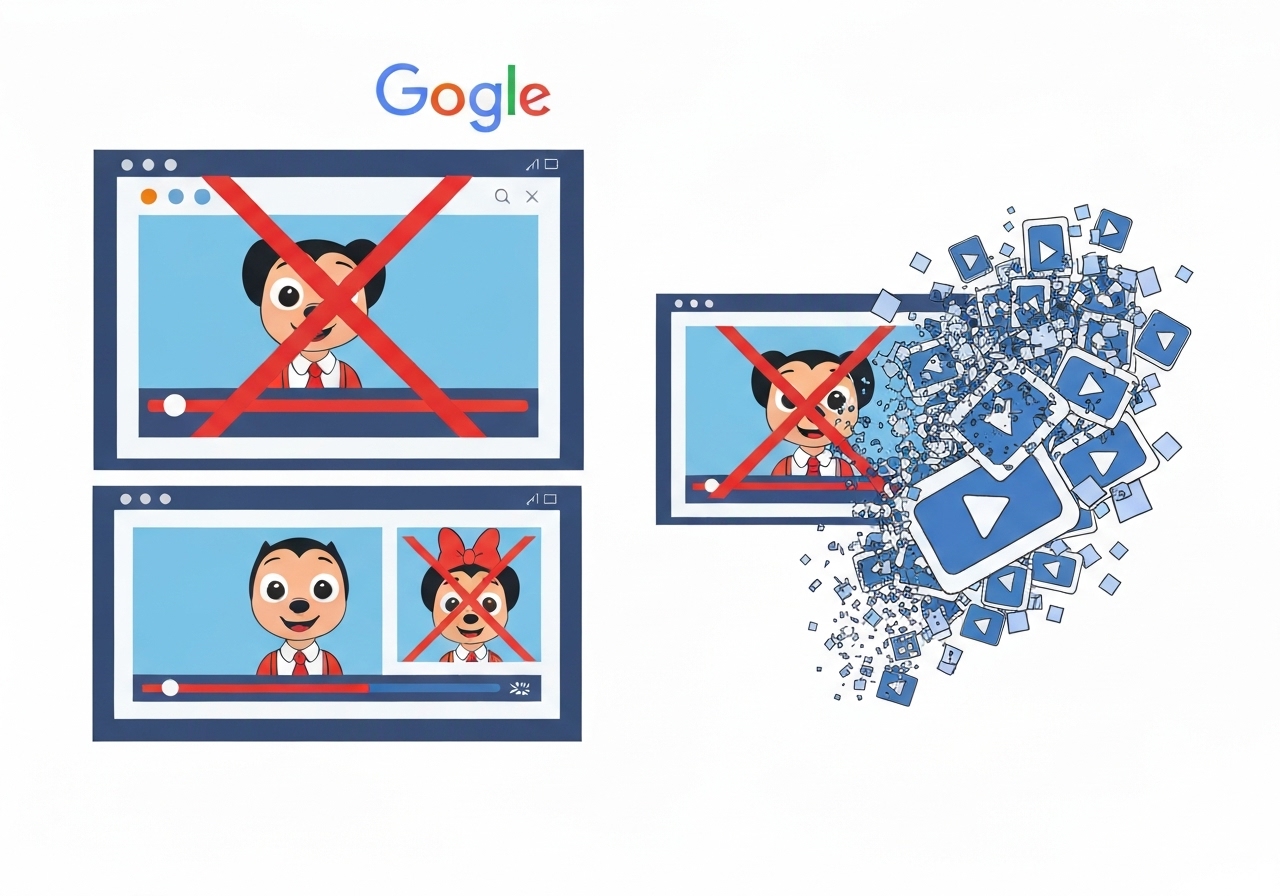
On Wednesday, Disney sent a cease-and-desist letter to Google requesting removal of dozens of AI-generated YouTube clips that depicted Disney-owned characters. The videos — many reportedly created with Google’s Veo AI video tool — included Mickey Mouse, Deadpool and figures from Star Wars and The Simpsons. Links that previously led to those clips now reroute to a notice citing a copyright claim by Disney. Google said on Thursday it will engage with Disney and review the issue.
Key Takeaways
- Disney issued a cease-and-desist on Wednesday, flagging multiple YouTube links and asking Google to take them down immediately.
- Dozens of AI-generated videos depicting characters such as Mickey Mouse, Deadpool, figures from Star Wars and The Simpsons were targeted.
- Many flagged clips were reportedly produced using Google’s AI video tool Veo; the company also redirected viewers to a copyright-claim message.
- Disney asked Google to implement safeguards to block generation of Disney-owned characters and to stop using those characters to train AI models.
- Shortly before the takedown, Disney announced a licensing deal that grants OpenAI access to 200 Disney characters for Sora users to create short AI clips.
- Google said it will cooperate with Disney and pointed to existing copyright tools such as Content ID and Google-extended controls for YouTube.
Background
Disney has long treated its characters as core intellectual property and has acted aggressively to protect them across mediums and platforms. As generative AI tools matured, studios and rights holders grew concerned about unlicensed depictions that replicate iconic characters without permission. The rise of accessible AI video generators — including vendor tools and platform-built systems like Veo — accelerated that tension by enabling rapid creation and distribution of short clips on services such as YouTube and YouTube Shorts.
At the same time, major tech and entertainment firms have explored licensing arrangements to monetize controlled, authorized AI use. Disney’s reported licensing of 200 characters to OpenAI for the Sora product is an example of studios seeking revenue and oversight rather than relying solely on after-the-fact takedowns. That commercial approach contrasts with broad takedown demands intended to limit unauthorized reproductions across the open web.
Main Event
According to the letter Disney sent Wednesday, the studio flagged specific YouTube links and demanded immediate removal. Variety reported the list included characters from Frozen, Moana, Toy Story, Deadpool, Iron Man, Lilo & Stitch, Winnie the Pooh and others. Platform notices now indicate those videos are unavailable due to Disney’s copyright claims.
Industry accounts indicate many of the removed or flagged clips were made using Veo, Google’s AI video tool, which has been piloted for short-form content creation. The scope of the takedown was described as dozens of videos rather than a complete sweep of all instances on YouTube or Shorts. Viewers who click the original links encounter YouTube’s copyright-block message rather than the clips themselves.
In its Thursday statement, Google said it has a “longstanding and mutually beneficial relationship with Disney” and that it will continue engaging with the studio. Google also noted that it uses public web data to build AI and that YouTube offers copyright controls such as Content ID and Google-extended protections to give rights holders tools to manage their content.
Disney’s letter went beyond immediate removal requests; it also asked Google to stop its AI tools from generating Disney-owned characters and to cease any use of Disney characters in training datasets. That demand raises both technical and legal questions about how platforms control model behavior and trace training sources.
Analysis & Implications
The dispute highlights a growing fault line between rights holders and AI platform providers over control, compensation and training data. For studios like Disney, unlicensed character images and motion can dilute brand control and undercut future licensing revenue. For platforms, policing every generated clip at scale is technically difficult and legally complex, especially where models were trained on broad public data.
Legally, takedowns on hosting platforms are straightforward when specific copyrighted content is identified. The harder questions concern prevention and training: can a company be required to prevent its generative tools from producing particular characters, and how should training datasets be audited or constrained? Regulators and courts are only beginning to grapple with those questions, so precedent remains limited.
Commercial licensing, as Disney pursued with OpenAI for 200 characters, is one clear path forward: it gives studios control and monetization while allowing platforms to offer authorized creative options. However, licensing alone may not stop unauthorized clips that appear on open platforms, especially when creators use widely available tools for quick, low-cost generation.
The broader industry consequence is increased friction between content platforms and rights holders, which could produce tighter content controls, new metadata or watermarking standards, and contractual clauses governing model training. For independent creators, more aggressive enforcement could shrink available material for remix culture while rights-compliant authoring tools may emerge as the safer alternative.
Comparison & Data
| Example Character | Franchise |
|---|---|
| Mickey Mouse | Disney |
| Deadpool | Marvel (Disney-owned) |
| Characters from Star Wars | Lucasfilm/Disney |
| Characters from The Simpsons | 20th Television/Disney |
| Elsa | Frozen (Disney) |
The table lists representative examples named in Disney’s letter and in reporting; it is not exhaustive. Disney’s separate licensing arrangement with OpenAI covers 200 characters, illustrating a contrast between authorized, revenue-generating partnerships and the unauthorized clips that prompted the takedown.
Reactions & Quotes
Google publicly acknowledged the dispute and framed it as part of an ongoing relationship with Disney; the company pointed to existing copyright controls on YouTube as part of its response.
“We have a longstanding and mutually beneficial relationship with Disney, and will continue to engage with them.”
Google (company statement reported by Variety)
Viewers attempting to access the contested clips encounter YouTube’s standard copyright-block notice, signaling that rights holders have successfully issued claims on specific uploads.
“This video is no longer available due to a copyright claim by Disney.”
YouTube platform notice (copyright claim)
Unconfirmed
- Whether Google used Disney-owned character material directly in training any of its AI models is disputed; Disney requested such a stop, but public confirmation is not available.
- The exact number of videos removed or redirected is described as “dozens” in reporting; a precise count from Google or Disney has not been released.
- While many flagged clips were reportedly created with Veo, it is not confirmed that all removed videos were produced with that tool.
Bottom Line
Disney’s cease-and-desist and Google’s subsequent removals illustrate the immediate tension between rights protection and the rapid growth of generative AI tools. Platforms can and do act on specific copyright claims, but the incident underscores larger unresolved questions about training data, preventative safeguards and how to balance creative innovation with rights-holder control.
Expect continued negotiations and possibly new technical measures: more robust content filters, rights-managed APIs, expanded licensing deals and greater transparency about training sources. For creators and platforms, the episode signals that authorized character use will likely require clearer pathways — either licensing agreements or built-in, rights-aware generation tools — if friction is to be reduced.
Sources
- Variety — industry reporting (article summarizing Disney letter and Google response)