
Lead
On Sunday in Los Angeles, the 2026 Grammy Awards fused fashion and political gestures as artists used the red carpet and stage to make statements. Several performers wore “ICE OUT” pins in visible solidarity with protesters in Minneapolis amid an ongoing immigration crackdown. Style highlights ranged from FKA Twigs’s distressed couture and unconventional accessories to Sabrina Carpenter’s crystal-embellished sheer gown. The event also included emotional onstage moments, including Bad Bunny dedicating his win to migrants who left their homelands to chase opportunity.
Key Takeaways
- Location and timing: The 2026 Grammys took place in Los Angeles on Sunday, with the red carpet preceding the televised ceremony.
- Visible political message: Multiple artists appeared wearing “ICE OUT” pins to signal support for Minneapolis protesters amid an immigration crackdown.
- Major nominees: Sabrina Carpenter arrived in a crystal-adorned sheer tiered gown; she was nominated for six awards including Record of the Year, Song of the Year and Album of the Year for “Man’s Best Friend.”
- First-time winner spotlight: FKA Twigs, a first-time Grammy winner, appeared in a deliberately tattered gown and carried a small book and a glossy red anthurium as an accessory.
- Notable dedications: Bad Bunny dedicated his award to “all the people who have had to leave their homeland” while accepting a prize in Los Angeles.
- Diverse red carpet looks: Performers including Chappell Roan, Olivia Dean and Miley Cyrus used the carpet to combine personal style with symbolic items or messaging.
Background
The Grammys have long been a platform where fashion, celebrity culture and political expression intersect. Performers and attendees often use red carpet moments to showcase designers, personal branding and sometimes political sentiment—this year’s visible pins follow that pattern. The appearance of “ICE OUT” pins connects to broader protests in Minneapolis focused on immigration enforcement, an issue that has animated artists and activists in recent months.
Music industry attention to social causes is not new: artists have repeatedly signaled solidarity on major stages going back years, and awards shows routinely reflect current political climates. Nomination and award recognition remain career-defining; Sabrina Carpenter’s six nominations this year placed her among the ceremony’s most recognized artists. Photographers and outlets documented both sartorial choices and protest-related symbols throughout the evening, amplifying their reach beyond the venue.
Main Event
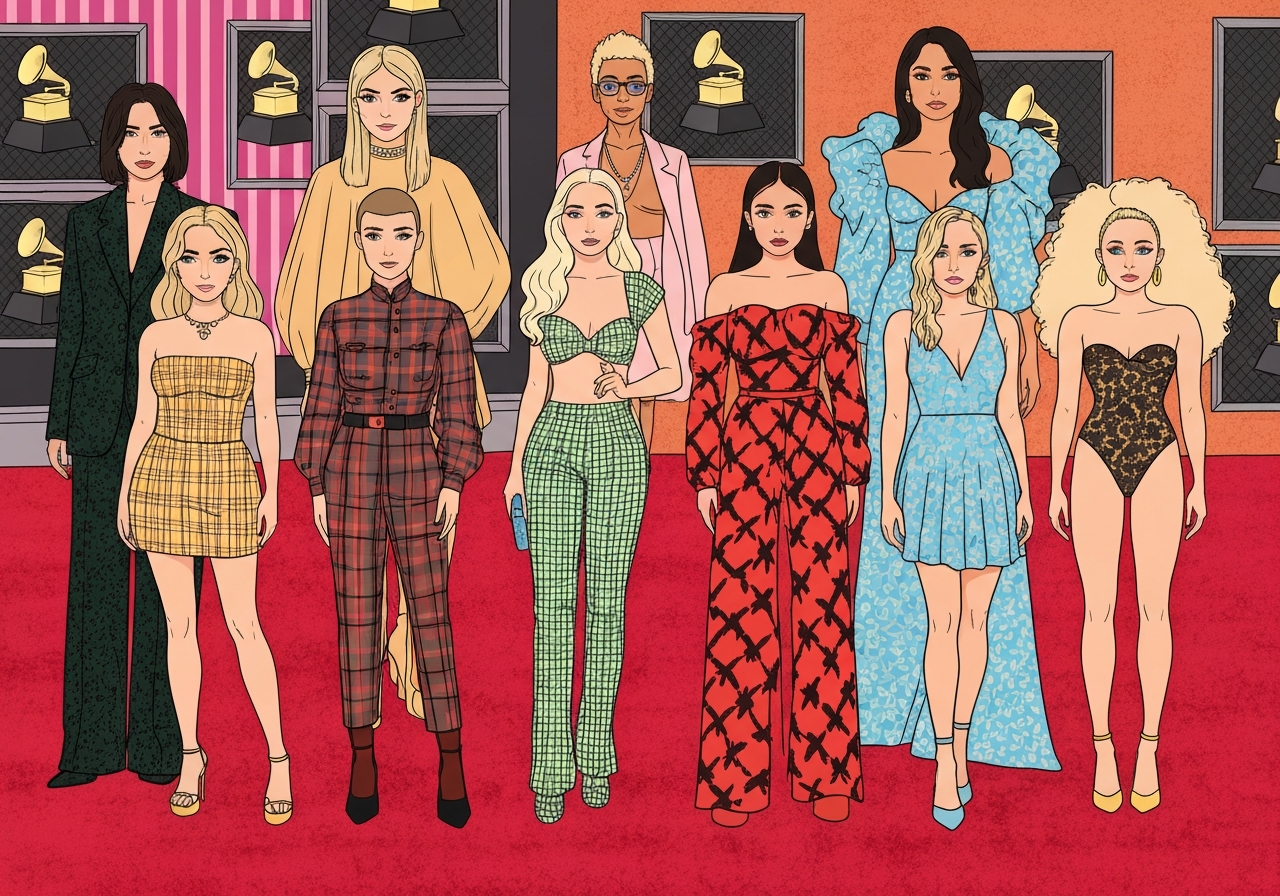
The red carpet presented a mix of high-glamour couture and deliberate, statement-making details. Sabrina Carpenter arrived in a sheer, tiered gown studded with crystals that drew attention from fashion critics and social feeds alike. Chappell Roan, Olivia Dean and Miley Cyrus each offered distinct looks that balanced runway influence with personal touches, prompting discussion about evolving red carpet aesthetics.
FKA Twigs—celebrated for winning her first Grammy—chose a tastefully distressed gown that framed a small book and a glossy red anthurium where a purse might traditionally appear. That choice was widely photographed and discussed as an artistic accessory decision rather than a conventional fashion carryover. The presentation underscored how artists can use accessories to add narrative or symbolism to their appearances.
Alongside fashion, a number of performers used their stage moments to call attention to migration and displacement. In his onstage remarks, Bad Bunny dedicated an award to migrants who left their home countries for new opportunities, a statement that tied performance accolades to a broader humanitarian theme. Several well-known figures—identified in photographs by outlets and onlookers—wore “ICE OUT” pins on the red carpet to express solidarity with protesters in Minneapolis reacting to an immigration crackdown.
Analysis & Implications
The prominence of protest symbols at a high-profile entertainment event highlights the continuing overlap between pop culture and social movements. When multiple artists display the same emblem—such as the “ICE OUT” pin—it raises questions about coordination, the communication channels between activists and artists, and how effective visibility is in shaping public dialogue. Visibility at awards shows guarantees media pickup but does not by itself translate into policy change.
From a cultural standpoint, the Grammys functioning as a stage for messaging can deepen fan engagement and broaden issue awareness, particularly among younger audiences. For artists, the decision to wear political symbols carries reputational and commercial calculus: it can strengthen bonds with activist-aligned fans but may also provoke backlash among other segments. Industry stakeholders—labels, managers, and sponsors—often weigh these trade-offs when advising talent about public statements.
Economically, awards-related attention still drives streaming, sales, and brand partnerships; artists who receive recognition (such as Sabrina Carpenter’s six nominations) typically see measurable post-ceremony uplift. Meanwhile, the blending of fashion and politics can affect designers and stylists who may be credited for looks that become associated with a cause, offering both visibility and potential scrutiny.
Comparison & Data
| Artist | Notable Notes |
|---|---|
| Sabrina Carpenter | Six nominations; crystal-embellished sheer tiered gown |
| FKA Twigs | First-time Grammy winner; tattered gown with book and red anthurium |
| Bad Bunny | Dedicatory onstage remarks to migrants |
The table above summarizes how fashion moments and award outcomes intersected for several headline artists. While nomination counts and wins are concrete metrics, the cultural impact of red carpet statements is harder to quantify; social media engagement, news pickup and subsequent artist activity provide proxy measures for influence.
Reactions & Quotes
Public and media responses were mixed: some outlets amplified the solidarity message, while commentators debated the efficacy of symbolic gestures at entertainment events. Fans on social platforms highlighted looks and statements in tandem, using images and clips to broaden the conversation beyond the ceremony.
“All the people who have had to leave their homeland, their country, to follow their dreams.”
Bad Bunny
“ICE OUT”
Visible pin text on multiple red carpet attendees
Unconfirmed
- Whether the wearing of “ICE OUT” pins represented a coordinated campaign among artists or spontaneous individual actions is not confirmed.
- The exact number of performers and attendees who wore the pins has not been independently verified beyond media photo coverage.
- Any formal endorsement of the pins by event organizers or the Recording Academy has not been publicly confirmed.
Bottom Line
The 2026 Grammys in Los Angeles combined high-fashion spectacle with visible political signaling, illustrating how awards shows continue to serve as platforms for both style and social statements. Artists like Sabrina Carpenter and FKA Twigs drew attention for sartorial choices tied to career milestones, while visible protest symbols connected the ceremony to real-world policy debates in Minneapolis and beyond.
For observers, the key question is less whether celebrities wore pins or unusual accessories and more whether those gestures catalyze sustained attention or action. In the short term, the coverage will increase awareness; in the longer term, impact will depend on whether artists, activists and institutions follow symbolic moments with organized campaigns or policy engagement.
Sources
- NBC News — news article reporting on red carpet looks and ceremony coverage
- Recording Academy (GRAMMYs) — official organization site for awards information