
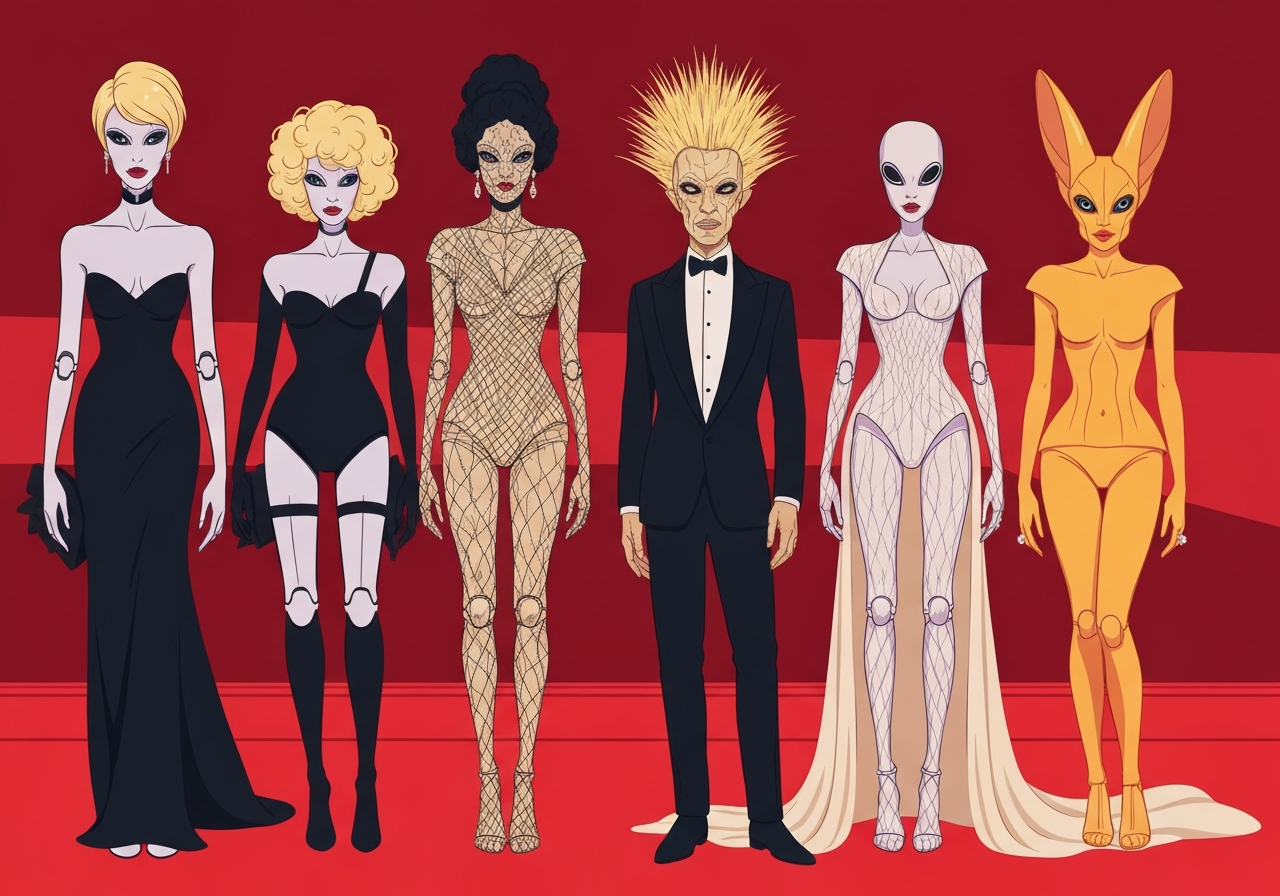
On the evening of February 1, 2026, the Grammy Awards red carpet at Los Angeles’ Crypto.com Arena delivered a spectacle of theatrical fashion, political statements and headline-making theatrics. Attendees — from established icons to breakout winners across the record 95 categories — favored feathers, voluminous draping and dramatic trains. Standout moments included Rosé in a dramatic black minidress by Giambattista Valli, Lady Gaga in a feathery gown by Matières Fécales, and Doechii trailing a reported 13-foot train from Roberto Cavalli. The arrivals combined haute-couture showmanship with political badges and overtly risqué choices, ensuring the carpet dominated conversation online and in the press.
Key takeaways
- The ceremony took place on February 1, 2026, at Crypto.com Arena in Los Angeles and coincided with the Grammys presenting a record 95 categories.
- Rosé (Blackpink) appeared in a theatrical black minidress by Giambattista Valli; Lady Gaga wore a feathery ‘black swan’ gown by Matières Fécales.
- Doechii wore a Roberto Cavalli gown with a reported 13-foot train, one of the longest seen on this red carpet.
- Billie Eilish arrived in a deconstructed suit by Hodakova; Bad Bunny wore a Schiaparelli tuxedo featuring corset detailing, marking a high-profile menswear turn for the label.
- Risqué moments included Heidi Klum in a fitted molded dress described as ‘naked’ and Chappell Roan revealing a Mugler negligee secured with nipple clamps.
- Several guests, including Finneas and members of the Bieber family, wore ‘ICE Out’ and ‘Be Good’ badges in protest of the Trump administration’s immigration policies.
- Breakout artists from the expanded field — such as Addison Rae and the cast of KPop Demon Hunters — used the carpet to showcase looks by Alaïa, Dior, Guvanch and Thom Browne.
Background
Music-industry red carpets have long leaned toward bolder, more experimental dressing than many mainstream Hollywood events. The Grammys in particular have produced enduring fashion moments: think Michael Jackson’s bedazzled military jacket, Pharrell Williams’ oversized hat, or Jennifer Lopez’s plunging green gown. That history sets expectations for boundary-pushing looks and headline-making collaborations between artists and designers. Designers and stylists view the Grammy carpet as a global runway where a single image can amplify a designer’s profile overnight and shape seasonal narratives.
In recent years, the Grammys’ expansion of categories has brought a broader set of performers to the spotlight, increasing the range of red-carpet risk-taking. Social media and streaming outlets magnify each arrival, so stylists balance theatricality with image control. Simultaneously, the music community has used the platform to surface political statements and solidarity messaging, a trend that continued this year with visible protest badges and other signifiers. All these forces — legacy spectacle, platform amplification and political expression — help explain the particularly vivid fashion on show on February 1, 2026.
Main event
Arrivals at Crypto.com Arena opened with a parade of exaggerated silhouettes: feathers, ruffles and voluminous draping dominated camera frames. Rosé’s black Giambattista Valli minidress drew attention for its theatrical shaping and runway sensibility adapted to a short silhouette. Lady Gaga chose a feathery gown from Matières Fécales described in coverage as evoking a ‘black swan’ moment; the outfit stood out both for texture and the brand’s cultivated eccentricity.
Doechii’s Roberto Cavalli gown included a dramatic trailing element measured at approximately 13 feet, creating an elongated procession on the carpet that required coordination with handlers and photographers. Billie Eilish subverted suiting expectations in a deconstructed ensemble by Hodakova, while Bad Bunny’s Schiaparelli tuxedo incorporated corset elements long associated with womenswear, signaling a continued loosening of gendered tailoring norms. Breakout performers used their carpet time strategically: Addison Rae in Alaïa and the KPop Demon Hunters cast in Dior, Guvanch and Thom Browne delivered high-fashion moments that commentators flagged as career-defining visuals.
Not all fashion was strictly aesthetic. Heidi Klum’s molded ‘naked’ dress and Chappell Roan’s Mugler look, which included staged removal of a cape to reveal attachments, prompted debate about spectacle and consent on the carpet. At the same time, political messaging appeared: multiple attendees wore ‘ICE Out’ and ‘Be Good’ badges to protest the Trump administration’s immigration policies, adding an explicitly activist layer to otherwise purely sartorial statements. The interplay of theatricality and politics kept the focus on both clothing and context.
Analysis and implications
The Grammys remain a unique convergence of celebrity culture, fashion commerce and social media attention; the images produced at the event translate directly into editorial coverage, designer sales momentum and cultural hashtags. For emerging designers and heritage houses alike, a single red-carpet moment can generate earned media that outpaces typical runway exposure. The visible embrace of gender-fluid tailoring at a high-profile moment like Bad Bunny’s Schiaparelli look suggests continued momentum for experimental menswear in mainstream press cycles.
Commercially, designers who clothed high-profile arrivals often see spikes in search interest and inquiries to retailers; stylists and brands trade visibility for future selling power. Artist-led spectacle — from extreme trains to provocative reveals — risks overshadowing musical achievements, but it also magnifies artists’ personal brands in a visual-first media environment. The presence of protest badges indicates that red carpets remain not just marketing platforms but also venues for political expression, which can complicate brand partnerships and audience reception.
Looking ahead, the record number of Grammy categories may continue to diversify the pool of red-carpet personalities, producing a wider array of stylistic experiments. That diffusion can democratize fashion moments beyond a handful of celebrity names, elevating stylists and lesser-known designers. However, it may also increase logistical pressures at events as more elaborate garments require handlers, rehearsal and careful press choreography to achieve the desired images without wardrobe malfunctions or disruptions.
Comparison and data
| Artist | Designer | Notable detail |
|---|---|---|
| Rosé | Giambattista Valli | Theatrical black minidress |
| Lady Gaga | Matières Fécales | Feathery ‘black swan’ gown |
| Doechii | Roberto Cavalli | Approx. 13-foot train |
| Billie Eilish | Hodakova | Deconstructed suit |
| Bad Bunny | Schiaparelli | Tuxedo with corset detailing |
The table highlights five headline-making looks and their defining details, illustrating the range from theatrical miniatures to extreme trains. While some items leaned into classic couture techniques, others repurposed tailoring and lingerie motifs for red-carpet drama. These contrasts reflect broader trends in fashion cycles: simultaneous revival of opulence and reworking of traditional menswear. Photographic reach and streaming clips amplify whichever details translate best to social feeds, shaping which designers receive prolonged attention beyond the night.
Reactions and quotes
‘A night for bold statements on and off the carpet,’ paraphrased reaction summarising critical commentary on the event.
Fashion critic commentary (paraphrased)
‘The runway energy was unmistakable,’ paraphrase of fan and social media reaction praising theatrical looks.
Social media reactions (aggregated, paraphrased)
‘We wanted looks that read both cinematic and immediate,’ paraphrased explanation attributed to a stylist involved in red-carpet preparation.
Stylist commentary (paraphrased)
Unconfirmed
- Claims that Matières Fécales intended the gown’s name as a deliberate provocation beyond its own branding have not been independently confirmed.
- Long-term plans by labels such as Schiaparelli to pivot fully into menswear after this tuxedo moment remain unverified.
- Attribution of specific political messaging strategies to any single artist’s team has not been confirmed by spokespeople and should be treated as unverified interpretation.
Bottom line
The February 1, 2026 Grammys red carpet reinforced the awards’ role as a theatre of fashion where risk-taking and spectacle overshadow conventional expectations. From oversized feathers to a reported 13-foot train, artists and designers used the platform to stake aesthetic claims that will ripple across fashion coverage and social feeds in the days and weeks ahead. Political badges and provocative reveals showed that the carpet remains a site for both commerce and commentary, a dual role that will continue to shape red-carpet calculus.
For designers and stylists, the takeaway is clear: visibility at a high-profile music awards show still translates into significant cultural capital. For audiences and brand partners, the event underscored the increasingly blurred line between performance, politics and promotion on the red carpet — a dynamic likely to inform how future award-season moments are styled and interpreted.
Sources
- CNN — news coverage summarising red-carpet looks and arrivals.
- Recording Academy / Grammys — official organization and event information (official).
- Crypto.com Arena — venue information (official).
- Giambattista Valli — designer brand site (official).
- Roberto Cavalli — designer brand site (official).