
Lead
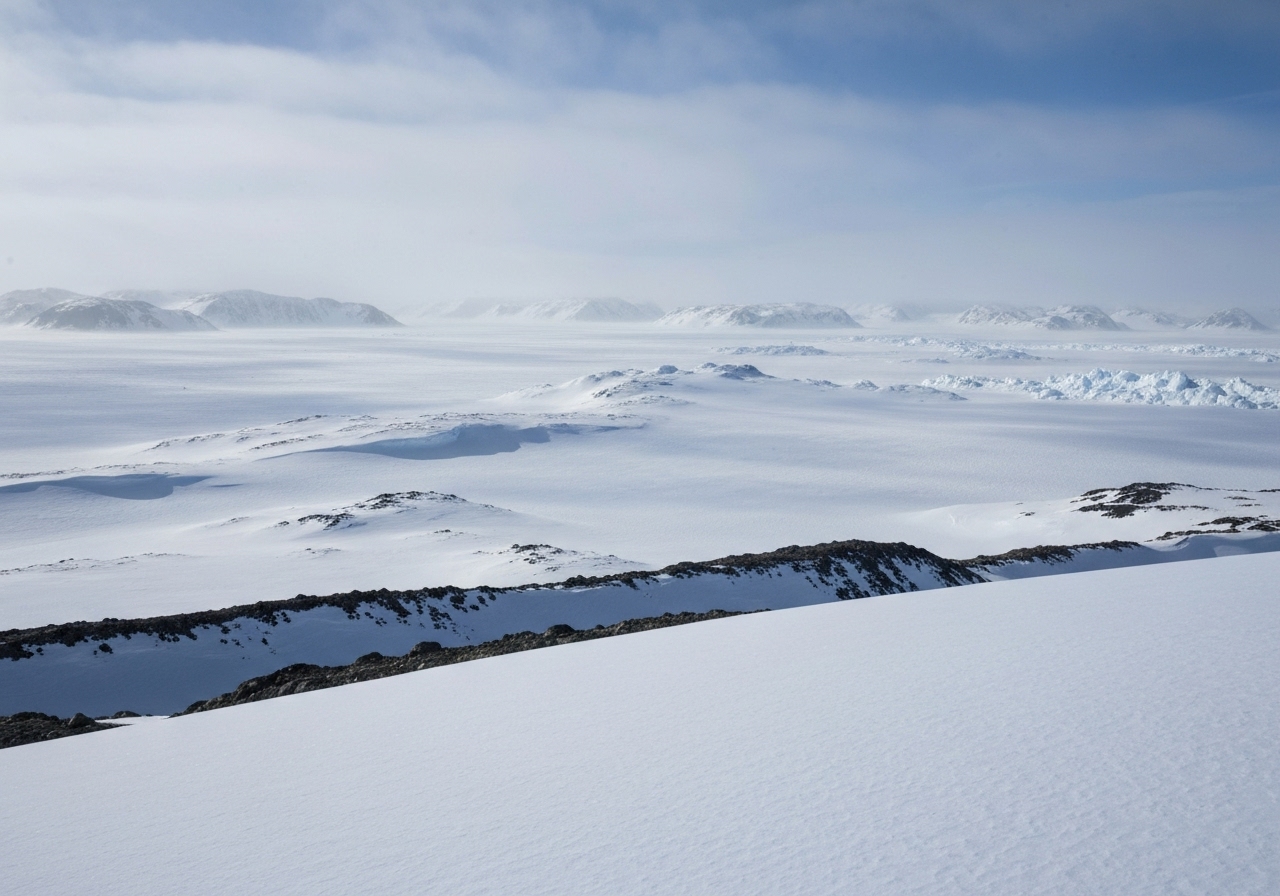
Greenland contains an estimated 1.5 million tons of rare-earth elements, but its remote Arctic setting, scant infrastructure and difficult geology have so far stopped any commercial mine from being built. In recent weeks President Donald Trump again framed Greenland as a geopolitical prize, arguing U.S. control could curb Chinese and Russian influence and help secure supplies. Industry experts and geologists say those political ambitions do not remove the practical barriers: ice, limited transport, local power needs and ores that are costly to process. As a result, projects remain largely exploratory and any production — if feasible at all — is likely years away.
Key Takeaways
- Greenland’s estimated rare-earth resource: roughly 1.5 million tons of contained rare earths, according to public company and survey estimates.
- Infrastructure shortfall: there are few roads, no railways and limited local power in Greenland, meaning mining would require major upfront construction and capital.
- Geology challenge: much of Greenland’s rare earths occur in eudialyte rock, for which no proven, profitable large-scale extraction process exists yet.
- Market concentration: more than 90% of global rare-earth processing currently takes place in China, creating supply vulnerability outside that country.
- Funding gap: companies exploring Greenland would still need to raise at least hundreds of millions of dollars to advance from exploration to production.
- Recent investor moves: one firm announced a pilot plant plan and saw its stock more than double after the news, though it remains far from commercial mining.
- Environmental risk: separation of rare earths typically requires strong chemicals and can produce pollution; many Greenland stakeholders worry about impacts on fragile Arctic ecosystems and tourism.
Background
Rare-earth elements such as neodymium and terbium are critical inputs for electric-vehicle motors, wind turbines, high-performance magnets, robotics and defense systems. Historically, these elements are mined and processed in regions with accessible ore types called carbonatites, where extraction and refining methods are well established. Greenland’s deposits are geologically different: the elements are often bound up in eudialyte, a complex mineral matrix that poses technical and cost challenges for separation and refining. The U.S. has moved to diversify supply chains after tariffs and trade tensions with China tightened controls on some materials, and Washington has invested hundreds of millions of dollars and taken stakes in several companies working on non-Chinese sources.
At the same time, Greenland is an autonomous territory of the Kingdom of Denmark with about 56,000 residents concentrated in the southern and western coastal towns. Its economy currently leans on fishing, public sector employment and a growing tourism industry. Building a major mining and processing industry would require not only capital but also ports, roads, local power generation and sustained skilled labor—requirements that alter long-standing community, environmental and political balances. Previous large-scale Arctic ventures have shown that logistics and social license can be as limiting as the ore grade itself.
Main Event
President Trump recently revived public discussion by suggesting the United States might pursue control of Greenland, arguing such a move would block China or Russia from gaining a foothold. He reiterated that the island’s resources are strategically important amid a broader push to reduce dependency on Chinese-processed rare earths. Greenlandic and Danish officials have dismissed suggestions that sovereignty could be transferred, and analysts note that political posturing will not solve technical mining hurdles. Even companies that have reported promising assays remain at the exploration or pilot stage and face lengthy permitting and financing timelines.
Industry insiders point out that Greenland’s cold climate and seasonal ice impede year-round shipping and construction. Diogo Rosa of the Geological Survey of Denmark and Greenland has highlighted the lack of roads and railways in the populated south, meaning any mine would need to establish its own transport links and local power capacity. Processing plants would likely have to import specialized equipment and rely on fly-in expert teams during long Arctic winters. Those added costs multiply the capital expenditure needed before a single tonne of ore reaches a refinery.
Compounding the logistical challenge is the ore type. Eudialyte-hosted rare earths are chemically and physically different from carbonatite-hosted deposits that the industry knows how to treat economically. No commercial, widely accepted method yet exists for cost-effective extraction from eudialyte at scale, a reality that keeps companies focused on pilot tests and lab processing rather than full mine construction. As a result, Greenland’s potential remains largely a geological estimate, not a market-ready supply source.
Analysis & Implications
The political appeal of Greenland is clear: control over resource-rich territory could provide leverage in great-power competition. But geopolitics cannot substitute for the economic fundamentals of mining. For the U.S. and allied purchasers, near-term supply security will more plausibly come from expanding capacity in places with established logistics and processing—or from recycling and magnet manufacturing projects that can scale faster. Investments in proven operations in the United States, Australia and elsewhere are already moving ahead and may deliver materials sooner than any Greenland project could.
Greenland’s environmental sensitivity raises further costs and uncertainties. Separation of rare earths typically uses strong reagents and generates waste streams that must be managed to avoid contamination; Arctic discharge standards, community opposition, and tourism interests all raise the bar for socially acceptable operations. That regulatory and reputational friction will lengthen timelines and increase capital needs, making private investment appetite weaker unless substantial public subsidy or guaranteed offtake is provided.
Market behavior also complicates commercial prospects. China has in the past used export controls and price strategies to protect market share, including periods of low-priced exports that pressured foreign producers. That ability to influence global prices means new entrants face the double bind of high upfront costs and potential price volatility. Unless buyers are willing to pay a premium for non-Chinese supply or governments provide sustained support, firms may struggle to make a Greenland project economic.
Comparison & Data
| Metric | Greenland | Global/Reference |
|---|---|---|
| Estimated contained rare earths | ~1.5 million tonnes | Varies by deposit; commercial mines are smaller but more accessible |
| Processing concentration | Low (no commercial eudialyte process) | China processes >90% of refined rare earths |
| Typical capital need (explore→mine) | Hundreds of millions to >$1 billion | Depends on site; many non-Arctic projects are lower-cost to reach market |
The table underlines that Greenland’s geological inventory is substantial on paper but that processing capacity and proven extraction technology lag behind. Where deposits lie in accessible rock types and nations have logistics in place, time-to-market is measured in years rather than decades. For Greenland, developing the full supply chain—from port and power to processing plants—adds layers of time and cost that make it an outlier compared with nearer-term alternatives.
Reactions & Quotes
White House comments reignited debate about Greenland’s strategic value and the intersection of resource policy and foreign policy. Officials sympathetic to rapid action stress geopolitics; others warn that political headlines will not erase technical barriers. Below are representative statements with context and immediate analyst responses.
Before the president’s short public remark, White House aides emphasized a broader strategy to reduce dependence on hostile markets for critical minerals. The president’s comment followed months of U.S. investment in companies pursuing rare-earth supply chains outside China and came amid bilateral tensions with Beijing.
“We are going to do something on Greenland whether they like it or not.”
President Donald Trump (White House remark)
That blunt formulation reflects a strategic stance but prompted swift pushback from Danish and Greenlandic officials who control the island’s governance. Analysts note the quote illustrates political intent but does not address the nonpolitical obstacles—engineering, environmental and economic—that stand between resource estimates and commodities flowing to market.
Industry and academic experts have cautioned that the hype around Greenland exceeds what current geology and economics support. Before and after expert commentary, observers stressed technical hurdles and the need to prioritize projects with proven pathways to production.
“The hype far outstrips the hard science and economics behind these critical minerals.”
Tracy Hughes, Critical Minerals Institute (industry analyst)
Hughes’ critique underscores that interest from politicians and investors can raise valuations and attention, but converting that interest into scalable, environmentally responsible production requires substantial, sustained technical work. Other technical sources highlighted the absence of an established eudialyte processing industry as a fundamental constraint.
“Of course, the remoteness is the main problem; a mining venture would have to create accessibilities and local power.”
Diogo Rosa, Geological Survey of Denmark and Greenland (researcher)
Rosa’s observation frames the logistical calculus: ports, roads, energy and skilled personnel are prerequisites for any Arctic mine, and those prerequisites materially increase the time and money required compared with projects in more accessible jurisdictions.
Unconfirmed
- No confirmed timeline: claims that Greenland could be turned into a reliable rare-earth supplier within a short time frame remain unverified and lack detailed feasibility studies.
- Sovereignty outcomes speculative: suggestions that Greenland could change hands or be sold to another country are political conjecture without legal or bilateral confirmation.
- Commercial viability of eudialyte processing remains unproven at scale; pilot announcements do not equate to established commercial methods.
Bottom Line
Greenland’s geological inventory makes it an important long-term strategic asset on paper, but current realities—harsh climate, remote infrastructure, complex eudialyte ores and environmental constraints—make near-term production unlikely. Political efforts to claim or control the island do not resolve these technical and economic problems, and may instead distract from pragmatic investments that can deliver supply security sooner.
For policymakers and industry alike, the practical course is to balance strategic posture with support for projects that have proven routes to market: expanding processing capacity in accessible jurisdictions, accelerating recycling and magnet manufacturing, and funding R&D for difficult ore types. Greenland may be part of a diversified future supply, but it is not a quick fix to reduce global reliance on Chinese processing today.
Sources
- AP News — news reporting and original article.
- Geological Survey of Denmark and Greenland (GEUS) — official geological research institution.
- Chatham House — international affairs think tank (environment & society analysis).
- MP Materials — company running a U.S. rare-earth operation (industry source).
- Colorado School of Mines — academic expertise on critical minerals and rare-earth economics.