
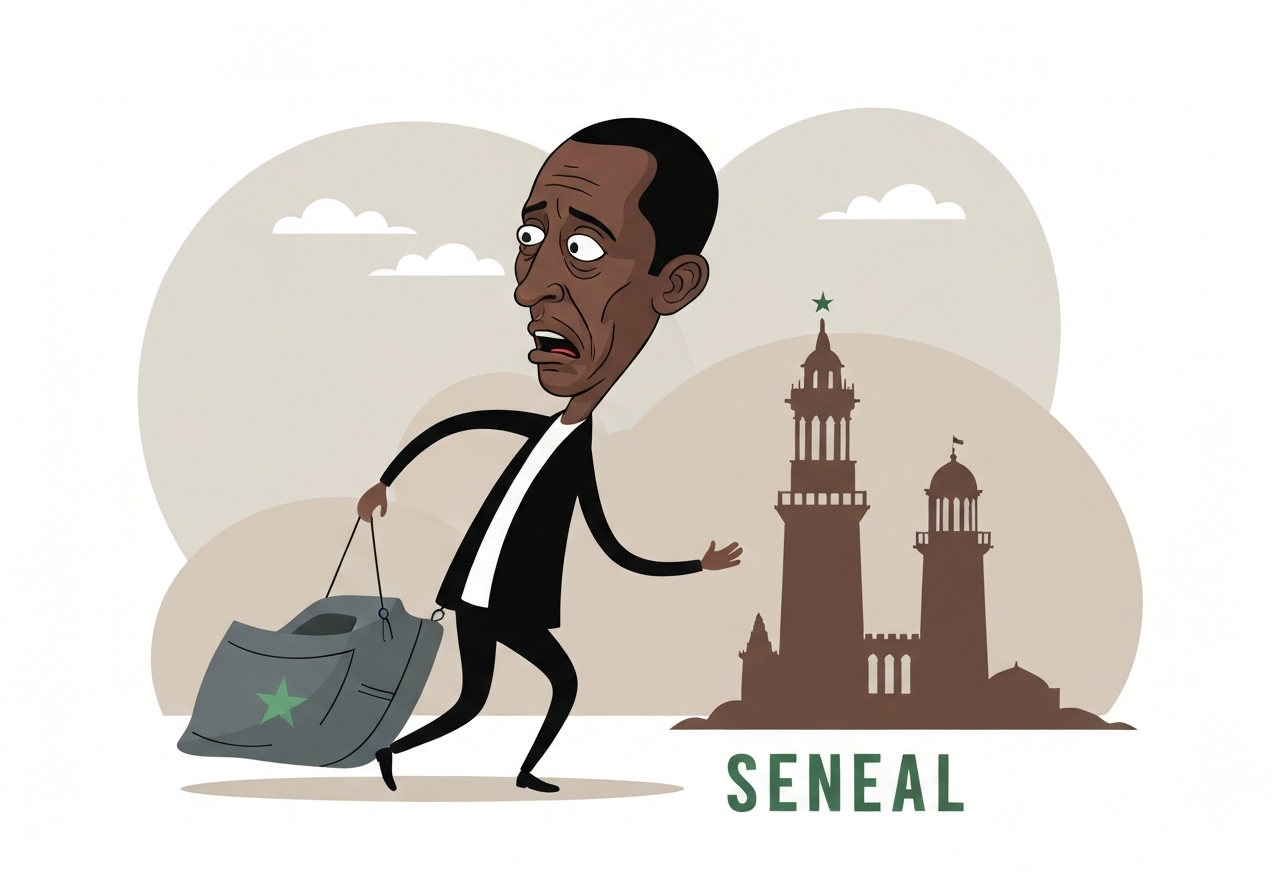
Lead: Deposed President Umaro Sissoco Embaló arrived in neighbouring Senegal late on Thursday after being released by the military that overthrew his government this week. Senegal’s foreign ministry said he landed on a chartered military flight and was ‘safe and sound’. The coup in Guinea-Bissau took place on Wednesday, a day before provisional results from a presidential and parliamentary vote were due to be announced. The armed forces have named Gen Horta N’Tam as transitional leader for a one-year period.
Key takeaways
- The coup occurred on Wednesday, immediately before provisional election results were scheduled to be released, disrupting the electoral process nationwide.
- Umaro Sissoco Embaló was released by the military and flown to Senegal on a chartered military flight late on Thursday, according to Senegal’s foreign ministry.
- Gen Horta N’Tam, the army chief of staff, was sworn in as head of a transitional administration for one year.
- The junta suspended the electoral process, imposed a night-time curfew and briefly closed land, air and sea borders before reopening them.
- The military justified its action by alleging a plot involving unnamed politicians and ‘the support of a well-known drug baron’ to destabilize the country; that claim has not been independently verified.
- Regional body ECOWAS has suspended Guinea-Bissau from its decision-making organs and ordered the military to return to barracks; the African Union and the UN have also condemned the takeover.
- Guinea-Bissau has experienced at least nine coups or attempted coups since 1974, underlining a long history of political instability.
Background
Guinea-Bissau is a small West African state sandwiched between Senegal and Guinea and has a modern history marked by frequent military intervention in politics. Since gaining independence from Portugal in 1974, the country has seen the military play a major role in governance; observers count at least nine coups or attempted coups over roughly five decades. The country is also known to be a transit point for international drug trafficking, a factor that has complicated civilian rule and international engagement.
The immediate trigger for this week’s crisis was a tightly contested presidential election held on Sunday in which both incumbent Umaro Sissoco Embaló and his main challenger, Fernando Dias, claimed victory. Former prime minister Domingos Pereira had been disqualified from running; Pereira reportedly supported Dias. Tensions rose as authorities prepared to announce provisional results, creating a volatile environment that preceded the armed forces’ intervention.
Main event
The military seized control on Wednesday, suspending the electoral process and blocking publication of provisional results that were expected the same day. Soldiers imposed a night-time curfew across the capital, Bissau, and detained several political figures, according to government sources cited in media reports. Markets and many shops in Bissau were closed while troops patrolled the streets, indicating heightened tension and constrained civic life.
In a public statement, the junta said it acted to forestall operations intended to ‘threaten our democracy,’ and later named Gen Horta N’Tam as the country’s transitional leader for a one-year period. Shortly after the swearing-in, authorities reopened borders that had been closed when the military first announced the takeover. The junta also banned public protests and other actions it said would disturb peace and stability.
Following negotiations involving ECOWAS, Embaló was released and transported to Senegal on a chartered military flight, where Senegal’s foreign ministry confirmed his arrival late on Thursday. Reports indicate that other figures—Fernando Dias, Domingos Pereira and Interior Minister Botché Candé—were detained earlier in the week, though full lists of detainees and their legal status have not been publicly confirmed.
Analysis & implications
The coup deepens a pattern of political fragility in Guinea-Bissau that has long hindered governance, development and international cooperation. A repeat of military intervention undermines public trust in electoral processes and complicates efforts by donors and partners to support institutional reform. The immediate suspension of the vote and the detention of political actors could erode prospects for a negotiated settlement and raise the risk of localized clashes or prolonged civil unrest.
Regionally, ECOWAS’s swift suspension of Guinea-Bissau from decision-making organs and its call for the military to return to barracks signal possible diplomatic isolation and the threat of sanctions if constitutional order is not restored. The African Union’s condemnation and the UN secretary-general’s expression of deep concern reinforce international pressure on the junta. However, the effectiveness of regional pressure depends on ECOWAS’s willingness and capacity to coordinate sanctions or mediation measures.
Economically, the coup may deter investment and hamper assistance at a time when governance improvements are needed to tackle organized crime and trafficking networks that exploit weak state institutions. If instability persists, humanitarian and development agencies could face access constraints, slowing projects in health, education and infrastructure that already rely on fragile financing.
Comparison & data
| Metric | Value |
|---|---|
| Recorded coups/attempts since 1974 | At least 9 |
| Transitional leadership term announced | 1 year (Gen Horta N’Tam) |
| Timing of coup | Wednesday, day before provisional election results |
This simple comparison highlights both the frequency of military interventions over five decades and the immediate political consequences of this week’s takeover. The one-year transitional timeline announced by the military contrasts with international calls for a rapid restoration of constitutional order, setting up a potential clash between domestic timelines set by the junta and external diplomatic pressure.
Reactions & quotes
International organizations and regional actors moved quickly to criticise the seizure of power and call for a return to constitutional rule. Those responses frame possible diplomatic and economic consequences for the junta.
We are deeply concerned about the situation and call for an immediate and unconditional restoration of constitutional order.
UN Secretary-General (statement)
The UN chief’s remark frames the international community’s position and foreshadows possible UN engagement in mediation or monitoring if requested. The statement places emphasis on an unconditional return to constitutional norms rather than negotiation under military oversight.
The president landed in Senegal safe and sound after his release.
Senegal foreign ministry
Senegal’s confirmation of Embaló’s arrival provides a factual anchor for his whereabouts and initial condition; it also signals Senegal’s role as a refuge and a regional interlocutor in the unfolding diplomatic response.
Unconfirmed
- The military’s claim that unnamed politicians had the backing of a ‘well-known drug baron’ remains unverified by independent investigation.
- The current legal status and specific charges, if any, against reported detainees Fernando Dias, Domingos Pereira and Interior Minister Botché Candé have not been publicly confirmed.
- Details of the negotiations by ECOWAS that led to Embaló’s transfer to Senegal, including participants and assurances given, have not been disclosed.
Bottom line
The swift transfer of Umaro Sissoco Embaló to Senegal after his release removes one immediate flashpoint but does not resolve the underlying crisis in Guinea-Bissau. The junta’s suspension of the electoral process and the naming of a one-year transitional leader create a clear divergence between domestic military timelines and international demands for a rapid return to constitutional order.
Regional isolation, potential sanctions and sustained diplomatic pressure are likely if the junta does not commit to a transparent timetable for restoring civilian rule and publishing verified election results. For citizens and partners, the vital questions are whether political detainees will be treated lawfully, whether election results will be validated or rerun, and whether ECOWAS and the AU can broker a credible pathway back to stable, civilian governance.