
Lead
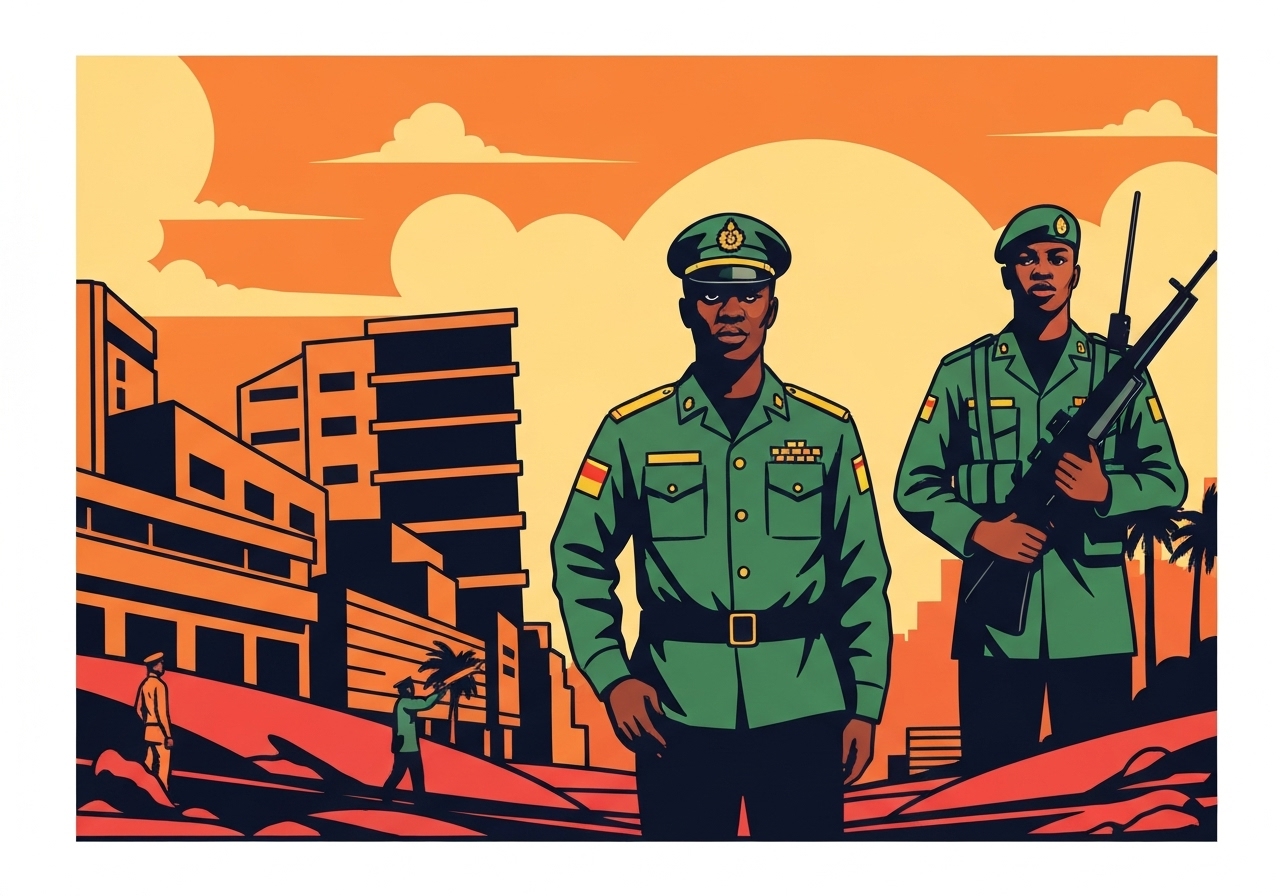
On 26 November 2025 a group of military officers in Guinea-Bissau announced they had taken “total control” of the country, as sustained gunfire was reported across the capital, Bissau. The self-styled “High Military Command for the Restoration of Order” said it had suspended the electoral process and imposed a nationwide curfew and border closures. The announcement came a day before official results were due from a tightly contested presidential vote that pitted incumbent Umaro Sissoco Embalo against challenger Fernando Dias. Local and regional sources reported arrests and attempts to restrict communications while confusion spread through political and civil society circles.
Key Takeaways
- On 26 November 2025 military officers declared “total control” in Guinea-Bissau and suspended the electoral process until further notice.
- The officers ordered closure of land, air and sea borders and imposed an overnight curfew across the capital, Bissau.
- Sustained gunfire was reported near the election commission, the presidential palace and the Ministry of the Interior on the same day.
- Al Jazeera reported that President Umaro Sissoco Embalo and PAIGC leader Domingos Simoes Pereira were believed to be under arrest; independent confirmation remains limited.
- The group identified itself as the “High Military Command for the Restoration of Order” and said it was acting amid disputed claims of victory by both main candidates.
- The disruption occurred a day before official results from the Sunday presidential vote were expected, halting the counting and announcement process.
- Guinea-Bissau has a long history of coups and post-election crises since independence in 1974; the 2019 presidential vote produced a four-month standoff.
Background
Guinea-Bissau has experienced repeated interruptions to civilian rule since independence from Portugal in 1974, with frequent military interventions shaping its political landscape. The armed forces have historically played a decisive role in transitions of power and in enforcing order during periods of electoral contention. The country’s main political party, the PAIGC, has been a central actor in national politics and was reported this week to have faced restrictions related to candidate eligibility, intensifying tensions ahead of the vote.
The November 2025 presidential ballot pitted sitting President Umaro Sissoco Embalo against a primary challenger, Fernando Dias, in a contest observers described as closely fought and politically polarising. Civil society groups and some observers raised concerns about the process after the PAIGC was reportedly barred from fielding candidates, a development that critics said could undermine the perceived legitimacy of the contest. In 2019, a disputed presidential result produced a four-month post-election crisis that unsettled the country and drew regional mediation efforts.
Main Event
On Wednesday the officers reading a televised statement identified their body as the “High Military Command for the Restoration of Order” and announced suspension of the electoral process “until further notice,” along with border closures and an overnight curfew. The announcement followed reports of heavy gunfire around key government and electoral sites in Bissau, including the election commission headquarters, the presidential palace and the Ministry of the Interior. Journalists and residents in the capital described heightened military presence on main thoroughfares and checkpoints being established at major intersections.
Al Jazeera’s reporting from the region cited sources saying President Embalo was believed to be detained, and that Domingos Simoes Pereira, leader of the PAIGC, had also been taken into custody. The officer identified publicly as leading the operation, Denis N’Canha, served as head of the presidential guard, a detail that underscored the breach of the unit tasked with protecting the head of state. Communications disruptions were reported, with attempts to cut internet access and restrict information flows described by correspondents monitoring the situation from neighboring countries.
Both leading presidential camps had publicly declared victory in the immediate aftermath of the vote, amplifying uncertainty over the official count that was due the following day. Campaign spokespeople for President Embalo asserted he would secure a second mandate without a second round, while Fernando Dias posted a video declaring a first-round victory. The simultaneous claims, combined with allegations about candidate eligibility and pre-election restrictions, created a fraught environment that the military cited in justifying its intervention.
Analysis & Implications
The immediate effect of the military announcement is to freeze the electoral timeline and raise the prospect of a prolonged transition or negotiated settlement under military oversight. Suspension of the process stalls any formal confirmation of a winner and raises questions about the legitimacy of governance going forward. Regional bodies such as ECOWAS commonly respond to unconstitutional changes in West Africa with diplomatic pressure, sanctions or mediation; their reaction will be a key determinant of how quickly civilian authorities can reassert control.
Domestically, the move risks deepening polarization and could spark protests or further armed confrontations if political actors or their supporters resist military directives. Humanitarian and logistical disruptions are likely if borders remain closed and the curfew persists, affecting movement of goods and potentially international assistance. Businesses and foreign partners may halt operations or evacuate staff, compounding economic strain in one of West Africa’s poorer states.
Internationally, the timing — on the cusp of announcing presidential results — undermines wider efforts to stabilise electoral norms in the region and may discourage investment and aid flows. If key figures are confirmed detained, international legal and diplomatic avenues will be tested, and there may be calls for transparent investigations into the circumstances of any arrests. The long-term political trajectory will depend on whether the military seeks to hold power, broker a transition, or restore the previous civilian administration under negotiated terms.
Comparison & Data
| Year | Event | Duration/Note |
|---|---|---|
| 1974 | Independence from Portugal | Start of modern political history |
| 2019 | Post-election crisis | Four-month standoff after disputed vote |
| 2025 | Military claims control (Nov 26) | Election suspended; results pending |
The table places the current events against landmark moments: independence in 1974 and the prolonged crisis after the 2019 presidential contest. This pattern highlights recurring instability tied to contested elections and military intervention. Analysts note that repeated disruptions have eroded institutional resilience, complicating the conduct of free and widely accepted polls.
Reactions & Quotes
Political actors and observers reacted quickly, with regional correspondents relaying developing details while international partners called for restraint.
“We have confirmation that the president is under arrest and that senior figures have been detained amid attempts to restrict communications.”
Al Jazeera correspondent (regional reporting)
This dispatch summarises field reporting that indicated detentions and emerging information controls; independent verification was still being sought by international newsrooms at the time of the report.
“The military has ordered a suspension of the electoral process and closed borders; they claim this is to restore order.”
Statement read on national television by military officers
The televised readout framed the intervention as corrective action; it did not outline a clear transition timeline or procedures for returning to civilian authority, leaving key questions unresolved.
“There was going to be a stalemate over who was going to win this election, and that is when the military stepped in.”
Regional analyst on political tensions
Analysts point to the pre-existing electoral disputes and allegations about candidate eligibility as the immediate political context that the army cited in explaining its actions.
Unconfirmed
- Exact status and location of President Umaro Sissoco Embalo remain not independently verified beyond initial media reports.
- Reports that the military has fully cut internet access across the country were circulating but lacked technical confirmation at the time of reporting.
- The full extent of military control outside the capital, including border posts and provincial centres, has not been confirmed by independent observers.
Bottom Line
The military’s declaration and temporary seizure of key sites has abruptly halted a contested presidential process and reintroduced the risk of extended instability in Guinea-Bissau. With official results delayed and principal actors reportedly detained, the immediate horizon will be shaped by whether regional organisations, international partners and domestic stakeholders can secure a negotiated path back to civilian rule.
Observers should watch for clear signals from ECOWAS and the African Union, evidence of coordinated diplomatic pressure, and any timeline the military provides for restoring the electoral process. For citizens and neighbouring states, the priority will be protection of civilians, restoration of communications, and a credible mechanism to determine and accept the election’s outcome.
Sources
- Al Jazeera — news report and regional correspondence (media)
- AFP — reporting cited by campaign spokespeople and observers (news agency)
- ECOWAS — Economic Community of West African States (regional organization)