
Lead
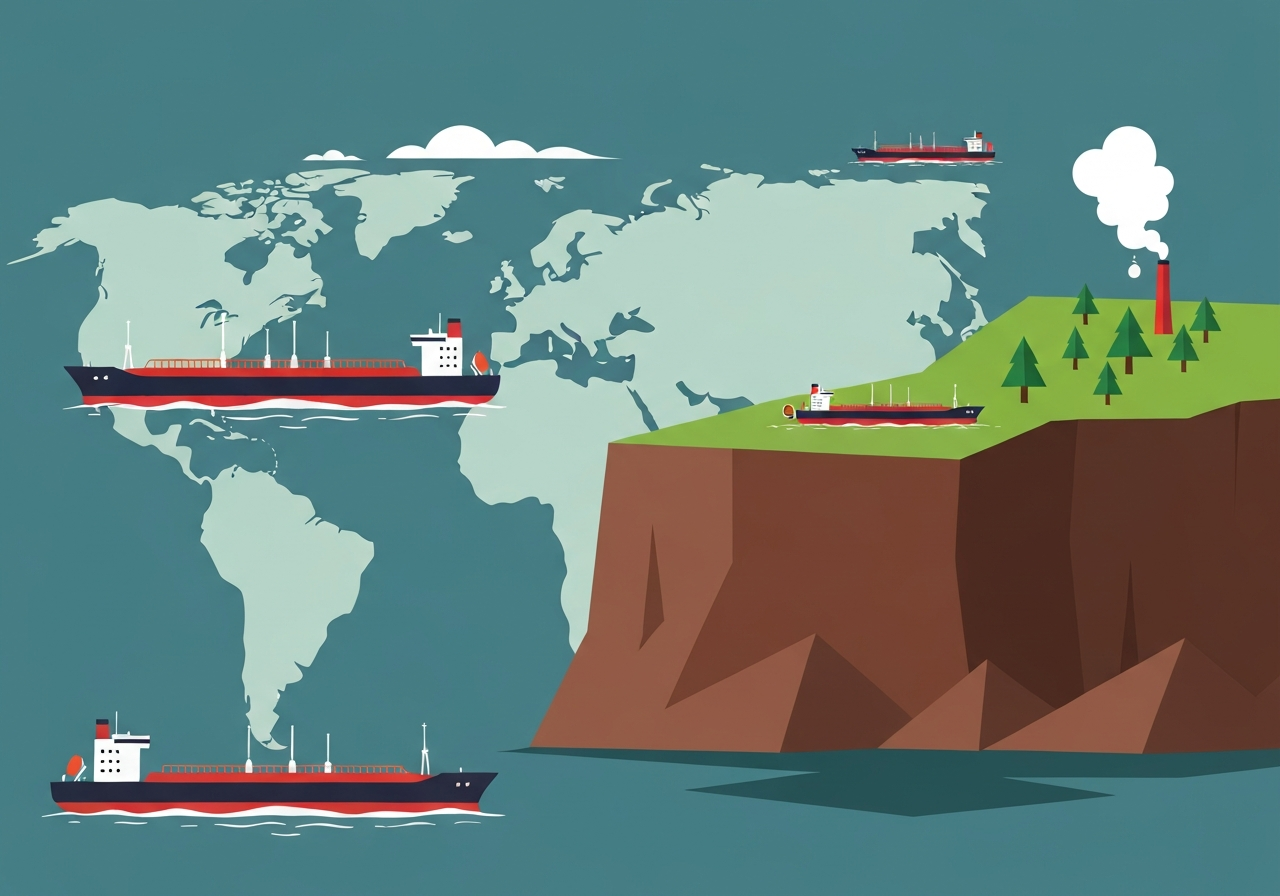
Multiple liquefied natural gas (LNG) cargoes originating in the Gulf are due to arrive at key European and Asian terminals in the coming days, raising alarm among energy planners about a potential shortfall for the northern-hemisphere heating season. Market participants and some governments say the incoming shipments represent a final window to avoid supply pressure this winter. Shipping delays, port congestion and competing demand have tightened the margin for error, prompting officials to weigh contingency measures. The outcome will shape prices and energy security across several regions.
Key takeaways
- Several LNG cargoes from the Gulf are scheduled to berth at European and Asian ports in the near term, creating a narrow window to bolster supplies ahead of winter.
- Market tightness has pushed liquefied natural gas spot prices higher in recent weeks, reflecting constrained spare capacity and transit bottlenecks.
- Port congestion and ship turnarounds are contributing factors limiting how quickly cargoes can be redeployed to the highest‑need markets.
- Major exporters in the Gulf remain central to global LNG balances, and any further disruptions there would reduce flexibility for buyers.
- European policymakers are examining contingency plans, including demand curbs and storage draws, to manage the risk of a supply cliff.
- Asian buyers face competing bids for the same cargoes, increasing the chance of price-driven reallocations before some ports receive shipments.
Background
The global LNG market tightened after a series of supply shocks over the last few years, including reduced pipeline deliveries from Russia and rising post‑pandemic demand. Importers responded by sourcing cargoes from an increasingly wide set of suppliers, with Gulf exporters playing a pivotal role in backfilling needs. That reorientation has left trade flows more dynamic and shipping patterns more complex than in prior seasons.
Simultaneously, infrastructure constraints — limited berth capacity, slower turnaround at receiving terminals and seasonal maintenance — have limited how rapidly additional cargoes can be absorbed. Buyers and traders now operate with slimmer contingency margins, meaning that a small cluster of delayed or rerouted shipments can have outsized market effects. Governments, particularly in Europe and East Asia, have been monitoring flows closely and coordinating with industry where possible.
Main event
Over the past several days, tankers carrying Gulf‑sourced LNG have been charted to ports across Europe and Asia. Some charterers have sought to reassign destinations as prices and demand signals change during voyage, a feature of the flexible, cargo‑by‑cargo nature of the spot market. That flexibility helps allocate fuel where it is most valued, but it also increases unpredictability for terminal operators awaiting scheduled arrivals.
At affected ports, operators report heightened activity and complex scheduling decisions as berths are prioritized for unloads. The logistical challenge is compounded when ships queue offshore waiting for slots, which lengthens the overall delivery timetable and reduces the number of cargoes that can be handled before peak winter demand intensifies.
Government agencies in importing countries have engaged with industry to assess storage levels and potential emergency measures. In some cases, regulators have signalled preparedness to activate demand‑management tools or import facilitation steps if critical thresholds are breached. Market participants say those interventions are still a contingency rather than an immediate requirement.
Analysis & implications
The immediate implication of the Gulf cargoes’ arrival pattern is that global markets face a compressed decision window: will the shipments reach intended terminals in time to avert a winter squeeze? If congestion or rerouting prevents timely unloading, buyers may need to draw down inventories or pay up to secure replacement supplies on short notice. That dynamic could sustain elevated spot prices and feed through to retail energy costs in some countries.
Policy consequences are uneven across regions. Europe, having diversified away from some pipeline supplies, retains substantial but finite storage capacity; the timing of resupply matters as much as volume. Asian importers, particularly in East Asia, often compete in a tight spot market and may outbid others for marginal cargoes, shifting pressure back to Europe and other buyers.
Geopolitically, the episode underscores how concentrated production locations and chokepoints in shipping routes can transmit localized issues into global price volatility. It also reinforces incentives for importing states to accelerate investment in storage, alternative fuels and demand‑response measures to reduce future vulnerability. For exporters, the situation highlights the market power and reputational importance of reliable deliveries during seasonal peaks.
Comparison & data
| Aspect | Typical pattern | Current issue |
|---|---|---|
| Cargo flexibility | Cargoes reallocated commercially | Rapid reallocation creating port uncertainty |
| Terminal capacity | Planned seasonal turnarounds | Higher queueing, slower unloads |
| Price response | Short-term spikes | Sustained upward pressure near winter |
This simplified comparison shows that the innate flexibility of LNG trade now intersects with physical constraints, raising the chance of short‑term supply stress even where total annual volumes are adequate. The timing and sequencing of deliveries are therefore critical, not only aggregate tonnage.
Reactions & quotes
Officials and market analysts have given terse statements emphasizing monitoring and coordination.
“We are tracking vessel movements and storage levels closely with industry partners,”
Energy ministry official (importer)
This statement was offered as authorities reviewed contingency options if unloading schedules slip, noting that coordination with terminal operators is ongoing.
“Market reassignments of cargoes are within commercial norms, but they increase short‑term uncertainty,”
Independent energy analyst
Analysts highlighted that while cargo reallocation improves efficiency in a perfect market, in practice it may concentrate stress at a few receiving points.
“We continue to operate to contractual obligations and adjust operations to meet customer needs,”
Gulf exporter (industry statement)
Exporters stressed supply reliability while noting that logistical issues at receiving ends can affect the pace at which cargoes are delivered into the market.
Unconfirmed
- Exact number of Gulf cargoes that will be rerouted or delayed remains unclear; open shipping manifests and last‑minute commercial reallocations mean counts can change during transit.
- Whether any government will deploy legally enforceable demand cuts or emergency import measures this season has not been publicly confirmed.
- Precise impact on end‑user retail prices for specific countries is uncertain and will depend on local taxes, hedging arrangements and regulatory interventions.
Bottom line
The upcoming arrival schedule of Gulf LNG shipments has highlighted how timing and logistics can matter as much as total volumes in modern gas markets. With narrow operational margins, a cluster of delays or diversions could prompt short‑term price spikes and force governments to tap contingency tools.
For policymakers and market participants the practical takeaway is to prioritize visibility over flows, speed up coordination between ports and charterers, and accelerate medium‑term resilience measures — including storage, demand management protocols and diversified fuel mixes — to reduce the risk of similar episodes in the future.
Sources
- Financial Times (subscription/press coverage)
- International Energy Agency (analysis/market data)
- QatarEnergy (industry/official statements)