
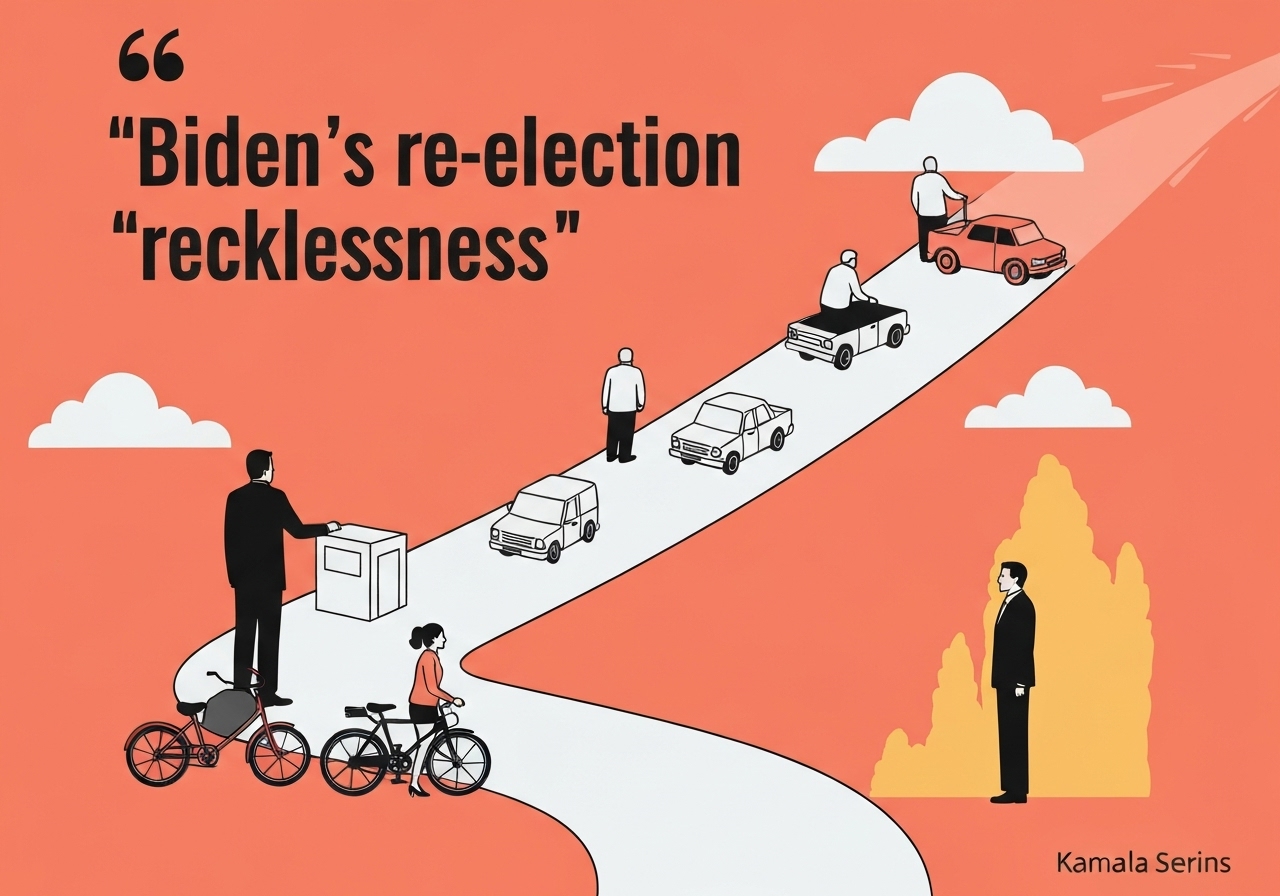
Lead: In a 3,000-word excerpt from her forthcoming memoir 107 Days published by The Atlantic, former Vice‑President Kamala Harris describes Joe Biden’s 2024 re‑election bid as “recklessness.” Harris, writing of decisions made inside the White House, says she felt sidelined at times and raises questions about the judgment that led an 81‑year‑old president to run again. The excerpt, released ahead of the book’s full publication later this month, also notes Harris will begin a 15‑city book tour including stops in the United Kingdom and Canada.
Key takeaways
- Kamala Harris calls Joe Biden’s choice to seek a second term “recklessness” in an Atlantic excerpt from her memoir 107 Days, a 3,000‑word selection published ahead of the book’s full release.
- Harris says the decision affected more than a personal choice, arguing the stakes were “simply too high” given Biden’s age of 81 and the demands of the presidency.
- She recounts moments she felt denied credit and marginalised by the administration, including limited communications support when Republicans labelled her a “border czar.”
- The excerpt recounts Harris watching a televised Biden address in Houston after a hurricane and noting she was mentioned near the end of the 11‑minute speech.
- Biden withdrew from the 2024 race after a poor debate performance against Donald Trump; Harris later lost the election to Trump.
- Harris secured private investment pledges for Latin American countries to address migration drivers, she says, but argues the White House did not sufficiently promote that work.
Background
Joe Biden and Kamala Harris teamed up during the 2020 Democratic primary; Biden selected Harris as his running mate and their ticket defeated Donald Trump and Mike Pence in November 2020. Over the next term, Biden launched a bid for re‑election in 2023 despite continuing public debate about his age and stamina for a second full term. The question of a sitting president’s fitness for re‑election has been a recurring political theme in modern U.S. politics, amplified by intensified media scrutiny and partisan attack lines.
Harris ran for the Democratic presidential nomination in 2019–2020 and adopted the phrase 107 Days as the title of her memoir to mark the length of her campaign. After serving as vice‑president, she remained a public figure with a portfolio that included diplomatic outreach and initiatives addressing migration from Latin America. Those responsibilities, and how they were communicated to the public, became a point of political friction and media attention during and after her vice‑presidential tenure.
Main event
The Atlantic published a 3,000‑word excerpt from 107 Days in which Harris directly questions the White House decision‑making that led to Biden’s 2024 re‑election run. She writes that the mantra “It’s Joe and Jill’s decision” was repeated internally, and later asks, “Was it grace, or was it recklessness? In retrospect, I think it was recklessness.” The passage frames the choice as one with consequences beyond the private sphere.
Harris describes practical constraints that limited what she felt she could say to the president. She writes she was in the “worst position” to advise Biden privately against running, fearing any such counsel would be read as self‑serving or disloyal. That dynamic, she argues, helped prevent an internal challenge to the re‑election decision at a moment when she believes broader consultation was warranted.
The excerpt also addresses how Harris perceived her role and recognition inside the administration. She recounts bringing private investment commitments for Latin American countries aimed at addressing migration’s roots, and says Republicans reduced that work to a pejorative label — calling her a “border czar” — without sufficient White House pushback to correct the record. Separately, she recalls watching Biden give a post‑hurricane speech in Houston and noting that she was not mentioned until late in the address.
Analysis & Implications
Harris’s public reassessment of a former president’s re‑election bid is notable because it comes from someone who both ran for the nomination and served as vice‑president. That dual perspective gives her critique weight: she writes from inside the inner circle and from the vantage of an unsuccessful presidential contender. Her use of the words “recklessness” and the argument that the decision “should have been more than a personal decision” reframes a debate about age and capacity as also one about institutional responsibility.
Politically, the memoir excerpt risks ruffling Democratic unity while offering a candid account that supporters and critics alike will scrutinize. For Democratic strategists, Harris’s critique may be unwelcome if it is seen as public airing of internal doubts that could be used by opponents. Conversely, it may prompt renewed conversations inside the party about succession planning, vetting processes, and how to manage public perception when a president’s capacity becomes a campaign issue.
On the broader institutional level, Harris’s account raises questions about the balance between personal agency and collective responsibility in choosing a presidential nominee. If a president’s decision to run affects national stability and electoral outcomes, her argument that it should not be treated as solely an individual’s choice will likely feed ongoing debates about governance norms and the role of advisers, family, and party leaders in shaping those decisions.
Comparison & Data
| Year | Event |
|---|---|
| 2020 | Biden selects Harris as running mate; Biden–Harris win over Trump–Pence |
| 2023 | Biden launches re‑election campaign |
| 2024 | Debate performance prompts Biden withdrawal; Trump wins election |
| September (later this month) | 107 Days book expected on sale; 15‑city tour planned |
The table above summarizes key milestones referenced in the excerpt and reportage. It does not include vote totals or polling figures, which fall outside the scope of the excerpt but would be relevant for deeper electoral analysis. Still, the sequence underscores how campaign events and public performances shaped the 2024 outcome that Harris discusses.
Reactions & Quotes
Harris’s lines were published in an Atlantic excerpt and have prompted responses across political and media spheres. Below are cited passages from the excerpt and contextual reactions summarised from reporting.
“It’s Joe and Jill’s decision.”
Kamala Harris, 107 Days (excerpt published in The Atlantic)
Harris uses the phrase to describe the internal refrain around Biden’s 2024 decision, portraying it as a repeated rationalisation inside the administration rather than the result of wider consultation.
“Was it grace, or was it recklessness? In retrospect, I think it was recklessness.”
Kamala Harris, 107 Days (excerpt published in The Atlantic)
This line is the core charge in the excerpt: Harris frames the choice to run as carrying consequences beyond the president’s personal prerogative and links it explicitly to concerns about age and stamina.
“border czar”
Republican characterisation (reported by Harris)
Harris highlights how that label—used by opponents—became shorthand in media and political attacks, arguing the White House communications apparatus did not adequately rebut the mischaracterisation or highlight her stated accomplishments.
Unconfirmed
- Internal private conversations between Biden and senior advisers about whether to run again are described from Harris’s perspective; full contemporaneous records of those deliberations are not publicly verified here.
- Harris’s account that White House communications “did not help” to rebut specific Republican attacks is her assessment; the extent of internal communications decisions and their rationale has not been independently corroborated in this excerpt.
Bottom line
Kamala Harris’s excerpt from 107 Days offers a candid, insider critique of the decision-making that led to Joe Biden’s 2024 re‑election bid, framing it as a choice with national consequences rather than solely a private one. Her use of the term “recklessness” and accounts of being sidelined will fuel discussion inside the Democratic Party about leadership, succession, and how administrations handle sensitive internal judgments.
Readers should treat memoir excerpts as a subjective, hindsight account: Harris writes from her perspective and with the purpose of explaining her experience and reasoning. The broader implications—on party cohesion, public messaging, and norms around presidential succession—are likely to be debated in media and political forums as the full book and tour bring more attention to her narrative.
Sources
- BBC News (news report summarising the excerpt and contextual facts; media)
- The Atlantic (publisher of the 3,000‑word excerpt from 107 Days; media)