
Lead
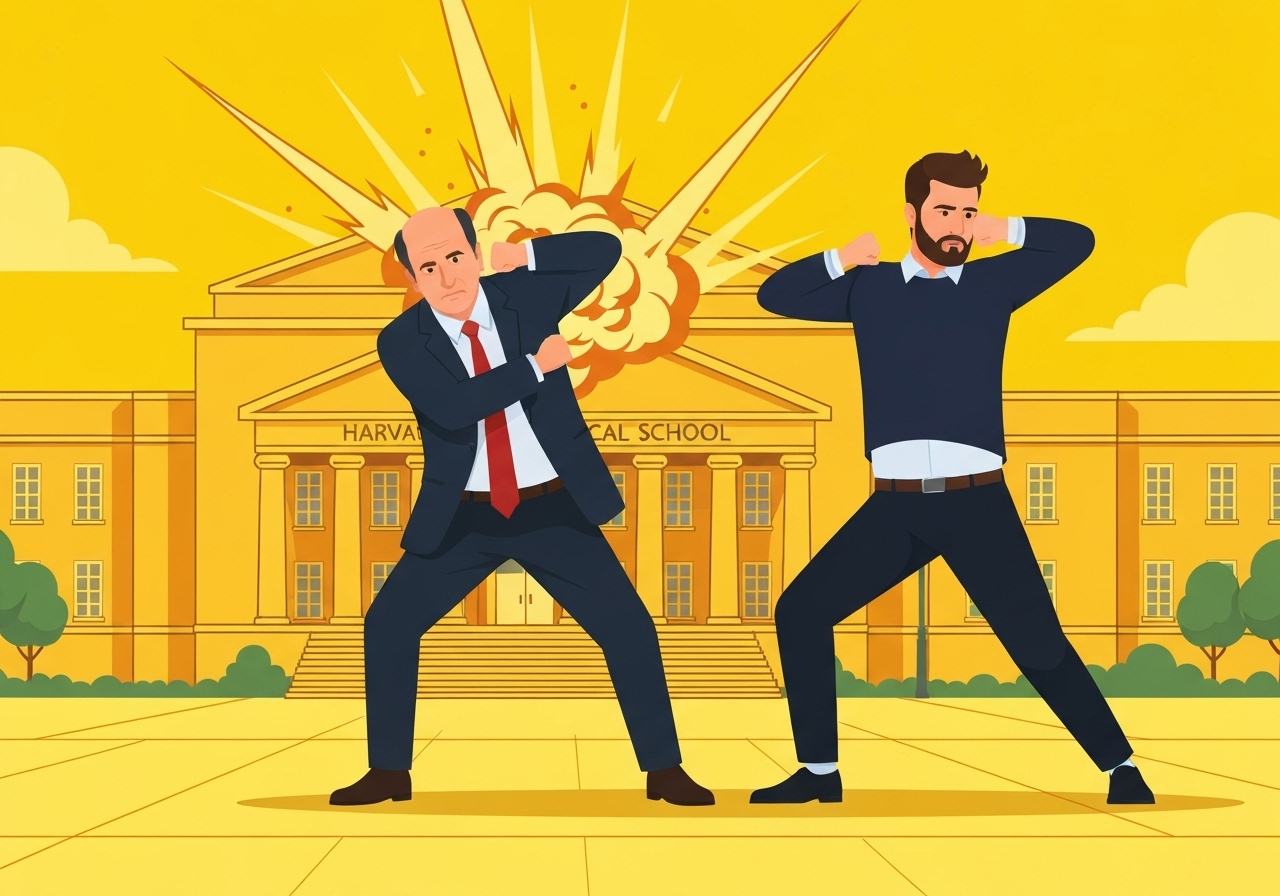
Two Massachusetts men were arrested Tuesday in connection with an explosion that rocked the fourth floor of the Goldenson Building at Harvard Medical School early Saturday morning, the FBI announced. The blast occurred just before 3 a.m., and Harvard University Police reported two people running from the scene. No injuries were reported, and authorities said they will provide additional details at a 1 p.m. ET news conference Tuesday. The FBI has taken the lead on the federal aspect of the investigation.
Key Takeaways
- Two Massachusetts residents were arrested Tuesday in relation to the Saturday explosion at Harvard Medical School, the FBI said.
- The explosion occurred just before 3 a.m. on Saturday on the fourth floor of the Goldenson Building, according to Harvard University Police Department (HUPD).
- HUPD reported two people fleeing the scene; police initially searched for two suspects following the blast.
- No injuries were reported at the scene, and no reports of damage to persons have been released.
- The FBI announced the arrests publicly on Tuesday and scheduled a news conference for 1 p.m. ET to release more information.
- The investigation involves local and federal authorities; the FBI is coordinating leads and evidence collection.
Background
The Goldenson Building houses research and educational facilities affiliated with Harvard Medical School, making any security incident there particularly sensitive. Campus safety protocols and coordination with municipal and federal law enforcement are typical when incidents occur on research campuses with potentially hazardous materials. In recent years, universities have increased scrutiny of building access and lab safety after a string of accidents and targeted incidents nationally.
Previous campus explosions or suspicious device incidents have often prompted rapid multiagency responses, combining local police, university public safety, and federal investigators. Stakeholders in this case include Harvard University officials, the Harvard University Police Department, the Boston-area field office of the FBI, and municipal emergency services. The involvement of the FBI indicates federal interest, which can reflect concerns about interstate activity, significant public-safety risk, or specialized forensic needs.
Main Event
According to HUPD, the explosion was reported just before 3 a.m. on Saturday on the fourth floor of the Goldenson Building. Responding officers found evidence of an explosion but reported no injuries to occupants or first responders. HUPD said two people were seen leaving the area immediately after the blast, prompting a search for suspects that continued over the weekend.
The FBI announced on Tuesday that two Massachusetts men had been arrested in connection with the incident. Officials provided limited public detail ahead of the scheduled 1 p.m. ET news conference; routine practice in ongoing investigations is to withhold certain specifics to protect investigative integrity. Authorities are developing evidence and conducting interviews as part of the criminal inquiry.
Investigators have been working to determine the cause and mechanism of the explosion and whether any devices, materials, or deliberate actions were involved. Forensic teams typically analyze blast patterns, residue, surveillance footage and access logs to reconstruct events. Harvard representatives and law enforcement have emphasized there were no reported injuries and that campus safety measures remain in effect while the investigation continues.
Analysis & Implications
The arrest of two local men escalates the incident from a closed safety event to an active criminal investigation. That shift means potential criminal charges, preservation of chain-of-custody for evidence, and the possibility of broader investigative leads if interstate activity or networks are implicated. Arrests also raise questions about motive, access to restricted areas, and whether the event targeted specific research or was opportunistic.
For Harvard and similar institutions, the incident will likely trigger internal reviews of building access, after-hours monitoring, and lab safety procedures. Universities may reassess badge-controls, visitor screening, and coordination protocols with local police to reduce the risk of future incidents. Administratively, the school faces the task of balancing transparency to community members with the confidentiality needs of an active criminal probe.
At the federal level, FBI involvement can bring specialized forensic resources and broader investigative reach. If evidence shows interstate movement of persons or materials, federal charges could follow. Conversely, if the event is determined to be accidental or limited in scope, prosecutions may be constrained to local jurisdiction matters. Either outcome will influence policy discussions about campus security and resource allocation for preventing similar events.
Comparison & Data
| Event | Date/Time |
|---|---|
| Explosion at Goldenson Building, 4th floor | Saturday, just before 3 a.m. |
| Two people observed fleeing scene | Saturday, immediately after blast |
| FBI announces arrests | Tuesday (announcement) |
| Planned public briefing | Tuesday, 1 p.m. ET |
The simple timeline above shows the incident occurred early Saturday and arrests came several days later, a cadence consistent with initial scene processing followed by identification and apprehension. Investigative steps typically include securing the scene, collecting physical and electronic evidence, reviewing building access logs and surveillance footage, and following up on witness statements. The absence of reported injuries narrows immediate public-safety concerns but does not diminish the criminal and procedural dimensions of the case.
Reactions & Quotes
“We can confirm the FBI has made arrests in connection with the explosion at Harvard Medical School,”
FBI (announcement)
The FBI’s brief public confirmation framed the development as part of an ongoing federal investigation and signaled a forthcoming public briefing.
“Two people were seen fleeing the scene after the explosion, and no injuries have been reported,”
Harvard University Police Department
HUPD’s statement highlighted the observed movements of individuals and the lack of reported casualties, which shaped initial public messaging and campus advisories.
Unconfirmed
- Motive: Authorities have not publicly confirmed any motive for the explosion or whether the event was intentional or accidental.
- Identities: The names and backgrounds of the two arrested men have not been released in public statements available at the time of this report.
- Explosive origin: It remains unconfirmed whether the explosion resulted from an incendiary device, an improperly handled material, or another cause.
Bottom Line
The arrests mark a significant development in an incident that initially raised immediate campus safety concerns but did not result in injuries. With federal and university investigators now coordinating, the focus will be on evidence that explains cause, intent and any broader risk to academic operations. Transparency around outcomes, balanced with investigative integrity, will be critical for public trust.
Readers should expect further updates after the scheduled 1 p.m. ET briefing and as authorities release more detailed information on charges, identities and forensic findings. In the meantime, Harvard and law enforcement steps to review access and safety protocols could shape longer-term campus security practices.
Sources
- ABC News (news report)
- Harvard University Police Department (official campus public safety)
- FBI Boston Field Office (official federal law enforcement)