
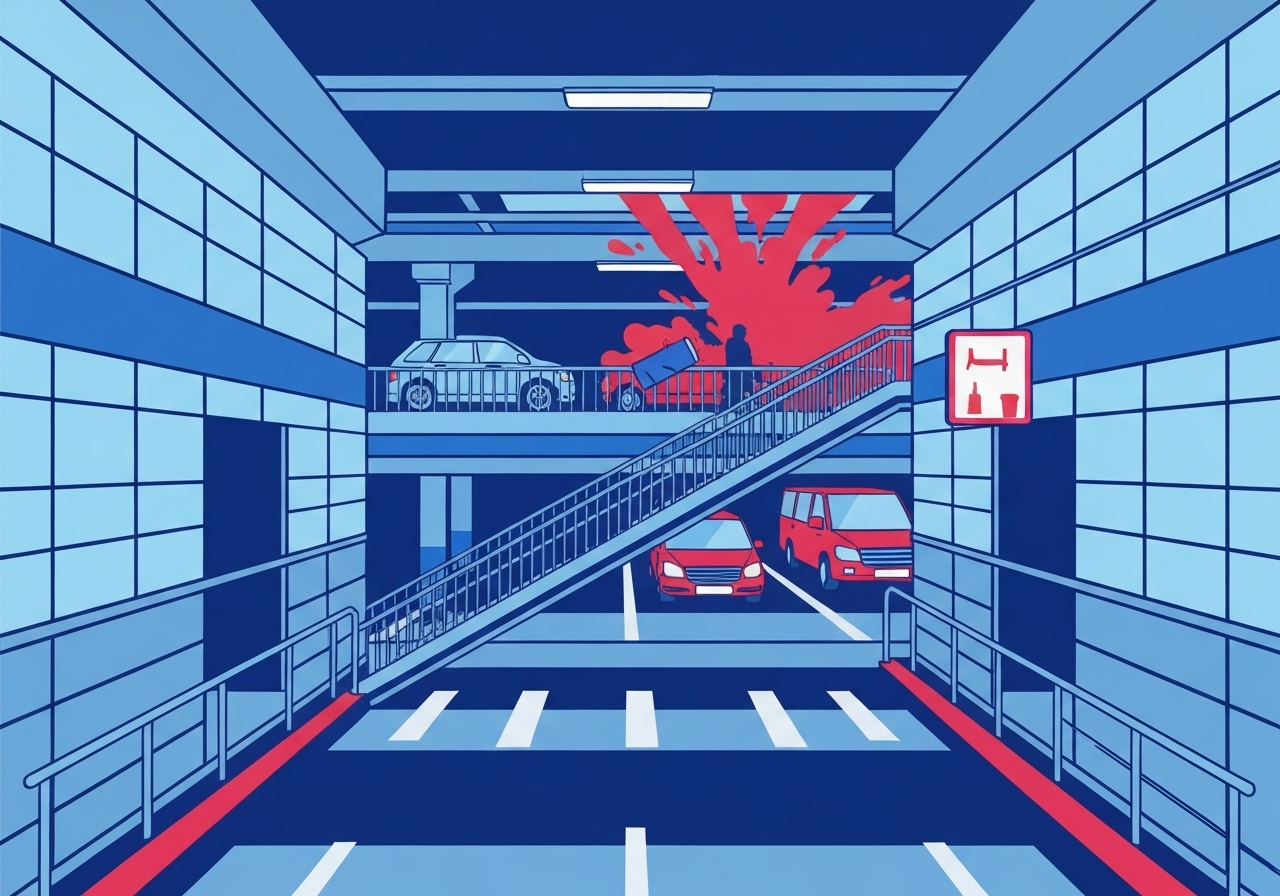
Lead: On the morning of Sunday, December 7, 2025, parts of Heathrow Airport were temporarily closed after a spray—reported by police to be a type of pepper spray—was used during a fight in a Terminal 3 parking garage. Metropolitan Police officers were called at about 8:00 a.m.; London Ambulance Service treated 21 people at the scene and sent five to hospital. One man was arrested on suspicion of assault and police said the incident was not being treated as terrorism. Transport services including the Elizabeth Line were disrupted while roads and an airport highway were briefly closed during the response.
Key Takeaways
- Incident time and place: Around 8:00 a.m. on 7 December 2025 in a Terminal 3 parking garage at Heathrow Airport.
- Casualties and care: London Ambulance Service treated 21 people at the scene; five were conveyed to hospital with injuries described as non-life-threatening.
- Police action: One man was arrested on suspicion of assault; officers said they were searching for additional suspects.
- Security status: The episode prompted a brief lockdown of parts of the airport but was explicitly not being investigated as terrorism.
- Transport impact: National Rail suspended the Elizabeth Line service to Heathrow for more than an hour and a key access road was briefly closed; roads around the airport remained blocked for several hours.
- Containment: Airport officials said the episode was contained by late Sunday morning and pledged an increased police presence to reassure the public.
Background
Heathrow is one of the world’s busiest international hubs and is especially sensitive to security incidents given its passenger volumes and complex surface access network. Parking facilities serve thousands of travelers and staff daily, and altercations in those spaces can quickly affect terminal operations and road access. In recent years, UK airports have invested in co‑ordinated responses among airport police, local forces and ambulance services to manage chemical irritant incidents and keep disruptions short.
Incidents involving sprays or irritants typically trigger a multi-agency response because of the potential for many people to be affected in a confined environment. Past events at busy transport hubs have shown that even when injuries are not life-threatening, disruption to rail and road links can cascade and delay thousands of passengers. The Metropolitan Police, the airport authority and emergency services have predefined protocols for cordons, triage and public messaging to limit both harm and uncertainty.
Main Event
According to Metropolitan Police accounts, officers were summoned at about 8:00 a.m. on 7 December after reports that a group of men had been involved in an altercation in the Terminal 3 multi-storey car park. The police say a spray described as a pepper-type irritant was used during the dispute; those involved fled the immediate area after the use of the substance. Emergency crews assessed and treated multiple people on site before arranging hospital transfers.
London Ambulance Service confirmed it attended and treated 21 people, of whom five required hospital care. The force described the injuries as not life-changing and not life-threatening. Metropolitan Police placed cordons, carried out initial enquiries and arrested one man on suspicion of assault; detectives reported they were looking for further suspects connected to the confrontation.
Airport operations felt immediate effects: the National Rail operator paused Elizabeth Line services to the airport for over an hour while police responded, and a major route into the complex was closed briefly to secure the area. Road closures and police presence continued for several hours afterward as officers worked to restore normal operations and reassure the traveling public that there was no wider threat.
Analysis & Implications
Operationally, the event highlights how a relatively localized incident—an argument among a group that escalates to the use of an irritant—can produce disproportionate systemic effects at a major transport hub. Suspension of rail links and closure of key roads magnified passenger disruption, illustrating the vulnerability of surface access dependencies around airports. For passengers, even short suspensions at peak times can lead to missed connections and cascading delays across airlines and rail services.
From a policing perspective, the decision not to treat the episode as terrorism narrows the investigative focus to criminal assault and public order offences, which changes resource allocation for detectives and forensic teams. However, any incident involving chemical irritants demands careful evidence collection and medical liaison to determine the substance used and the intent behind its use. That process can be time-consuming, and the balance between rapid public reassurance and thorough investigation is delicate.
Economically, repeated disruptions—however brief—erode traveler confidence and impose costs on carriers, airport operators and ground transport providers. While this single event appears limited in physical harm, its reputational effects could prompt authorities to review parking security, stewarding and rapid detection measures. Longer-term, airports may need targeted investments in surveillance, staff training and public-information systems to reduce the chance that small-scale confrontations spread into larger disruptions.
Comparison & Data
| Metric | Value |
|---|---|
| People treated on scene | 21 |
| People taken to hospital | 5 |
| Arrests | 1 (suspected assault) |
| Elizabeth Line suspension | More than 1 hour |
| Roads blocked around airport | Several hours (police reported activity ~3 hours after) |
The quick table above places the direct human impact alongside the transport effects recorded during the response. While the physical injuries were limited, the operational footprint of the police response—rail suspension and road closures—was the principal driver of disruption. Comparisons with similar Heathrow incidents show that even low-severity events can require substantial inter-agency coordination to restore full traffic flow.
Reactions & Quotes
Airport and emergency officials provided short public statements to keep travelers informed as services were restored. The Metropolitan Police summarized the current working assessment of the event and the steps under way to find further suspects and preserve public safety.
“At this stage, we believe the incident involved a group of people known to each other, with an argument escalating and resulting in a number of people being injured.”
Metropolitan Police (public statement)
That comment framed the police view that the episode was a contained criminal altercation rather than an act intended to cause wider terror. Emergency medical teams emphasized the scale of their immediate response and the clinical status of those affected.
“We attended and treated 21 people at the scene; five were taken to hospital.”
London Ambulance Service (press statement)
Airport officials also released an update noting containment and continued patrols around the site. The combination of police and airport remarks was aimed at restoring traveler confidence and clarifying that operations would resume with heightened security to reassure the public.
Unconfirmed
- Exact chemical identity: Authorities reported a pepper-type spray but formal laboratory confirmation of the substance used has not been published.
- Number of suspects: Police arrested one man, but the total number of people involved or their precise roles remains under investigation.
- Motive: While police say those involved were likely known to each other, a definitive motive has not been publicly confirmed.
Bottom Line
The episode at Heathrow on 7 December 2025 appears to have been a localised, criminal altercation that used an irritant spray, resulting in multiple minor injuries and one arrest. The principal consequence was operational disruption: rail services to the airport were halted for more than an hour and road access was constrained, demonstrating how even limited physical harm can cause outsized transportation effects at a major hub.
Authorities contained the scene by late morning and emphasized that the incident is not being treated as terrorism, while continuing investigations into additional suspects and the substance used. Travelers and operators alike may expect a temporary increase in visible security and possibly a review of parking-area policing and rapid-response protocols to reduce the chance of similar disturbances causing wide disruption in future.
Sources
- The New York Times — News report summarising incident and official statements.
- Metropolitan Police — Official police organisation (public statements and press releases).
- London Ambulance Service — Official emergency medical service (statements on patient care).
- BBC News — National broadcaster reporting on transport disruption and ongoing police activity.
- Heathrow Airport — Airport operator (operational statements and travel advisories).