
Lead
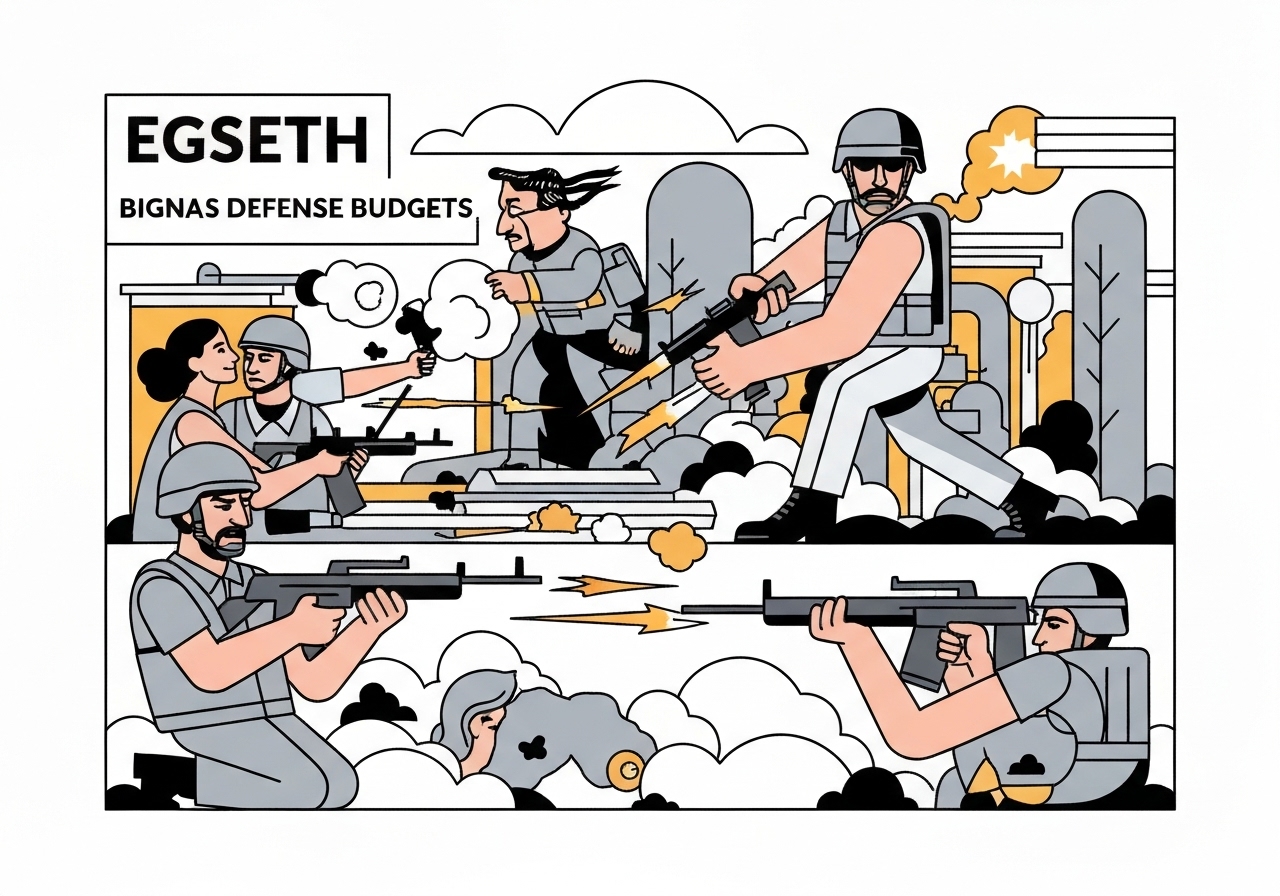
Secretary of War Pete Hegseth told an audience at the Reagan National Defense Forum that he personally authorized the Trump administration’s Sept. 2 strike on a suspected drug‑smuggling vessel off Venezuela and watched the mission feed live at the Pentagon. He said that strike was the opening action in what he described as a campaign of more than 20 U.S. strikes against cartel‑linked narco‑terror networks across the Caribbean. Hegseth rejected reporting that he ordered blanket killings of those aboard and said he retained strike approval only for the initial operation because of its strategic implications. He also signaled that defense spending as a share of GDP is likely to rise as the administration prioritizes a rebuilt industrial base.
Key Takeaways
- Sept. 2, 2025 was the date Hegseth identified for the first strike on a suspected drug‑smuggling vessel off Venezuela; he says he authorized it and viewed the Pentagon mission feed for about five minutes.
- Hegseth described the strike as the first in a series of more than 20 U.S. strikes targeting cartel‑linked networks across the Caribbean.
- He said building the intelligence package took “a couple of weeks, almost a month,” and required reorienting assets previously deployed roughly 10,000 miles away.
- Strike authority for follow‑on missions now rests with Adm. Bradley; Hegseth retained approval only for the initial operation due to its strategic sensitivity.
- After the first strike, commanders reported the need for a secondary attack; Hegseth endorsed that decision and said such re‑attacks are common.
- Survivors from a later semi‑submersible engagement were recovered and returned to their host countries, Hegseth said, indicating recovery protocols were applied case‑by‑case.
- Hegseth said the unredacted video of the Sept. 2 strike is under review because of concerns about sources and methods; he also indicated defense spending as a GDP share is expected to increase.
Background
The remarks came at the Reagan National Defense Forum at the Ronald Reagan Presidential Library in Simi Valley, California, where Hegseth delivered a keynote and later sat for a Q&A. He framed the administration’s approach as a return to Ronald Reagan’s “peace through strength” doctrine and criticized previous bipartisan tendencies toward open‑ended conflicts. The strike narrative intersects two policy streams: an intensified campaign against transnational organized crime framed as “narco‑terrorism,” and a wider effort to reconstitute U.S. defense capacity after prolonged emphasis on distant theaters.
U.S. strikes against maritime drug trafficking have legal, operational and diplomatic dimensions: designating a group as a terrorist organization affects target selection and rules of engagement, while maritime operations near Venezuela strain an already tense U.S.‑Venezuela relationship. Hegseth emphasized the legal and analytic work that preceded the operation — civilian and military briefings, lawyers, intelligence analysts and red‑teaming — to underscore authorizations complied with internal vetting processes.
Main Event
Hegseth said he authorized the Sept. 2 strike after receiving what he described as an “extensive, exhaustive” briefing covering military, civilian, legal and intelligence aspects. According to his account, analysts assembled a case over several weeks, and the Pentagon had to shift assets that had been focused some 10,000 miles away to the Caribbean area of operations. He said he watched the live mission feed for roughly five minutes before the tactical execution phase moved beyond his direct involvement.
When asked about reporting that he ordered U.S. forces to “kill all” aboard the vessel, Hegseth flatly disputed that characterization and described the claim as inaccurate. He said commanders later determined a follow‑on strike was necessary because some individuals retained communications gear and there were indications of remaining contraband and potential links to other vessels. Hegseth said he supported the commanders’ decision to re‑attack.
Hegseth explained that he retained approval authority for the initial strike because of its strategic implications but ceded subsequent strike approval to Adm. Bradley, who now oversees strike decisions. On survivor handling, Hegseth cited a separate incident involving a semi‑submersible in which U.S. forces recovered people from the water after a second strike and returned them to their host countries, saying procedures vary with circumstance.
Analysis & Implications
Operationally, Hegseth’s account signals a shift toward direct U.S. maritime action against narcotics trafficking routes when those networks are framed as terrorist organizations. Designation alters legal authorities and can broaden permissible targeting options; it also raises questions about proportionality, evidence thresholds and interagency coordination. Congress and legal observers are likely to scrutinize the basis for designations and the oversight applied to cross‑border maritime strikes.
Strategically, the campaign’s stated scope — “more than 20” strikes — if sustained, could reshape traffickers’ behavior in the Caribbean and heighten regional tensions. Caribbean states and coastal nations will be affected directly by increased U.S. military activity in their maritime approaches, and diplomatic outreach will matter to mitigate escalation risks with Venezuela and other actors. Hegseth’s public framing of deterrence — “putting them at the bottom of the Caribbean” — is declarative; measuring actual disruption to trafficking networks will require independent assessments of seizures, arrests and recidivism.
Budgetary implications are significant: Hegseth signaled defense spending as a share of GDP is likely to rise, reflecting both procurement and operational demands. Rebuilding an industrial base to supply maritime, surveillance, and precision strike capabilities would require multi‑year funding increases and political buy‑in from Congress amid competing domestic priorities. If enacted, higher defense allocations could accelerate fielding of AI‑enabled tools and autonomous systems, which Hegseth said will complement — not wholly replace — human forces.
Comparison & Data
| Date | Reported Action | Public Outcome |
|---|---|---|
| Sept. 2, 2025 | Initial strike on suspected drug‑smuggling vessel off Venezuela | Strike authorized by Hegseth; mission feed viewed at Pentagon; follow‑on required |
| Since Sept. 2, 2025 | Series of strikes described by Hegseth | Hegseth cites “more than 20” strikes across the Caribbean (campaign ongoing) |
The table summarizes the timeline Hegseth provided and his public characterization of outcomes. Independent verification of the full campaign’s size, targets and interdiction results is not available in open sources; official after‑action reports and congressional oversight records would provide clearer metrics over time. For now, the publicly stated count — “more than 20” — is an administration figure and should be treated as such until corroborated.
Reactions & Quotes
Hegseth pushed back on press reports he described as inaccurate when questioned about orders on civilian casualties, framing the reporting as erroneous and emphasizing legal review.
“Of course not … you don’t walk in and say, ‘Kill them.’”
Pete Hegseth (Secretary of War)
On deterrence and operational effect, Hegseth presented the campaign as already making U.S. waters safer by disrupting trafficking routes.
“We’re putting them at the bottom of the Caribbean. … It will make the American people safer.”
Pete Hegseth (Secretary of War)
Regarding defense budgets, Hegseth signaled a likely increase and stressed the need to revive the industrial base.
“I think that number is going up.”
Pete Hegseth (on defense spending as a share of GDP)
Unconfirmed
- Precise casualty numbers and identities from the Sept. 2 strike and subsequent actions are not publicly confirmed in independent reporting.
- The administration’s public claim of “more than 20” strikes across the Caribbean is an internal count provided by officials and lacks full external verification.
- The unredacted strike video remains under administrative review; whether it will be released and what it shows has not been resolved.
- The longer‑term deterrent impact on cartel operations in the Caribbean has been asserted by officials but is not yet demonstrated by independent seizure or arrest data.
Bottom Line
Pete Hegseth’s account frames the Sept. 2 strike as a legally vetted, narrowly authorized opening move in a broader campaign against cartel‑linked networks in the Caribbean. He emphasizes operational caution in some respects — retaining initial approval himself and citing legal and analytical vetting — while publicly asserting a strong deterrent effect. Key factual claims, including the campaign’s overall size and its operational results, remain subject to outside verification and likely congressional scrutiny.
Policy implications are broad: the actions intersect questions about the legal basis for cross‑border maritime strikes, the scale and funding of future defense investments, and the diplomatic fallout with regional partners. Readers should watch for independently corroborated metrics — after‑action reports, interagency briefings and congressional oversight — that will clarify the campaign’s scope and consequences.