
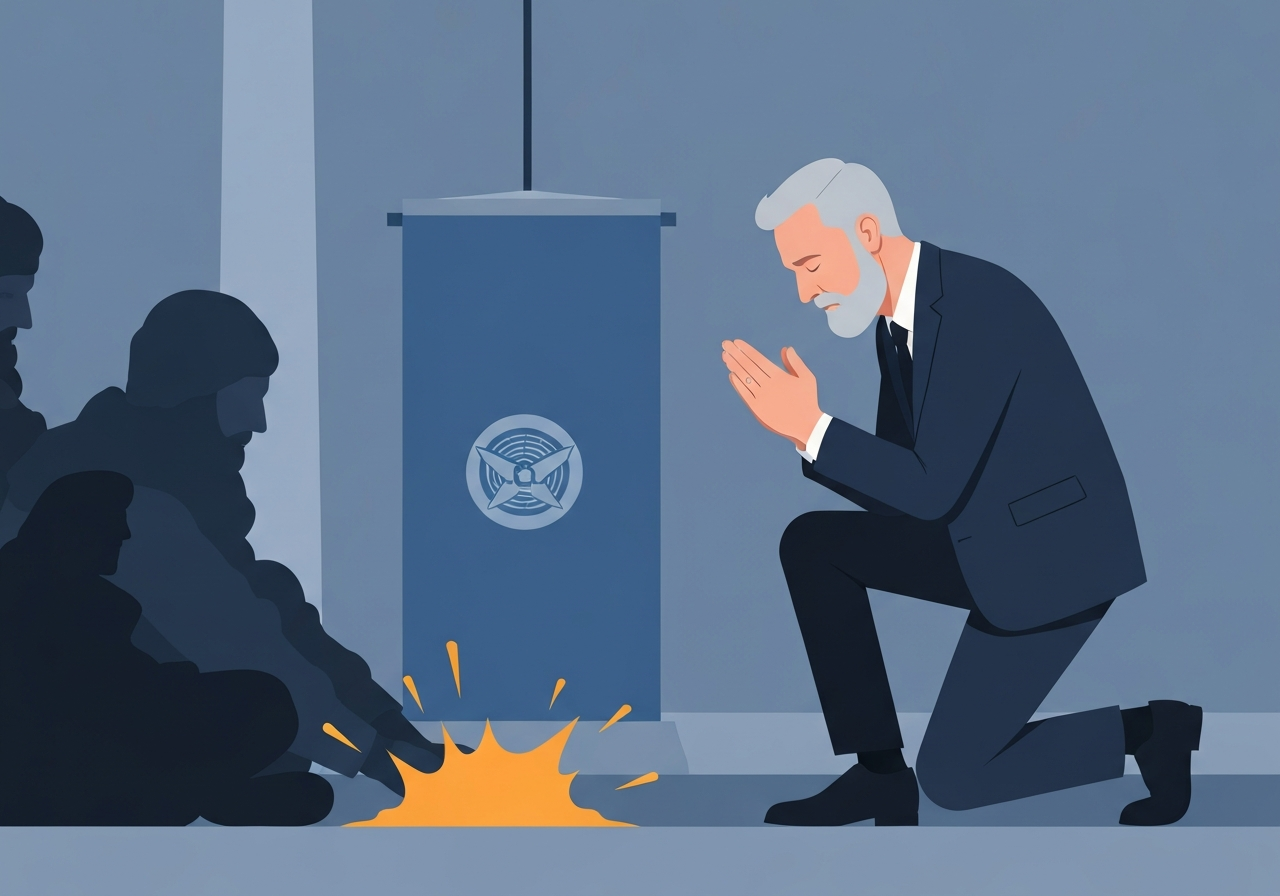
Defense Secretary Pete Hegseth led a prayer at a Pentagon worship service on Wednesday asking for decisive, merciless force against the United States’ enemies, according to accounts from witnesses and news reports. The gathering, held before military and civilian personnel, was Hegseth’s first public Pentagon worship session since the Iran war began and followed recent changes he announced to the military chaplain corps. His remarks—said to have been adapted from a chaplain-provided prayer—stoked immediate scrutiny from veterans, religious-freedom advocates and civil-rights groups who argue the language and policy shifts risk eroding religious neutrality in the Department of Defense.
Key Takeaways
- Location and timing: The prayer occurred at the Pentagon on Wednesday, reported as Hegseth’s first public worship service there since the Iran war began.
- Prayer content: Hegseth asked for decisive force against “those who deserve no mercy,” and invoked imagery that troops’ rounds would find their marks, according to reporting.
- Chaplain reforms: Hegseth announced reducing chaplain religious-affiliation codes from about 200 to 31 and replacing officer rank insignia with religious insignia.
- Prayer practice: He has held monthly prayer sessions at the Pentagon during his tenure; reports say these sessions have been led by evangelical Christians.
- Organizational response: Americans United for Separation of Church and State filed records requests this week to assess whether departments are maintaining religious neutrality.
- Veteran concern: Some veterans and watchdogs warn that encouraging Christian nationalist recruits could harm long-term military cohesion and readiness.
- Political framing: Hegseth has described the Iran conflict in religious terms, calling opponents religious fanatics seeking nuclear capability for an Armageddon scenario.
Background
The Pentagon has long hosted voluntary religious observances for service members and civilian employees; military chaplains provide rites across a wide range of faiths and traditions. Traditionally, the chaplain corps balances pastoral care with an obligation to provide religious accommodation and to uphold the Constitution’s proscription on government establishment of religion. Critics say recent changes and the tenor of some leadership comments blur those lines and risk privileging one faith expression within a plural military.
Secretary Hegseth, a public adherent of a church affiliated with the Congregation of Reformed Evangelical Churches, has moved quickly to reshape chaplaincy standards, arguing the corps had been diluted by political correctness and secular approaches to mental health. His proposal to collapse roughly 200 distinct faith codes into 31, and to shift uniform insignia from rank to religious symbols, is framed by his office as simplifying administration and restoring spiritual focus.
Those shifts come as tensions over religion in public institutions have intensified nationwide. Civil liberties organizations and some service members have already lodged complaints and legal requests to determine whether departmental practices are coercive, discriminatory or improperly favoring a particular religious viewpoint.
Main Event
At the Wednesday service, Hegseth recited a prayer he said originated with a military chaplain. Rather than using conciliatory language, he called for resolute action and for battlefield effectiveness—asking that strikes be decisive and without mercy toward enemies he described as opposing righteousness. Attendees reported the prayer asked that munitions “find their mark,” a phrase that sharpened concern among observers about the mixing of combative language and religious invocation in a government setting.
The prayer followed public announcements by Hegseth altering chaplain corps policy. He characterized prior chaplain practice as overly focused on therapy and individual well-being rather than on explicit religious instruction and virtue. The proposed administrative changes would narrow recognized religious affiliation codes to 31 categories, a contraction from the roughly 200 current identifiers, and would also change uniform insignia practices.
Hegseth has also instituted monthly prayer sessions at the Pentagon; reporting indicates these events have been consistently presided over by evangelical leaders. One such leader, Doug Wilson, founder of the Congregation of Reformed Evangelical Churches and described publicly as a Christian nationalist, has led a Pentagon prayer session in the past. That combination of personnel and policy has galvanized opponents who see a pattern of privileging a particular religious viewpoint within the Defense Department.
Analysis & Implications
The immediate policy effect of consolidating religious affiliation codes could be administrative simplification, but it may also erase nuance important for accommodation and representation. Reducing codes from about 200 to 31 risks lumping distinct traditions together and could make it harder for chaplains to claim expertise in specific faith practices, raising legal and pastoral challenges for units with diverse memberships.
Altering uniform insignia to emphasize religious symbols over rank carries symbolic weight. Supporters say the change highlights the chaplain’s spiritual role; critics contend it may undermine the clear line between ecclesiastical identity and military command, potentially confusing chain-of-command perceptions and unit cohesion during operations.
Mixing combative language with prayer in a government setting has domestic and international consequences. Domestically, it fuels litigation and employee complaints alleging pressure to conform; internationally, it can be cited by adversaries as evidence of religiously tinged U.S. policy, complicating diplomatic efforts and coalition-building in the Iran war and elsewhere.
Operational impacts are speculative but plausible: veterans and watchdog groups warn that an influx of recruits motivated by Christian nationalist ideology could alter leadership culture. If non-representative belief systems shape promotion and command norms, critics say, military effectiveness and trust across diverse ranks may decline over time.
Comparison & Data
| Aspect | Before | After (announced) |
|---|---|---|
| Chaplain religious codes | About 200 | 31 |
| Insignia | Officer rank insignia | Religious insignia (proposed) |
| Regular services at Pentagon | Occasional | Monthly (during Hegseth tenure) |
The table above summarizes announced shifts versus prior practice. Administrative streamlining may reduce paperwork, but the consolidation could also remove recognition of smaller faith groups. Observers note that numerical contraction does not straightforwardly predict pastoral outcomes; implementation details and oversight will determine practical effects.
Reactions & Quotes
Advocacy groups and veterans reacted swiftly. Americans United filed requests seeking records of speakers, recordings and complaints related to Pentagon prayer services to assess neutrality and potential coercion.
“The federal government’s role is to serve the public, not to proselytize,”
Rachel Laser, Americans United for Separation of Church and State (advocacy organization)
Some veterans expressed concern about recruitment and leadership consequences if the department signals preference for a specific religious-political outlook.
“We could see a wave of Christian nationalist recruits who may harm cohesion and readiness,”
Kristofer Goldsmith, Iraq war veteran and CEO, Task Force Butler (nonprofit watchdog)
The Pentagon has not publicly released a legal or policy memorandum explaining the precise implementation timetable for the announced chaplain reforms; department spokespeople are expected to be the subject of follow-up records requests and possible litigation.
Unconfirmed
- Whether the exact wording of the prayer was composed solely by a chaplain; Hegseth said it came from a chaplain but independent verification of the draft origin is pending.
- Whether the announced reduction to 31 faith codes has been finalized in regulation or only proposed administratively; official published policy updates are not yet available.
- The long-term personnel impact—such as measurable changes in recruitment or promotion patterns tied to religious affiliation—remains speculative and unproven at this stage.
Bottom Line
Secretary Hegseth’s prayer and his accompanying chaplaincy reforms have crystallized a broader debate about religion’s place in the Defense Department. The mix of combative religious language in a government setting and swift administrative changes to chaplain structures has prompted legal scrutiny and unease among veterans and civil-liberties groups.
Watch for records and potential court actions from Americans United and others, formal DoD implementation guidance on the 31-code plan, and formal responses from military leadership addressing neutrality and accommodation. How those processes unfold will determine whether the announced shifts become administrative adjustments or provoke enduring legal and cultural change within the U.S. armed forces.
Sources
- The Guardian (news report)
- Associated Press (news report referenced)
- Americans United for Separation of Church and State (advocacy organization)