
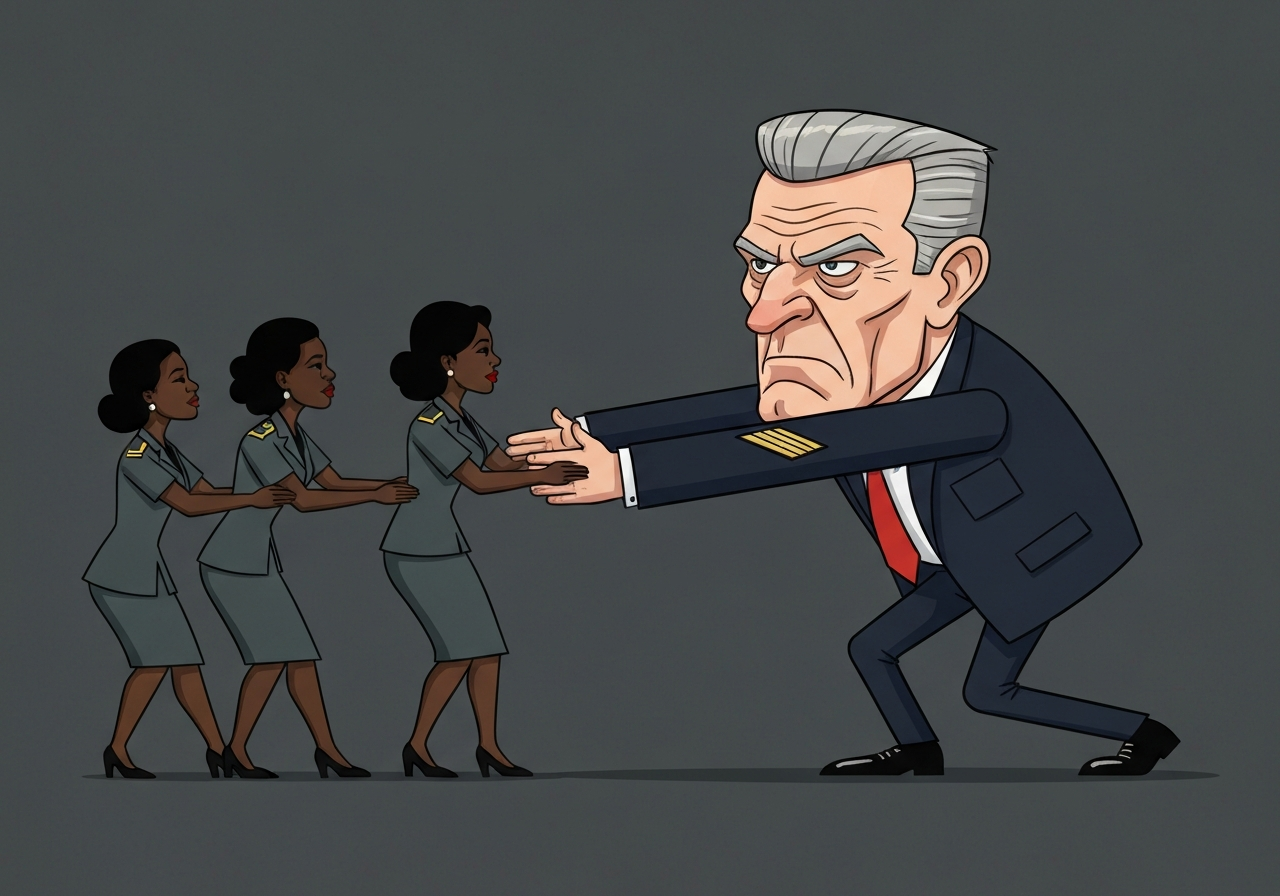
Secretary of Defense Pete Hegseth has intervened to halt the promotions of four Army officers — two Black service members and two women — who were under consideration for one-star (brigadier general) ranks, according to current reporting. The action, first reported by the New York Times and confirmed to NPR by U.S. officials speaking on background, represents a rare direct interference in the standard promotion pipeline at the Pentagon. The intervening moves come amid a sweeping leadership reshuffle since Hegseth took office, which has included dismissals of several four‑star officers without public explanation. Pentagon spokesmen have disputed the reporting, while congressional Democrats say they will investigate the allegations.
Key takeaways
- Four Army officers — identified by officials only as two Black officers and two female officers — were removed from promotion lists for brigadier general after peer selection, according to two U.S. officials not authorized to speak publicly.
- The New York Times first reported the interference; NPR later confirmed the core claim with two independent U.S. officials who spoke on background.
- Since taking office, Secretary Hegseth has overseen a broad Pentagon reorganization that has included firing multiple four‑star generals and admirals, including Gen. C.Q. Brown and Adm. Lisa Franchetti, both removed without formal explanations.
- Pentagon spokesperson Sean Parnell called the reporting “fake news” and defended the department’s commitment to merit-based promotions in a statement to NPR.
- Sen. Jack Reed (D‑R.I.), ranking member of the Senate Armed Services Committee, said he will review the matter and warned that denying promotions on the basis of race or gender would be unlawful.
- The controversy follows Hegseth’s pre‑appointment writings criticizing diversity initiatives in the military and questioning whether some senior appointments reflected merit or other considerations.
Background
The U.S. military promotion process for officers to one‑star rank typically involves selection by multi‑year promotion boards composed of senior officers, peer review, and formal confirmation steps before civilian leaders sign off. Historically, the Secretary of Defense has deferred to the recommendations of those boards except in limited, documented circumstances. That institutional norm makes the reported direct intervention notable because it bypasses aspects of the established process and the customary deference to military judgment.
Pete Hegseth, a political appointee who authored books criticizing what he described as “woke” influences in the armed forces, was confirmed as Secretary of Defense in the current administration and quickly set about reorganizing senior leadership. Among the most visible moves were the dismissals of Joint Chiefs Chairman Gen. C.Q. Brown — the second Black officer to hold that post — and Navy Adm. Lisa Franchetti, the first woman to serve as the Navy’s top uniformed officer. In both dismissals, the department offered minimal public explanation, raising questions among lawmakers and defense observers.
Main event
According to two U.S. officials who spoke on background, Hegseth requested that four Army officers be removed from a promotion list for brigadier general after those officers had been recommended through the normal selection process. The four officers were described as two Black officers and two women; their names were not released by the officials and NPR did not independently identify them. Officials characterized the move as part of a pattern in which Hegseth and senior aides have scrutinized senior personnel for ideological compatibility with the administration’s views.
The New York Times first published the account, and subsequent reporting by NPR corroborated the central claim with separate sources. Pentagon spokesman Sean Parnell responded to NPR’s inquiry by calling the reporting false and asserting that promotions under Secretary Hegseth are awarded on merit. The department has not released documents or a formal rationale explaining any specific promotion reversals.
The intervening actions come amid broader personnel changes at the Pentagon. In addition to the removals of Gen. Brown and Adm. Franchetti, senior leaders say Hegseth’s tenure has entailed reassessments of senior billets, reassignment of staff, and expedited reviews of strategy offices. Critics argue these moves have introduced uncertainty into career paths for officers; supporters contend the changes are intended to align the force with the administration’s priorities.
Analysis & implications
If confirmed in full, targeted removal of officers from promotion lists could have immediate and longer‑term effects on senior military cohesion and career incentives. Promotions to one‑star are pivotal career milestones; a reversal after peer selection can end or dramatically alter an officer’s trajectory and send a signal across the force about the political risks of advancement. That signal may affect retention of experienced leaders and could shape who seeks and attains higher command in coming years.
Legally, the scope of a civilian leader’s authority over promotions is constrained by statute and department regulations; however, the Secretary of Defense retains significant prerogative in personnel decisions. Congress — through oversight and confirmation powers — is the primary check on abuse of that authority. Senator Reed’s pledge to examine the matter foreshadows potential hearings or requests for internal documents that could clarify whether the interventions complied with law and policy.
The episode also carries reputational and diplomatic implications. Senior changes and allegations of bias can affect alliance relationships if partner militaries perceive U.S. leadership decisions as destabilizing. Domestically, perceptions that promotions are being influenced by ideology or demographic factors risk eroding public trust in the military’s impartiality and might provoke litigation or additional congressional constraints on the promotion process.
Comparison & data
| Subject | Role | Reported action | Notes |
|---|---|---|---|
| Four Army officers | Selected for brigadier general | Removed from promotion list | Two described as Black, two as female; identities not released |
| Gen. C.Q. Brown | Former Joint Chiefs chairman (four‑star) | Fired | Second African American to hold the post; removal announced without public reason |
| Adm. Lisa Franchetti | Former top Navy uniformed officer (four‑star) | Fired | First woman to have held that uniformed job; removal announced without public reason |
The table summarizes the central personnel actions reported to date. Confirmed, public documentation for the individual removals is limited; much of the current public record rests on reporting by major news organizations and statements from officials with direct knowledge. Quantitatively, the most concrete figure currently public is the number of officers reportedly removed from the brigadier general promotion list: four.
Reactions & quotes
“Under Secretary Hegseth, military promotions are given to those who have earned them. Meritocracy, which reigns in this Department, is apolitical and unbiased.”
Pentagon spokesperson Sean Parnell (statement to NPR)
The Pentagon’s statement framed the department’s process as merit‑driven and rejected the reporting as inaccurate. The department has not furnished documentary evidence to substantiate that characterization beyond the public statement.
“If these reports are accurate, Secretary Hegseth’s decision to remove four decorated officers from a promotion list … would be illegal.”
Sen. Jack Reed (D‑R.I.), ranking member, Senate Armed Services Committee
Sen. Reed said his office will review the allegations and indicated that committee oversight could include requests for internal documents and interviews with Pentagon officials if needed.
“Weeding out senior officers who are deemed ideologically incompatible”
Two U.S. officials speaking on background (reported to NPR/NYT)
Anonymous officials described an internal pattern of vetting that they characterized as ideological screening; those officials declined to provide documentary evidence on the record to NPR.
Unconfirmed
- Whether Secretary Hegseth specifically cited race or gender as the reason for removing the four officers remains unproven in public records.
- No public internal Pentagon memorandum has been produced that explains the specific rationale for the four promotion reversals.
- Extent and formalization of any “ideological compatibility” vetting process within personnel offices are not yet confirmed.
Bottom line
The reported intervention by Secretary Hegseth to block four Army officers’ promotions — if substantiated by documents or additional testimony — would represent an unusual and consequential exercise of civilian authority over military personnel decisions. It raises legal, institutional and morale questions about where the line between civilian oversight and improper interference should fall, and it will likely draw sustained congressional scrutiny.
In the near term, expect Senate Armed Services Committee inquiries and public calls for transparency from both parties. For service members, the development compounds uncertainty about career pathways; for policymakers and the public, it poses a core question about the degree to which personnel decisions should reflect merit alone versus evolving civilian leadership priorities.
Sources
- NPR (news report — original reporting corroborating details)
- The New York Times (news report — initial publication of the story)