
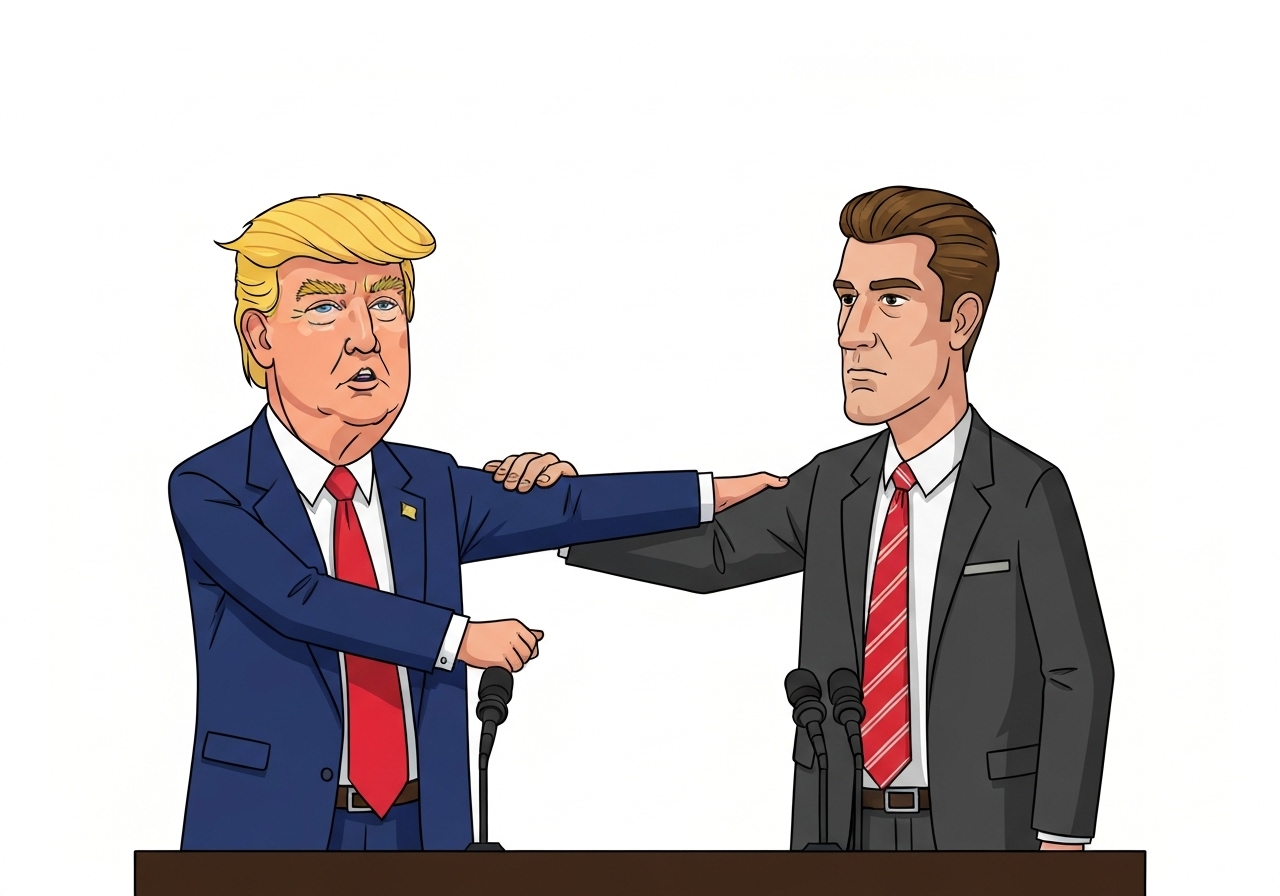
President Donald Trump on Air Force One defended Defense Secretary Pete Hegseth and said he believed Hegseth when the secretary denied ordering a second strike on a boat in the Caribbean. The claim, first reported by the Washington Post, says a 2 September strike was followed by a prohibited follow-up attack that killed two survivors. The report has prompted bipartisan demands for congressional oversight and calls for accountability from lawmakers and international rights officials. The administration says its boat strikes since September targeted drug-smuggling vessels and were lawful under US and international law.
Key takeaways
- The Washington Post reported that a 2 September US strike on an alleged drug-smuggling boat was followed by a second strike that killed two survivors.
- US Defense Department data cited in reporting says more than 80 people have been killed in related maritime strikes since September.
- Pete Hegseth strongly denies giving an order to target survivors and calls the reporting fabricated and inflammatory.
- President Trump said he believed Hegseth 100 percent and stated he would not have wanted a second strike.
- Republican and Democratic lawmakers, including Senators Mark Kelly and Tim Kaine, have demanded hearings and investigations.
- Venezuela called the strikes murder; the UN rights chief said there is strong evidence of extrajudicial killings and urged investigation.
- Republican-led armed services committees have opened inquiries to determine facts and accountability.
Background
Since September, the US has increased naval activity in waters off Venezuela and Colombia to disrupt maritime drug trafficking. The Pentagon frames those operations as defensive actions against vessels it alleges carry illicit narcotics, and it has repeatedly defended the legality of strikes under US and international law. The US Department of Defense has said more than 80 people have died in these operations to date, a casualty figure that has driven regional and diplomatic tensions. Venezuela has protested, calling the operations unlawful and describing the deaths as murder; Caracas officials have publicly condemned US actions and demanded accountability.
International human rights authorities have also weighed in. The UN human rights office has said there is strong evidence suggesting some strikes may constitute extrajudicial killings, and officials urged the US Congress to investigate. The alleged 2 September sequence, in which a follow-up strike reportedly aimed to kill survivors seen on drone footage, would contravene rules of engagement and Geneva Convention protections for wounded or shipwrecked persons if the reporting is accurate. Congressional committees that oversee the Pentagon have jurisdiction to subpoena witnesses and request classified material to establish a factual record.
Main event
The Washington Post reported that on 2 September US forces struck a suspected drug-smuggling vessel, killing some of the 11 people aboard. After the initial blast, live imagery reportedly showed two survivors clinging to wreckage, and a subsequent order was executed to strike again, according to the report. The story attributes a spoken directive to Defense Secretary Pete Hegseth to kill everybody on the vessel, a claim Hegseth has vehemently denied. Hegseth described the article as fabricated and said all strikes in the region have been lawful under US and international law.
Speaking to reporters aboard Air Force One, President Trump said he believed Hegseth’s denial and added that he personally would not have wanted a second strike. The president said he would look into the matter and repeated his support for Hegseth. Meanwhile, members of both parties announced they would press for formal inquiries and hearings to determine the facts of the operation and the chain of command involved. Republican-led committees overseeing defense matters said they were directing inquiries to the Department of Defense and would conduct vigorous oversight.
Venezuela’s National Assembly publicly labeled the strikes murder and demanded explanations, heightening diplomatic tensions between Washington and Caracas. The Venezuelan president and National Assembly leaders have framed the operations as a violation of sovereignty and an assault on Venezuelan nationals, increasing pressure on regional partners to call for transparency. The UN human rights office has also asked for a thorough and credible investigation to assess possible violations of international humanitarian law.
Analysis & Implications
If confirmed, the reported order to target survivors would represent a stark breach of established rules of engagement and international humanitarian law that prohibit targeting wounded or shipwrecked persons. A validated finding could expose commanders and policymakers to criminal and civil liability, and would almost certainly trigger formal congressional oversight, including public hearings and possible referrals to the Department of Justice or military judicial authorities. Political fallout would be immediate, with lawmakers across the aisle calling for accountability while the White House seeks to limit reputational damage.
On the diplomatic front, the allegations increase friction with Venezuela and risk broader regional condemnation of US maritime operations focused on drug interdiction. Allies and partners will press for documented legal justification and evidence tying specific vessels to criminal networks; absent that, support for US tactics may erode. The UN rights office comment that there is strong evidence of extrajudicial killings raises the international profile of the controversy and could lead to multilateral scrutiny or requests for independent inquiries.
Operationally, the Pentagon may be forced to revise rules of engagement, drone employment protocols, and oversight of special operations tasking if formal reviews find procedural failures. Changes could include stricter post-strike verification standards, limits on delegation of lethal directives, and enhanced reporting to Congress. For the wider counter-narcotics effort, legal and political constraints could slow strikes and encourage greater emphasis on interdiction and regional law-enforcement cooperation rather than kinetic options.
Comparison & data
| Date | Reported incident | Reported deaths | Source |
|---|---|---|---|
| Since September 2025 | Maritime strikes on alleged smuggling boats | More than 80 | US Department of Defense (public statements) |
| 2 September 2025 | Reported double-strike on single vessel, survivors targeted | 11 on board, 2 reportedly killed in follow-up | Washington Post reporting |
The table summarizes publicly cited figures. The Defense Department’s aggregate casualty count and the Washington Post’s detailed account of the 2 September incident are the two principal numerical references in current reporting. The Pentagon has not publicly released all underlying intelligence or targeting assessments, so absolute verification of itemized events remains pending congressional or independent review.
Reactions & quotes
Lawmakers and rights officials have reacted strongly and called for fact-finding.
We are going to have a public hearing and put witnesses under oath to find out what happened and ensure accountability.
Senator Mark Kelly (statement to reporters)
Senator Kelly’s comment came as the Senate armed services oversight process prepared to request documents and testimony. His office said the aim is to establish a definitive timeline and chain of command.
If what has been reported is accurate, it could rise to the level of a war crime and must be investigated.
Senator Tim Kaine (Face the Nation)
Senator Kaine framed the allegation in legal terms and urged Congress to move quickly to determine whether laws or the Geneva Conventions were violated. Democrats and Republicans have both signaled readiness to pursue oversight.
The report is fabricated and inflammatory. The strikes carried out have been lawful under US and international law.
Pete Hegseth (public statement)
Hegseth’s denial is central to the administration’s defense of the operations. The secretary has requested expedited reviews of public reporting and said he welcomes an inquiry to clear his name.
Unconfirmed
- That Defense Secretary Pete Hegseth personally issued the spoken order to kill everyone on the vessel remains disputed and unproven in public records.
- The exact identity and role of the Special Operations commander who allegedly executed a follow-up order have not been publicly confirmed.
- Full classified targeting assessments, intelligence products, and video footage that could validate or refute the reported sequence have not been released.
Bottom line
The core dispute concerns whether a chain of command order crossed legal and ethical red lines by targeting survivors after an initial strike. If independent oversight confirms the Washington Post account, the consequences would include hearings, possible referrals, operational changes, and sustained diplomatic fallout with Venezuela and regional partners. If the reporting is disproven, the episode will still leave lingering questions about transparency, evidence sharing, and the standards used to justify lethal maritime operations.
For now, Congress, the Pentagon, and international rights bodies will press for documentation. Close observers should watch for formal committee subpoenas, release of after-action reviews, and any declassified imagery or logs that clarify the targeting decisions made on 2 September and thereafter.
Sources
- The Guardian live blog — media reporting and live updates
- The Washington Post — media report attributing a spoken directive regarding the 2 September strike
- US Department of Defense — official statements and casualty figures
- UN Human Rights Office — public statements on alleged extrajudicial killings
- US Congress — statements and committee oversight powers