
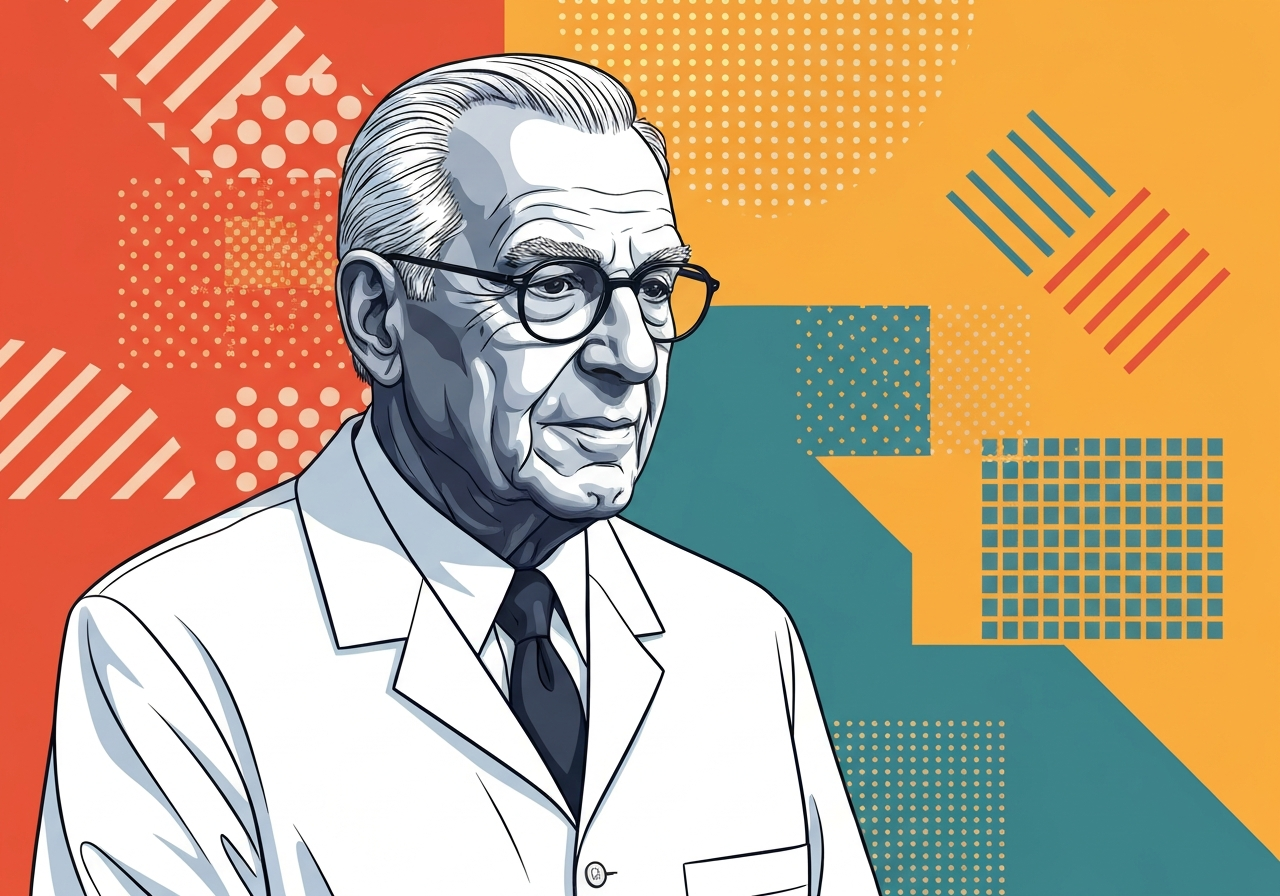
Henry C. Lee, the forensic scientist whose work brought modern crime-scene methods into public view through high-profile cases including the 1995 O.J. Simpson trial, died Friday at his home in Henderson, Nevada. He was 87. His family and the University of New Haven said he “passed away peacefully” after a brief illness. Lee taught at the University of New Haven for more than 50 years and remained an influential, if sometimes controversial, figure in forensic science until his final days.
- Age and passing: Lee died at 87 in Henderson, Nevada; his family and the University of New Haven confirmed the death and described a brief illness.
- Career span: He taught at the University of New Haven for more than 50 years and authored or co-authored over 40 books on forensics.
- High-profile cases: Lee gained national attention with testimony in the 1995 O.J. Simpson trial and consulted on the 1986 Helle Crafts case, the 1996 JonBenét Ramsey investigation, the 2004 Scott Peterson case and the 2007 Phil Spector trial.
- Early career and education: Born in China, Lee moved to Taiwan, became the youngest police captain in Taipei, and immigrated to the U.S. in 1964 to pursue advanced degrees in forensic science and biochemistry.
- Controversy and legal findings: In 2020 a judge vacated two 1985 convictions tied in part to testimony about a towel; in 2023 a federal court found no evidence to support some of Lee’s testimony and held him liable for fabricating evidence in that case.
- Institutional legacy: He helped expand New Haven’s forensic program from a single fingerprint kit into a multidisciplinary institute that bears his name and trains practitioners.
Background
Henry Lee was born in 1939 in China and relocated with his family to Taiwan as a child. There he earned a degree in police administration, rose through the ranks of the Taipei police and became the youngest captain in the city’s history. He and his wife moved to the United States in 1964, where he pursued advanced study in forensic science and biochemistry and later built a lengthy academic and consulting career. His international profile grew to the point that a multi‑story museum in China honors his career and public recognition.
Lee first drew widespread professional notice for his role in the 1986 Helle Crafts disappearance in Connecticut, where investigators used tiny fragments of bone and other trace materials to build a case without a recovered body. That case helped solidify public appreciation for trace-evidence work. Over subsequent decades he combined casework, teaching and public outreach, helping to professionalize forensic training while simultaneously becoming a media-facing figure connected to some of the nation’s most watched trials.
Main Event
The family and the University of New Haven announced Lee’s death on March 28, 2026, noting he had been working on a book about missing-person investigations up until his final days. Lee rose to broad public attention after his 1995 testimony in the O.J. Simpson double-murder trial, where he questioned the handling and interpretation of blood evidence—an appearance that cemented his status as both a prominent expert and a polarizing witness. He later advised or testified in other notable matters, including inquiries into the deaths of JonBenét Ramsey (1996), the Scott Peterson murder trial (2004) and the Phil Spector trial (2007).
At the University of New Haven Lee expanded what began as a modest program into a full department and established the Henry C. Lee Institute of Forensic Science to provide training and case consultation. He hosted a crime-documentary series in 2004 and published extensively, with more than 40 books to his name. Colleagues credited him with helping to raise the visibility and technical sophistication of American forensic practice.
Lee’s career was not without dispute. In 2020 a state judge vacated the 1985 convictions of two Connecticut men after testing showed stains previously described as blood were not blood. In 2023 a federal court ruled there was no supporting evidence for aspects of Lee’s testimony in that case and held him liable for fabricating evidence. Lee denied intentional fabrication, suggesting later degradation of material could explain discrepancies and asserting he never intended to mislead investigators.
Analysis & Implications
Lee’s death prompts a complex assessment of his legacy: he helped modernize forensic methods, popularized trace-evidence science and trained generations of practitioners, yet his career also highlights risks when expert testimony is decisive in criminal cases. High-profile experts shape public and juror perceptions; when a prominent figure faces credibility questions, confidence in forensic testimony can erode and spur calls for stricter standards.
The legal fallout tied to the 1985 case and subsequent rulings underscores how courtroom science, evidence handling and documentation practices are subject to later scrutiny. Courts and laboratories increasingly require robust validation, documented chain of custody and reproducible testing methods; Lee’s controversies have been cited in debates over independent testing and post-conviction review policies. Those debates are likely to influence training curricula and accreditation standards for forensic labs.
Internationally, Lee’s stature meant his methods and teachings influenced practitioners beyond the U.S., so reputational fallout has cross-border resonance. At the same time, his role in building educational infrastructure—especially the institute at New Haven—leaves a durable professional footprint. The net effect may be both a continued emphasis on trace-evidence techniques and renewed attention to quality control, peer review and transparency in forensic reporting.
Comparison & Data
| Case | Year | Lee’s role | Outcome/Note |
|---|---|---|---|
| Helle Crafts | 1986 | Forensic investigator | Conviction without body |
| O.J. Simpson | 1995 | Expert witness (blood evidence) | Notable defense testimony; high public profile |
| JonBenét Ramsey | 1996 | Consultant | Case remains unsolved |
| Scott Peterson | 2004 | Consultant | Conviction upheld in separate appeals |
| 1985 Connecticut murder | 1985–2023 | Testimony about towel stains | 2020 convictions vacated; 2023 ruling found no supporting evidence |
The table above summarizes select high-profile cases tied to Lee and the primary role he played in each. It shows both the breadth of his involvement across decades and the points at which his contributions became focal in courtroom and post‑conviction review processes.
Reactions & Quotes
“Dr. Lee was a remarkable individual. His contributions to our university as well as forensic science and law enforcement are extraordinary and unmatched,”
Jens Frederiksen, President, University of New Haven (official statement)
The university emphasized his decades of teaching, his role building the institute bearing his name and his influence on generations of forensic professionals.
“The court found no evidence to support aspects of the challenged testimony,”
Federal court ruling (2023)
That judicial finding has been central to criticism of parts of Lee’s casework; Lee and his supporters said later testing and degradation could account for differing test results and that he never willfully fabricated results.
Unconfirmed
- Precise cause of the “brief illness” leading to Lee’s death has not been publicly confirmed by the family or university.
- Specific publication date for the book Lee was finalizing on missing-person investigations remains unannounced.
- Whether all cases in which Lee provided testimony will be re-examined as a direct result of the 2023 ruling is not confirmed and would depend on individual courts and petitioners.
Bottom Line
Henry Lee leaves a mixed but consequential legacy: he pioneered trace-evidence techniques, elevated forensic training and brought scientific investigation into greater public focus, while later legal findings raised serious questions about aspects of his courtroom testimony. His death will prompt reflection across law enforcement, academia and the courts about the balance between individual expert authority and systemic safeguards.
For practitioners and policymakers, the immediate takeaway is durable: strengthen documentation, promote independent verification, and ensure forensic testimony is accompanied by clear statements about uncertainty and limits. Lee’s institute and his many students mean his methods and influence will persist, even as the field grapples with lessons from the controversies attached to his name.
Sources
- CBS News (news report, March 28, 2026)
- Associated Press (news agency reporting/photography)
- University of New Haven (official university statement and institute information)