
Lead
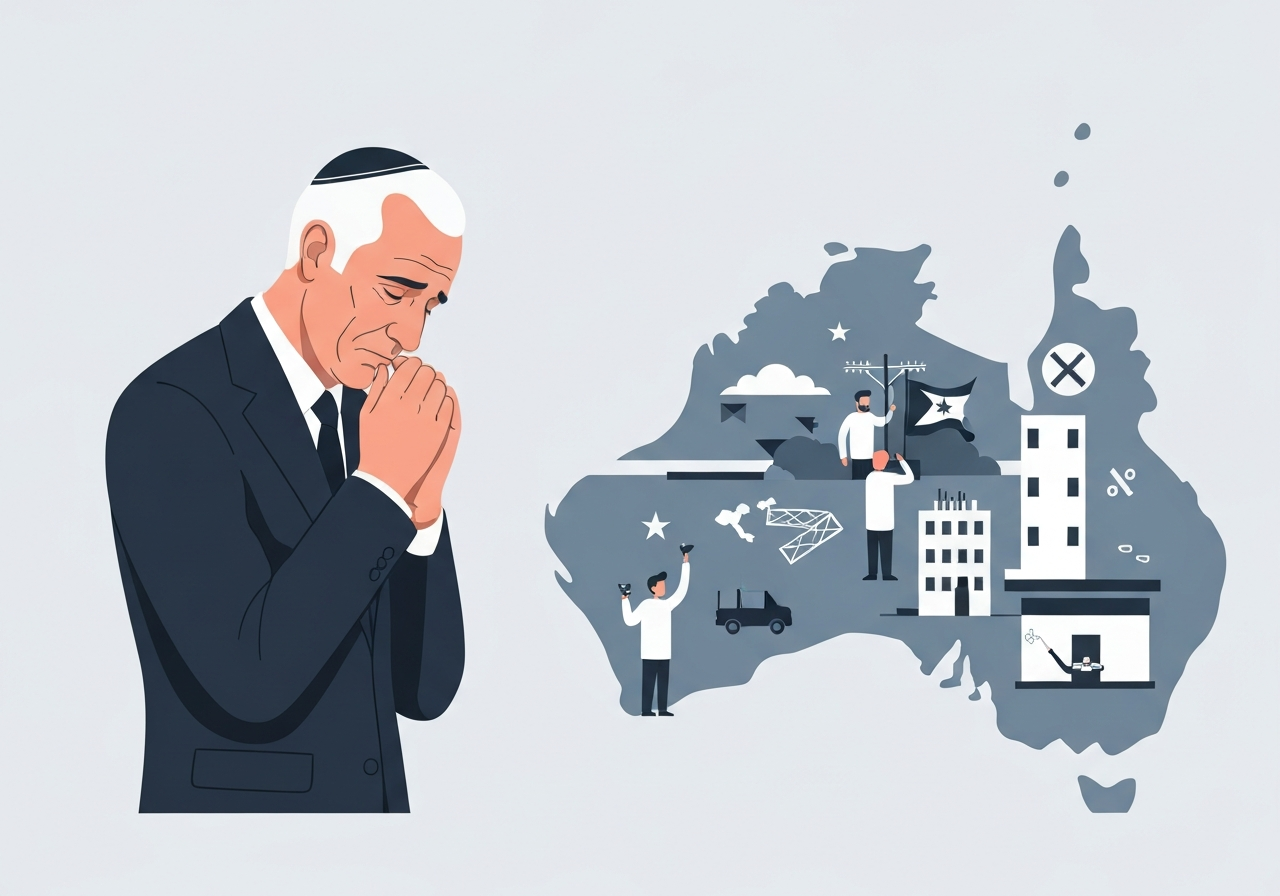
Israeli President Isaac Herzog visited Sydney on February 9, 2026, to pay respects to victims of the December 14, 2025 Hanukkah massacre near Bondi Beach, where 15 people were killed. The state visit, invited by Prime Minister Anthony Albanese as a show of solidarity with Australia’s Jewish community, was met with large pro‑Palestinian demonstrations across the country. Herzog laid a wreath at Bondi Pavilion while lawyers for the Palestinian Action Group contested protest restrictions in court. The trip underscored deep divisions in Australia over Israel’s war in Gaza and prompted debate about diplomatic immunity and accountability.
Key Takeaways
- On February 9, 2026, Isaac Herzog visited Sydney to honor 15 victims of the December 14, 2025 Bondi Hanukkah massacre.
- Prime Minister Anthony Albanese framed the invitation as solidarity with Jewish Australians amid heightened antisemitic incidents.
- About 30 protests were planned nationwide on the day of Herzog’s visit, with the largest gathering at Sydney Town Hall.
- The Australian Federal Police confirmed Herzog is protected by diplomatic immunity during the state visit.
- An independent UN inquiry (published September 2025) named Herzog among officials accused of incitement; the report has prompted calls from some quarters for his detention on arrival.
- Jewish community groups were split: major organizations welcomed the visit while progressive Jewish advocates criticized the timing and political framing.
- Jewish groups recorded more than 3,700 anti‑Jewish incidents in Australia in the two years to September 2025, prompting increased community security measures.
Background
The invitation to Herzog came after an attack on December 14, 2025 at a Hanukkah event near Bondi Beach that left 15 people dead, marking Australia’s deadliest terror attack in recent memory. Prime Minister Albanese publicly emphasized national unity and pledged stronger action on hate speech and firearms controls in the wake of the killings. The government also introduced expanded visa‑cancellation powers and tougher gun laws as part of its response.
Australia’s public debate has been sharply polarized since Israel’s October 7, 2023 conflict with Hamas, which Israeli officials say was prompted by a massacre of Israelis. The Palestinian Ministry of Health reports over 70,000 Palestinian deaths linked to the Gaza war; those figures and the human toll have fed global protests and disputes over terminology such as “genocide.” Domestically, these international issues have translated into rising tensions between communities and competing demands on policymakers.
Main Event
Herzog arrived in Sydney and immediately paid tribute at Bondi Pavilion, laying a wreath at a site still marked by floral tributes and memorials to those killed. His visit was intended as an act of condolence and visible state solidarity for Jewish Australians shaken by the massacre. For many survivors and communal leaders, the presence of Israel’s head of state was a consoling symbol after a traumatic attack.
Simultaneously, pro‑Palestinian groups organized as many as 30 demonstrations nationwide to coincide with Herzog’s trip. The largest assembly congregated outside Sydney Town Hall, drawing thousands and requiring a significant police presence. Organizers said the protests aimed to hold Israeli leaders to account for actions in Gaza and to challenge what they see as government endorsement of Israeli policy.
Legal disputes accompanied the street actions: lawyers for the Palestinian Action Group asked courts to protect their right to protest within zones subject to newly tightened restrictions. Separately, four legal groups, including the Australian Centre for International Justice and Al‑Haq, filed a complaint with the Australian Federal Police against Doron Almog, a member of Herzog’s delegation who does not have diplomatic immunity.
Analysis & Implications
The visit highlights a dilemma for liberal democracies balancing diplomatic protocol, community protection and legal accountability. On one hand, state visits are traditional tools for expressing solidarity after attacks; on the other, they can inflame domestic fault lines when the visiting country is central to an ongoing, contested conflict. In Australia’s case, the government judged the symbolic value of Herzog’s visit for Jewish victims to outweigh the risks of heightened protest and friction.
Legally, the dynamics are complex. Diplomatic immunity generally shields visiting heads of state from arrest during official visits; Australian authorities confirmed that protection for Herzog. That immunity does not automatically extend to all delegates, which is why complaints against figures such as Almog prompted attention and legal filings. International arrest warrants and separate UN findings add pressure, but practical enforcement depends on domestic legal decisions and political calculations.
Politically, Albanese’s move was criticized by some progressive Jewish groups and human rights advocates who argued the invitation politicized Jewish grief and risked deepening social divisions. Opposition voices, including those calling for stronger investigations into the Bondi attack, framed the visit as insufficiently consultative. The episode may influence domestic politics by reshaping debate over national security, immigration controls and the boundary between communal solidarity and foreign policy signaling.
Comparison & Data
| Metric | Figure | Period/Date |
|---|---|---|
| Bondi Hanukkah attack deaths | 15 | December 14, 2025 |
| Palestinian deaths cited by ministry | Over 70,000 | Since October 2023 (reported) |
| Anti‑Jewish incidents in Australia | 3,700+ | Two years to September 2025 |
These figures illustrate the scale tension operates on: a single mass‑casualty attack in Australia, large casualty figures in Gaza per Palestinian authorities, and a steep rise in recorded antisemitic incidents domestically. While the numbers are drawn from official and community sources, direct causal links between international events and local incidents are complex and mediated by political rhetoric, media coverage and social networks.
Reactions & Quotes
Several voices framed the visit in sharply different terms. Jewish communal leaders representing mainstream organizations thanked Albanese and welcomed Herzog’s gesture of solidarity. At the same time, progressive Jewish and Palestinian rights advocates condemned the state invitation and argued it risked conflating Jewish identity with Israeli policy.
“It means we are not alone. He’s come from the other side of the world — it means we are supported by Israel.”
Yvonne, Bondi massacre survivor (reported)
The survivor’s comment was cited by several outlets as expressing relief and consolation that an international leader acknowledged the community’s loss in person.
“This is a visit that will have serious consequences for social cohesion in Australia.”
Chris Sidoti, UN inquiry commissioner (reported)
Sidoti, who co‑authored the UN inquiry referencing incitement findings, urged Australian authorities to consider legal obligations and moral imperatives; he also expressed skepticism that Herzog would visit if arrest were genuinely likely. His statement underscores how international human‑rights work intersects with domestic law and politics.
“Hosting Herzog risks entrenching the dangerous and antisemitic conflation between Jewish identity and the actions of the Israeli state.”
Sarah Schwartz, Jewish Council of Australia (statement)
Progressive Jewish representatives argued the state visit could instrumentalize communal grief for political ends and worsen the security environment for Jewish Australians by polarizing public debate.
Unconfirmed
- Whether Australian authorities gave explicit, formal guarantees to Herzog that he would not be arrested beyond standard diplomatic protections — public reporting cites assurances but documentary proof has not been released.
- Reports that Doron Almog cancelled travel to South Africa out of arrest fears are reported but lack independent public confirmation from Almog or South African authorities.
- Claims that the visit will produce long‑term, irreversible harm to social cohesion in Australia are projections; the short‑term effect on tensions is evident, but longer‑term outcomes remain uncertain.
Bottom Line
Isaac Herzog’s February 9, 2026 visit to Sydney to mourn the Bondi Hanukkah massacre placed an international flashpoint squarely inside Australian politics. The trip offered solace to many victims and signaled formal support from Israel, but it also catalyzed large protests and renewed debates about accountability for actions in Gaza and the limits of diplomatic protection.
For policymakers, the episode highlights the trade‑offs between symbolic solidarity and the risks of escalating domestic division. Legally, diplomatic immunity for visiting heads of state reduces the likelihood of arrest during official visits, but complaints against non‑immune delegates and the wider UN findings mean legal and political disputes are likely to continue. Observers should watch whether Australian institutions pursue further investigations, how community security needs are addressed, and whether political leaders alter engagement strategies to reduce social strain.
Sources
- Yahoo News (news report summarizing the visit and reactions)
- Australian Federal Police (official law‑enforcement statements on diplomatic protections)
- UN Office of the High Commissioner for Human Rights (official site for UN inquiries and human‑rights reports)