
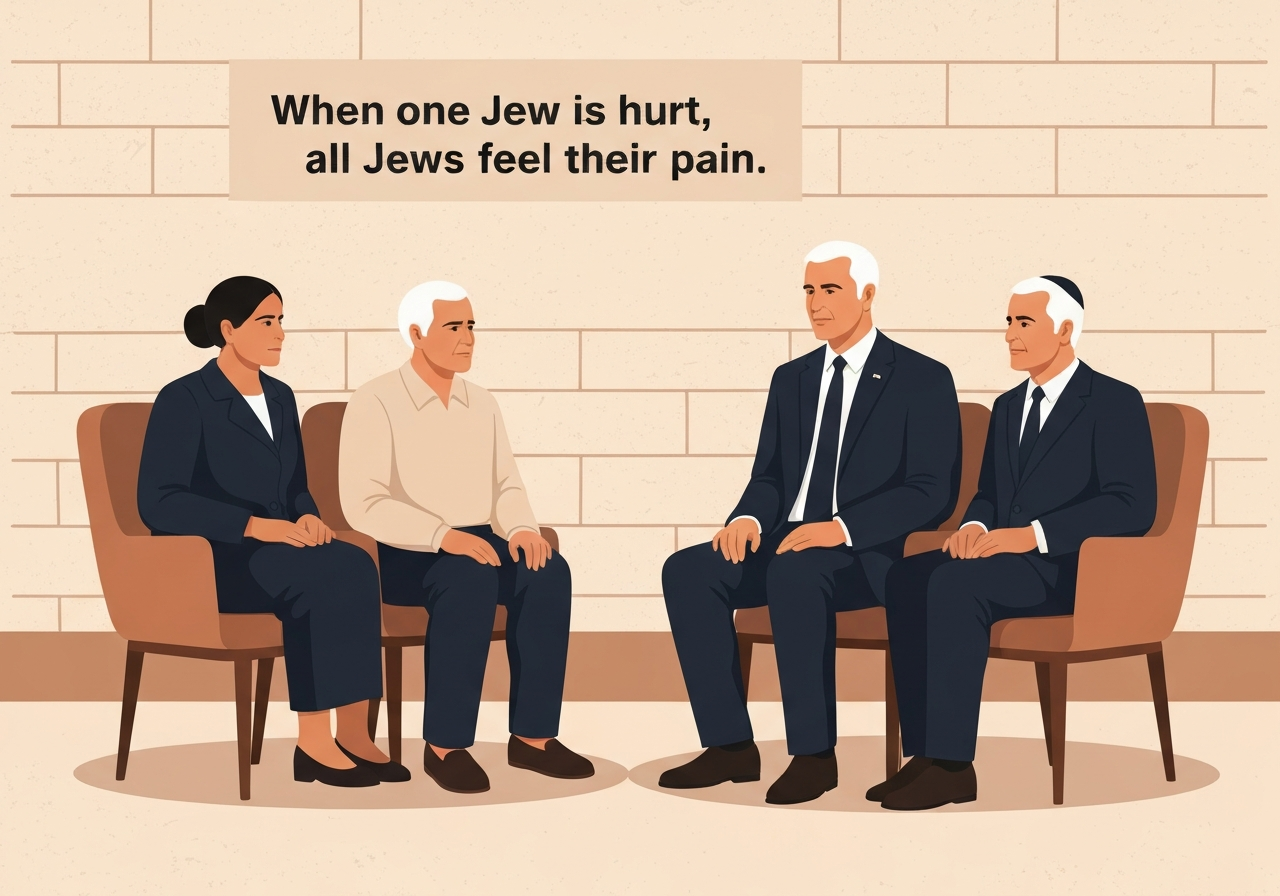
Israel’s president, Isaac Herzog, began a four-day visit to Australia on Monday, arriving in Sydney to meet survivors and families of the 14 December Bondi terror attack that left 15 people dead. At the Bondi Pavilion memorial he and his wife, Michal Herzog, laid a wreath and placed two stones from Jerusalem in a gesture he described as marking the endurance of memory and the weight of loss. Speaking to reporters at the site alongside New South Wales premier Chris Minns, Herzog said the attack had bound Israel and Australian Jews in shared grief and vowed continued solidarity. The visit combines public memorial events, meetings with senior officials in Canberra and Melbourne, and closed sessions with survivors and community leaders.
Key takeaways
- Isaac Herzog arrived in Sydney on Monday to begin a four-day visit focused on the Bondi terror attack and community outreach.
- The Bondi massacre on 14 December resulted in 15 deaths, including a 10-year-old, Matilda, and an 87-year-old Holocaust survivor, Alex Kleytman.
- Herzog and Michal placed two stones from Jerusalem at the Bondi Pavilion memorial as a Jewish symbol of remembrance.
- The Executive Council of Australian Jewry welcomed the visit; its co-CEO Alex Ryvchin said it would lift community spirits and could recalibrate bilateral ties.
- More than 600 signatories from within the Jewish community took out full-page ads opposing Herzog’s presence; the Jewish Council of Australia organised the ads.
- Police prepared a large security operation in Sydney, with officials citing around 500 officers deployed in inner-city locations and visible armed patrols.
- Herzog called a global rise in antisemitism a ˜global emergency’ and defended Israel against what he described as politicised international legal action.
Background
The Bondi attack on 14 December shocked Australia and international Jewish communities. Fifteen people gathered to celebrate Hanukkah were killed in what Australian authorities have treated as an antisemitic terror act; the victims included children and elderly survivors of past genocides. The massacre triggered widespread public mourning, large vigils across Australian cities, and renewed scrutiny of antisemitic threats and public safety measures. It also intensified debate in Australia about government preparedness and law enforcement responses before and after the attack.
Israel’s head of state, Isaac Herzog, announced a four-day trip to Australia as a show of solidarity with Jewish Australians and to meet directly with survivors and bereaved families. The visit follows public appeals from community leaders and an invitation from Prime Minister Anthony Albanese to reinforce ties between the two nations. At the same time, the trip surfaced divisions within Australia’s Jewish community, with some groups supporting the presidential visit and others publicly opposing it on political grounds. The visit therefore combines memorial diplomacy with a sensitive domestic political context for both Israeli and Australian audiences.
Main event
Herzog and his wife arrived in Sydney on Monday morning and were met by Israel’s ambassador to Australia, Amir Maimon, according to the Israeli embassy. At the Bondi Pavilion memorial the president laid a wreath alongside NSW premier Chris Minns and placed two stones from Jerusalem — a Jewish tradition he described as symbolising memory and an enduring bond. He paid explicit tribute to the 15 victims, naming the youngest victim, Matilda, and recalling Alex Kleytman, who survived the Holocaust before being killed in Sydney.
Herzog told reporters that the attack had united Australian people with the state of Israel and that the Jewish community should feel the support of both nations. He framed rising antisemitism as ˜not a Jewish problem’ but a ˜global emergency’, urging vigilance and international cooperation to prevent further violence. When asked about prior frustrations within Australia’s Jewish community regarding earlier responses to antisemitism, he acknowledged shared disappointment without assigning blame to any single actor.
The trip’s schedule has been tightly managed, with a mix of community events in Sydney and planned meetings in Canberra and Melbourne. Israel’s government press office said Herzog would meet Prime Minister Anthony Albanese and the governor-general, Sam Mostyn, and hold talks with leaders across political parties. Security arrangements in Sydney included a substantial police presence and temporary assembly restrictions in parts of the city while authorities sought to balance protest rights and public safety.
Analysis & Implications
Herzog’s visit is both a symbolic act of transnational mourning and a diplomatic gesture aimed at reinforcing the special relationship between Israel and Australia. By meeting survivors and laying stones from Jerusalem, the president foregrounded shared grief and ritual as means of conveying moral support. Diplomatically, the trip provides an opportunity to shore up ties after a traumatic event and to discuss practical cooperation on countering antisemitism and improving protective measures for vulnerable communities.
Politically, the visit exposes fractures within the Jewish diaspora in Australia. The full-page ads organised by the Jewish Council of Australia and signed by over 600 people illustrate a factional split that mixes concerns over Israeli government policy, human rights, and the appropriate role for Israel’s head of state on Australian soil. For Australian policymakers, the episode underscores the challenge of responding to communal grief while respecting diverse political views within minority communities.
On the international legal and reputational front, Herzog’s public rebuttals of international legal actions alleging serious violations have amplified tensions. He described the ICJ case as a ˜form of blood libel’ and defended prior statements about collective responsibility for the 7 October attacks, remarks that have been polarising and have spurred calls from some quarters for legal scrutiny. The debate over accountability, international law and free speech will likely follow Herzog’s itinerary and feature in subsequent media and diplomatic exchanges.
Comparison & data
| Incident | Date | Fatalities | Notable details |
|---|---|---|---|
| Bondi terror attack | 14 December 2025 | 15 | Hanukkah gathering; victims included a 10-year-old and an 87-year-old Holocaust survivor |
| Examples cited at memorial | — | — | Two stones from Jerusalem placed at Bondi Pavilion as a symbol of remembrance |
The table summarises the immediate factual record of the Bondi event and the memorial gesture; comprehensive national statistics on antisemitic incidents are compiled separately by community groups and law enforcement agencies. Contextual data on trends in antisemitic violence and hate crime reporting are essential for evaluating responses but fall beyond the scope of this visit report.
Reactions & quotes
These stones … will remain here at Bondi for eternity in sacred memory of the victims and as a reminder that the bonds between good people of all faiths and all nations will continue to hold strong in the face of terror, violence and hatred.
Isaac Herzog, President of Israel
The president used ritual and moral language to characterise the visit as a bond of shared mourning and interfaith solidarity.
His visit will lift the spirits of a pained community and, we hope, it will lead to a much-needed recalibration of bilateral relations between two historic allies.
Alex Ryvchin, co-CEO, Executive Council of Australian Jewry (ECAJ)
ECAJ framed the trip as emotionally and diplomatically significant for Jewish Australians and for relations between the two countries.
I know that there’s disagreement about this visit, but I think it’s hugely important for the long-term unity of the city and the country, if there is disagreement, it’s done in a calm and respectful way.
Chris Minns, Premier of New South Wales
The premier emphasised the need for peaceful protest and warned against street-level conflict during the visit while describing a large police operation in inner Sydney.
Unconfirmed
- Calls for Herzog’s arrest were reported in some media and public statements; the legal basis and any active arrest warrants are not confirmed in official court records cited here.
- Assertions that the UN commission speaks for the entire UN have been contested; the commission itself has a specific mandate and its findings have prompted divergent interpretations.
- Reports that particular protest organisers intended to breach police restrictions remained contested in court and in ongoing negotiations with authorities at the time of Herzog’s arrival.
Bottom line
Isaac Herzog’s visit to Australia combines solemn commemoration with diplomatic repair and outreach. The president’s public gestures at Bondi and meetings with national leaders aim to offer comfort to bereaved families and to signal an enduring bond between Israel and Australia in the wake of a traumatic antisemitic attack.
At the same time, the visit has surfaced deeper divisions within Australia’s Jewish community and among civil society actors about the proper response to Israel’s policies and to international legal processes. How Australian leaders, community groups and international partners translate the visit into longer-term policy on hate prevention, community safety and diplomatic engagement will shape the episode’s lasting impact.
Sources
- The Guardian (news report)
- Executive Council of Australian Jewry (ECAJ) (community organisation statement)
- Jewish Council of Australia (community group; organiser of public ads)
- International Court of Justice (international legal institution; case documents)
- UN human rights mechanisms (reports and commission materials)
- New South Wales Government (official statements on public safety and policing)